 Largo Window
 Board & Batten in Palm Harbor: A Style That Has to Earn Its Keep
Board and batten siding has a long history in Florida coastal communities, and it's easy to see why homeowners in Palm Harbor keep asking for it. The vertical lines read as coastal cottage, modern farmhouse, or clean contemporary depending on the trim and color choices around it, and it gives a home real texture instead of a flat wall of lap siding. But in Pinellas County, a siding profile isn't just a look — it's a system that has to survive salt air drifting in off the Gulf, punishing UV exposure nearly every day of the year, and wind-driven rain that finds every gap a lesser installation leaves behind. We install board and batten siding in Palm Harbor the same way we install every siding job: as a weather system first, a design choice second.
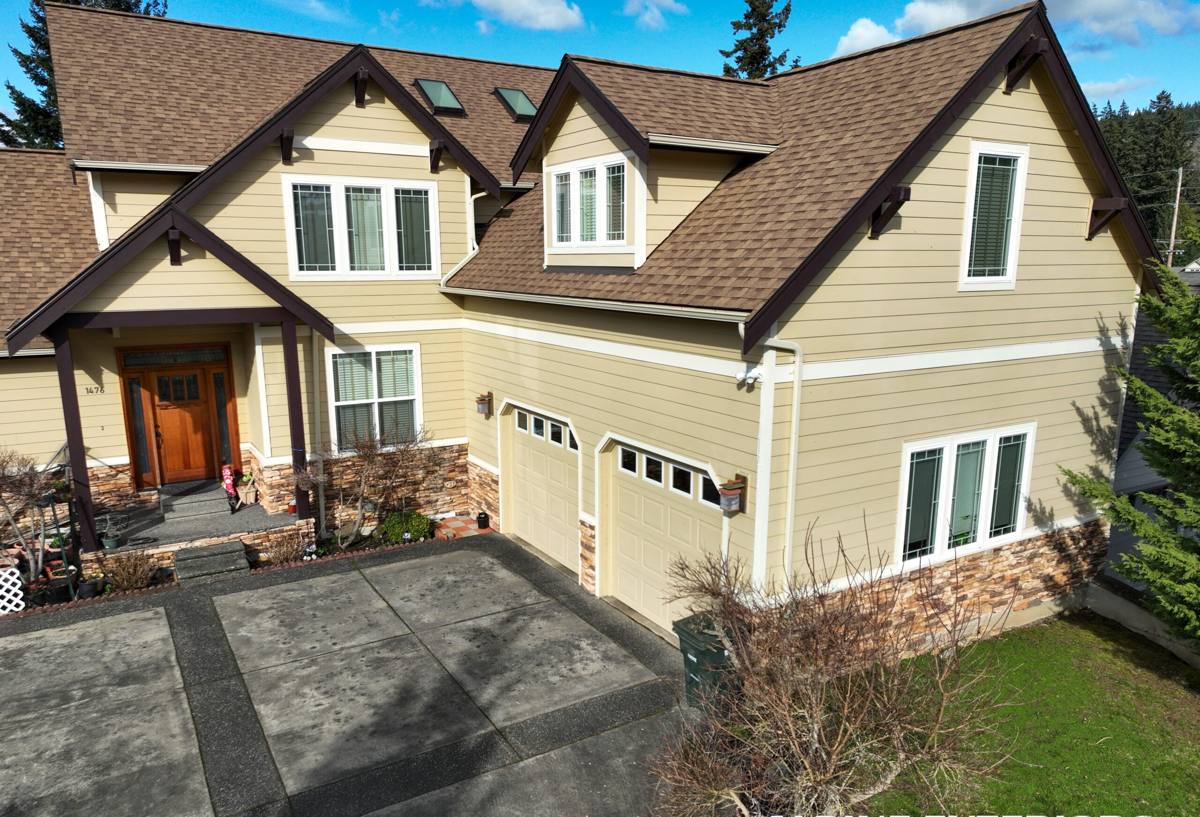
What Palm Harbor's Climate Actually Does to Siding
Palm Harbor sits close enough to the Gulf that salt-laden air is a constant, not an occasional event. Combined with the humidity that never fully leaves this part of Pinellas County, that salt air accelerates corrosion on fasteners, hardware, and any siding material that isn't built to resist it. Add in the region's hurricane-force wind events, and you have a siding assembly that needs to stay fastened, flat, and sealed under real lateral pressure — not just look good on a calm day.
Then there's the sun. Florida's UV load is among the highest in the country, and it doesn't take a season off. Paint film breaks down faster here than almost anywhere else in the continental U.S., which is exactly why factory-applied, UV-stable finishes matter more in Palm Harbor than in a milder climate. Finally, wind-driven rain during summer storms and tropical systems pushes water sideways into vertical seams — the exact seams that a board and batten profile creates by design. Every one of those seams either sheds water correctly or becomes a slow entry point for moisture behind the wall.
The Specific Risks Board & Batten Adds
Because board and batten relies on vertical seams and a batten strip covering each joint, the installation details carry more weight than they do with a simpler horizontal lap profile. Get the fastening, flashing, and gap spacing wrong, and you've built a network of channels that can funnel wind-driven rain straight down the wall assembly. Get it right, and the same profile sheds water as well as any siding style on the market.
Why We Install Board & Batten Only in James Hardie Fiber Cement
We don't offer board and batten in vinyl, LP SmartSide, or primed wood, and that's a deliberate standard, not an oversight. Vinyl board and batten profiles can warp and distort under sustained Florida heat, and the seams depend on the panel remaining dimensionally stable — something vinyl struggles with over a full Gulf Coast summer. Wood battens and boards, even primed ones, are organic material in a climate that stays humid for most of the year; they're vulnerable to rot, insect activity, and paint failure at the exact seams that matter most for keeping water out.
James Hardie's fiber cement products are engineered specifically for this. The material is non-combustible, dimensionally stable in heat and humidity, and resistant to moisture-driven swelling in a way that wood-based and vinyl products aren't. Hardie's ColorPlus factory finish is baked on and warrantied against fading and peeling — a real advantage in a market where UV exposure is constant. And Hardie's HZ5 product line is engineered specifically for climates like ours: high humidity, wind-driven rain, and hurricane exposure. That's the version we specify for Palm Harbor homes, not a generic national spec.
What a Correct Board & Batten Installation Involves
Board and batten can be installed two ways: as a true batten-over-board system (vertical panels with a batten strip fastened over each seam) or as a reveal-style panel system that mimics the look with fewer field seams. Both can perform well in Palm Harbor's climate when installed to manufacturer specification. Here's what that actually requires:
- Weather-resistive barrier and drainage plane: A code-compliant water-resistive barrier goes on before any siding, giving wind-driven rain a way to drain out rather than sit against the sheathing.
- Correct fastener pattern and embedment: Hardie specifies fastener spacing, type, and penetration depth by product line and exposure category. In a hurricane-wind zone like Pinellas County, that spec isn't optional — it's what keeps panels attached under uplift and lateral load.
- Batten placement over structural framing where required: Battens need to land on framing or blocking, not just be face-nailed into the board below, or the whole assembly loses holding strength in high wind.
- Proper gapping and caulking at every seam: Hardie's spec calls for specific gaps at butt joints and trim, sealed with a paintable, elastomeric caulk rated for exterior use — not general-purpose caulk that will crack under Florida's heat cycling.
- Flashing at every horizontal transition: Window heads, roof-to-wall intersections, and any horizontal trim need step or kick-out flashing so water is directed out and away from the seams below, not trapped behind the panel.
Where Installations Commonly Fail
Most board and batten problems we see on inspection calls in this area don't trace back to the material — they trace back to skipped steps: battens face-nailed without hitting framing, missing kick-out flashing at roofline transitions, or caulk joints that were never sized correctly and split within a year or two. In a coastal climate, those shortcuts show up faster than they would somewhere drier and calmer.
Our Process, Start to Finish
- On-site evaluation: We look at your home's current siding condition, existing water-resistive barrier (if it's a re-side), window and roof transitions, and wall framing before quoting anything.
- Product and profile selection: We walk through Hardie's board and batten options — including reveal panel widths and batten spacing — and match the HZ product line to your home's exposure.
- Written scope and schedule: You get a detailed scope covering tear-off (if applicable), barrier and flashing work, fastening spec, and finish color before any work starts.
- Installation to manufacturer spec: Our crews follow Hardie's published fastening, gapping, and flashing requirements for HZ5 products — not a generic siding install.
- Final walkthrough: We review the finished job with you, seam by seam, before calling it complete.
Board & Batten vs. Other Siding Profiles in a Coastal Climate
| Profile | Look | Seam Exposure | Best Fit |
|---|---|---|---|
| Board & Batten (Hardie panel + batten) | Vertical, farmhouse/coastal | Vertical seams under battens | Front elevations, gables, accent walls |
| Lap Siding (Hardie plank) | Traditional horizontal | Horizontal, self-shedding by design | Full-home siding, lowest seam maintenance |
| Shingle/Shake Panel | Textured, cottage style | High seam count | Accent areas, gables |
Board and batten isn't the lowest-maintenance profile Hardie offers — lap siding sheds water more passively — but installed correctly, it holds up well in Pinellas County and gives a home a distinct look that lap siding can't replicate. Many Palm Harbor homeowners choose it for a front elevation or gable accent and pair it with Hardie lap siding elsewhere.
Cost Factors for a Palm Harbor Board & Batten Project
| Factor | Why It Moves the Price |
|---|---|
| Full re-side vs. new construction | Tear-off, disposal, and existing barrier repair add labor |
| Whole-home vs. accent application | Board & batten as a gable or entry accent costs far less than full coverage |
| Wall complexity | Dormers, multiple roof-to-wall transitions, and window count increase flashing labor |
| Substrate condition | Rotted sheathing or damaged framing found during tear-off requires repair before siding goes on |
| ColorPlus vs. field-painted finish | Factory-applied finish costs more upfront but eliminates repainting for years |
We don't quote board and batten (or any siding job) off a square-footage rule of thumb over the phone. Wall complexity and substrate condition drive the real number, and those only show up on-site.
Maintenance in Palm Harbor's Climate
James Hardie board and batten needs less upkeep than wood alternatives, but "low maintenance" doesn't mean "no maintenance" this close to the Gulf. Rinse salt residue off the siding periodically, especially on elevations facing prevailing wind. Inspect caulked seams and trim joints once a year, since even a good elastomeric caulk has a service life and heat cycling will eventually ask something of every joint. Keep an eye on kick-out flashing at roofline intersections after major storms — that's the detail most likely to need attention after a hard wind-driven rain event.
What to Ask Before You Hire a Board & Batten Installer
- Do they install to James Hardie's published fastening and gapping spec, or a generic siding pattern?
- Will they show you the flashing plan at roof-to-wall and window-head transitions before work starts?
- Are they specifying HZ5 product for wind and moisture exposure, or a standard national spec?
- Do they carry manufacturer certification for Hardie installation, and can they explain the warranty terms?
- Will battens land on framing or blocking, not just face-nailed into the board beneath?
Why Hiring a Crew That Already Works Palm Harbor Matters
Board and batten installed to a generic national spec can still fail here in ways it wouldn't in a drier, calmer market. A crew that regularly works Palm Harbor and the surrounding Largo area already accounts for salt exposure, wind-driven rain patterns, and the wind ratings that Pinellas County construction actually needs — it's not a checklist they're learning on your house. That local repetition is what keeps flashing details, fastener choices, and caulk selection consistent from one job to the next, instead of being re-figured out each time.
If you're weighing board and batten for a Palm Harbor home, we're happy to walk your property, talk through where it makes sense architecturally, and give you a straightforward, no-pressure estimate using the form below.