 Largo Window
 Clearwater-Area Decks Face a Different Kind of Wear
A deck in Clearwater doesn't age the way a deck does in most of the country. It's not just years on the calendar that matter here — it's what those years are made of. Salt-laden air drifting in off the Gulf, months of intense UV exposure, wind-driven rain that finds its way into every seam and fastener hole, and the occasional hurricane-force gust all work on a deck at the same time, year-round. That combination is why decks in this part of Pinellas County often show damage sooner, and in different places, than the same structure would show up north.
We're a Largo-based exterior crew that works Clearwater and the surrounding communities regularly, and the repair calls we get tend to fall into a recognizable pattern: corroded fasteners, soft spots around ledger boards and posts, railings that have gone wobbly, and boards that look fine on top but are failing underneath. None of that is unusual for this climate — it's expected. The question isn't whether a Florida deck will need repair, it's whether the repair gets done correctly before a cosmetic problem becomes a structural one.
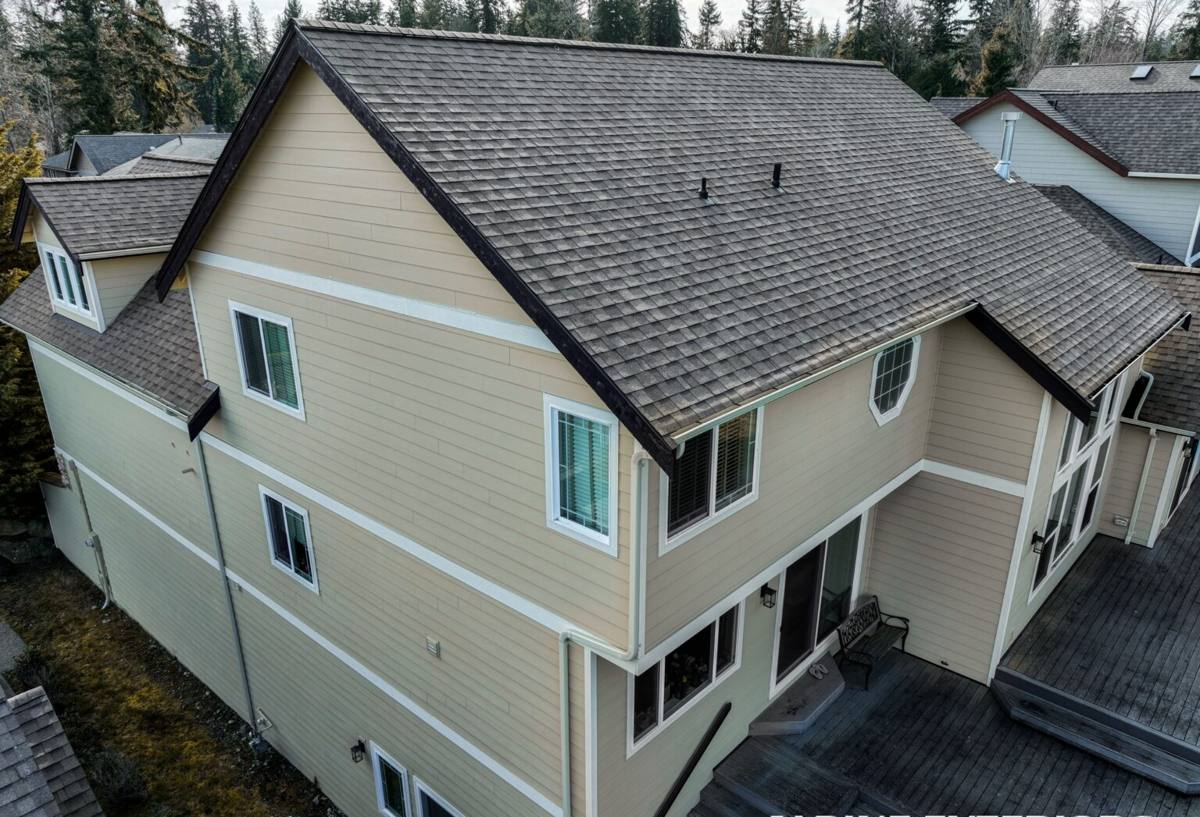
How Local Climate Attacks a Deck
Salt Air and Metal Fasteners
Coastal and near-coastal air carries salt that accelerates corrosion on nails, screws, brackets, and joist hangers — especially any hardware that isn't rated for this environment. Corroded fasteners lose grip strength long before they look obviously rusted, which is part of why a deck can feel solid right up until it isn't.
UV Exposure
Florida sun is harder on exterior wood and composite surfaces than most homeowners realize. UV breaks down the lignin in wood fibers, causing graying and surface splitting, and it can fade or chalk composite decking over time. Sealed or stained wood needs that protective layer renewed far more often here than it would in a milder climate.
Wind-Driven Rain and Moisture Cycling
The bigger issue usually isn't rain falling straight down — it's rain driven sideways by wind, which pushes water into board gaps, screw holes, and the ledger-to-house connection. Combined with Florida humidity, decks go through constant wet-dry cycling. That cycling is what causes wood to swell, crack, and eventually rot from the inside, often before any staining or discoloration shows on the surface.
Storm and Wind Loading
Hurricane-force winds put real lateral and uplift stress on railings, stair stringers, and the connections holding a deck to the house. A deck that was built to code years ago may still need its hardware checked and, in some cases, upgraded to hold up to current storm exposure.
Signs a Clearwater-Area Deck Needs Repair
Most deck problems give warning signs before they become safety issues. Walk your deck and check for these:
- Boards that feel spongy, springy, or noticeably softer underfoot than the boards around them
- Railings or posts that wobble or shift when pushed
- Rust streaks running down from screw heads or bracket hardware
- Gaps opening up where the deck meets the house (the ledger board connection)
- Visible cracking, splitting, or cupping in individual boards
- Stair stringers that flex or feel uneven when you step on them
- Discoloration or a musty smell near ground-contact posts, which can point to rot or moisture trapped underneath
- Fasteners that have backed out, are missing, or spin freely without biting into the wood
Any one of these on its own might be minor. Several together, especially near the ledger board or support posts, usually means it's time for a proper inspection rather than a DIY patch.
Wood vs. Composite: Repair Considerations Differ
What a correct repair looks like depends heavily on what the deck is built from. We treat these very differently, and being upfront about that difference matters more than pushing one material over the other.
| Factor | Pressure-Treated Wood | Composite / PVC Decking |
|---|---|---|
| Most common failure in this climate | Rot at fastener holes, ledger board, and ground-contact posts | Fastener corrosion, surface fading/chalking, occasional substructure rot underneath |
| Repair approach | Sister or replace damaged framing, re-fasten with corrosion-resistant hardware, reseal exposed cuts | Replace damaged boards individually; the structural frame underneath is usually still wood and inspected the same way |
| Maintenance after repair | Reseal or restain every 1–2 years in this climate to keep UV and moisture out | Occasional cleaning; no sealing needed, but hardware and framing below still need periodic checks |
| Typical repair cost driver | Extent of hidden rot found once boards are pulled | Number of boards affected plus any hidden framing issues |
A detail that surprises a lot of homeowners: even an all-composite deck has a wood or metal frame underneath. Composite boards resist rot and UV damage far better than the surface material, but the substructure holding them up is often still standard lumber — and that's exactly the part that's hardest to inspect without pulling boards.
What a Correct Deck Repair Actually Involves
A repair that only addresses what's visible on the surface tends to come back. A repair done correctly starts underneath.
1. Structural Inspection First
Before any board gets replaced, we check the ledger board connection to the house, the condition of support posts and footings, joist spacing and condition, and the hardware tying it all together. This is where hidden rot and corrosion actually live, and it's the part a surface-level patch job skips.
2. Fastener and Hardware Upgrades
If the original build used fasteners or brackets that aren't rated for coastal exposure, repair is the right time to upgrade to corrosion-resistant hardware. Reusing the same grade of hardware that just failed doesn't solve the underlying problem.
3. Board Replacement Done Right
Damaged boards get replaced, not just resurfaced. Cut ends and fastener holes on wood get sealed before installation, since untreated cut edges are one of the fastest ways rot gets started on an otherwise sound board.
4. Railing and Stair Safety
Railings and stairs take direct wind and impact loading and are checked for both cosmetic and structural soundness — a railing that looks fine but isn't properly anchored is a real safety issue, not a minor cosmetic one.
5. Sealing and Finish Work
For wood decks, the final step is a proper seal or stain matched to the board's condition — this is the layer that actually slows down the next round of UV and moisture damage, so it isn't optional in this climate.
Our Repair Process
- On-site assessment. We walk the full deck, check the structure from underneath where accessible, and identify what's cosmetic versus what's structural.
- Honest scope and estimate. You get a clear breakdown of what needs repair now, what's worth watching, and what your options are — including repair versus replacement if the damage is extensive.
- Repair the framework before the surface. Any rot, corrosion, or connection issue gets addressed first, since that's what the visible boards depend on.
- Board and hardware replacement. Damaged materials are replaced with fasteners and hardware suited to coastal exposure.
- Final check and finish. Railings, stairs, and fastener patterns get a final safety check, and wood surfaces are sealed before we consider the job done.
Repair or Replace? Honest Decision Factors
Not every deck problem calls for a full rebuild, and not every deck is worth repairing indefinitely. The honest factors we weigh:
| Consider Repair When | Consider Replacement When |
|---|---|
| Damage is limited to a few boards or a section of railing | Rot has reached the ledger board, main support posts, or multiple structural joists |
| The frame underneath tests solid when checked | The frame flexes, feels soft, or shows widespread corrosion at connection points |
| The deck is under roughly 15 years old and was reasonably maintained | The deck is older, was never sealed regularly, or has had repeat repairs in the same spots |
| You want to extend the deck's life a few more seasons cost-effectively | You're planning to sell or want a longer-term, lower-maintenance solution |
Why a Crew That Already Works Clearwater Matters
Deck repair isn't just carpentry — it's carpentry that has to hold up against a specific set of conditions. A crew that regularly works Clearwater and the greater Largo area already knows which hardware corrodes fastest in this air, which framing details tend to fail first on homes near the water, and what a deck actually needs to survive Pinellas County's combination of sun, humidity, and storm exposure. That local pattern recognition is the difference between a repair that lasts and one that's back on the schedule in eighteen months.
It also means straightforward logistics — someone who can be back on-site quickly if something needs a second look, and who's already familiar with the permitting and inspection expectations that come with structural deck work in this county.
Keeping a Repaired Deck in Good Shape
Once repairs are done, a little regular attention goes a long way in this climate:
- Reseal or restain wood decking every 1–2 years, sooner if the finish looks dull or dry
- Rinse off salt residue and debris periodically, especially after storms
- Check railings and stair connections for looseness a couple of times a year
- Keep gutters and drainage clear so water isn't funneling directly onto or under the deck
- Have the structure looked at after any major storm, even if nothing looks obviously wrong
If you're seeing soft boards, loose railings, or rust stains on a deck in the Clearwater or Largo area, it's worth having it looked at before those small signs turn into a bigger structural repair. We're happy to come take a look, give you a straight assessment of what's actually going on, and put together a free, no-pressure estimate — no obligation, just an honest read on where your deck stands.