 Largo Window
 Why Deck Replacement Looks Different Near Madeira Beach
A deck built a few miles inland doesn't face the same conditions as one on or near Madeira Beach's barrier island. Homes here sit close to open Gulf water, which means more direct salt spray, more humidity, and stronger sustained winds than you'd get on the mainland side of Pinellas County. Add in Florida's year-round UV load and the wind-driven rain that comes with almost every summer storm, and you have an environment that ages decking materials, fasteners, and framing faster than most manufacturers' warranty language assumes.
That's the starting point for any honest conversation about deck replacement in this area: it's not just about picking a color of composite board. It's about building something that can actually hold up to salt air corrosion, UV breakdown, and the wind loads that come with living this close to the water, while still meeting the codes that apply to construction near the coast.
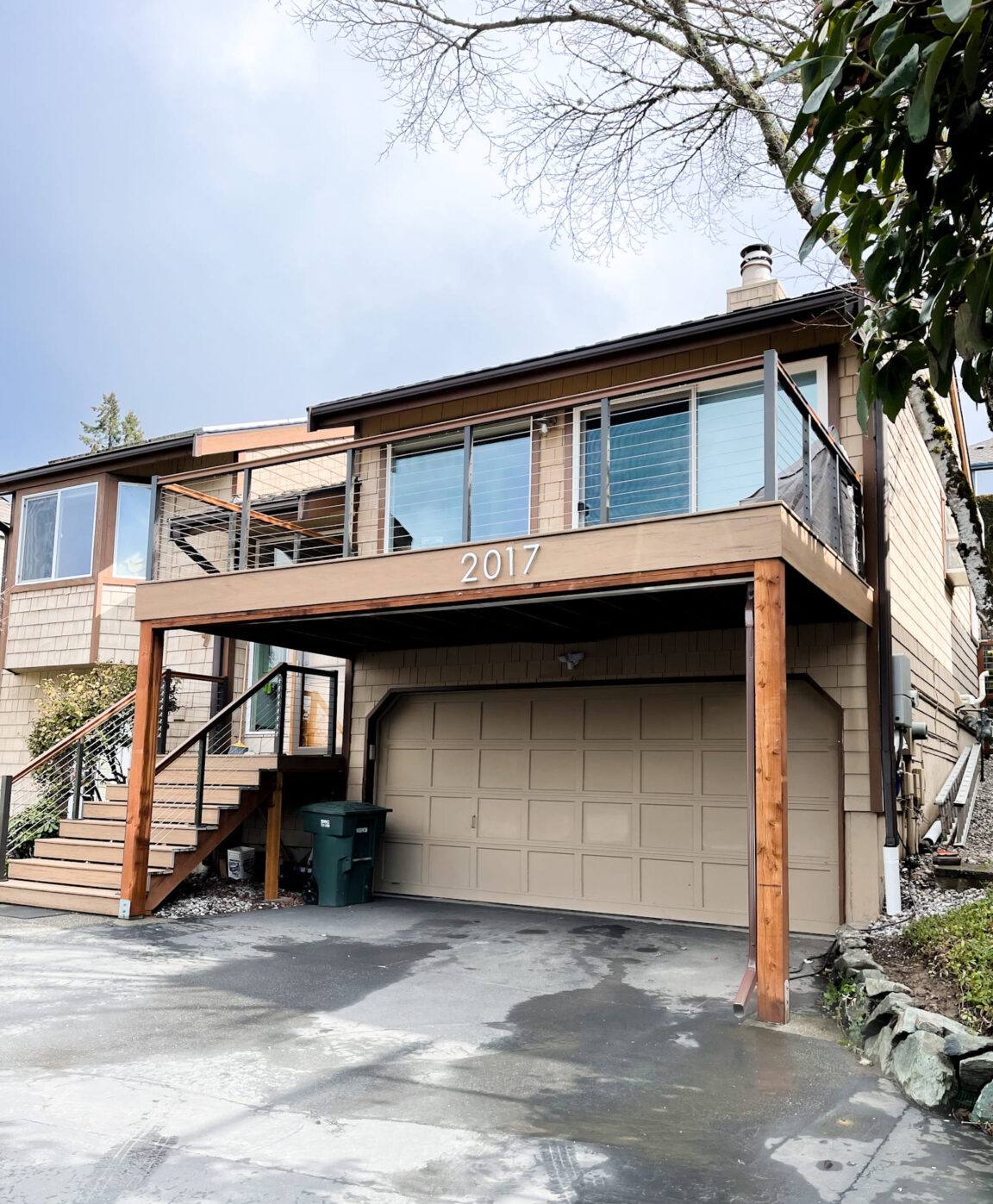
Signs a Deck Needs Replacement, Not Just Repair
Not every tired-looking deck needs to come out. But in a coastal environment, cosmetic problems are often a sign that something underneath has already failed. A few boards that look fine on top over rusted or corroded fasteners is a common pattern we see on older decks in this area.
- Soft, spongy, or bouncy spots in the decking or framing when you walk across it
- Visible rust streaks around fasteners, joist hangers, or post brackets
- Wood that's gone gray and fibrous, or composite boards that are flaking, delaminating, or chalky
- Gaps opening up where the deck ledger board meets the house
- Railings or posts that wiggle more than they used to
- Persistent moisture or staining underneath the deck where water isn't draining away
- A deck that's 15-20+ years old and has never had the substructure inspected
If you're seeing more than one or two of these, it's worth having someone look at the framing before spending money on surface repairs that won't hold.
Why Salt Air Accelerates the Timeline
Airborne salt is corrosive to standard steel fasteners, joist hangers, and hardware. Once corrosion starts inside a connection point, it's happening where you can't see it — under a deck board, inside a post base, behind a ledger flashing. That's why decks near the water often show structural problems well before the surface material looks obviously worn out.
Choosing Decking Material for a Coastal Pinellas County Deck
There's no single "right" material for every home, but the environment near Madeira Beach narrows the field. Whatever you choose needs to handle constant UV exposure, humidity, and salt without a heavy, ongoing maintenance burden.
Wood
Pressure-treated pine is the most affordable option and can perform well, but it requires real upkeep — regular sealing or staining, and attentive care around fasteners and end cuts where treatment chemicals don't always penetrate fully. In a high-UV, salty coastal setting, that maintenance schedule tends to be more demanding than homeowners expect going in.
Composite Decking
Composite boards (wood fiber blended with plastic) have become the standard choice for a lot of coastal homeowners because they don't need staining or sealing and resist rot. The trade-off is that not all composite is equal — cheaper, uncapped composite can absorb moisture at cut edges over time. Capped composite, with a protective polymer shell around the board, holds up noticeably better in humid, salty air.
PVC / Cellular Vinyl
Fully synthetic PVC decking contains no wood fiber at all, so it doesn't absorb moisture the way composite can. It's often the most resistant option to salt air and humidity, typically costs more up front, and can flex more than wood or composite under heavy point loads if the framing spacing isn't right for it.
| Material | Upfront Cost | Maintenance | Coastal Durability |
|---|---|---|---|
| Pressure-treated wood | Lowest | High — regular sealing/staining | Fair, depends on upkeep |
| Capped composite | Mid to high | Low — occasional washing | Good to very good |
| PVC / cellular vinyl | Highest | Lowest | Very good |
Structural Considerations: Framing, Fasteners, and Wind Load
The decking surface gets all the attention, but the framing underneath is what actually determines whether a deck is safe and code-compliant near the coast. This is where a lot of older, storm-region decks fall short, especially ones built or repaired before current wind and connection standards were common practice.
Ledger Board Attachment
The ledger board — where the deck attaches to the house — has to be properly flashed and lag-bolted or through-bolted, not just nailed. Improper ledger attachment is one of the most common failure points in older residential decks, and it's almost always hidden until you start tearing into the structure.
Post Bases and Footings
In sandy, coastal Pinellas County soil, footing depth and post connection hardware matter. Posts need to be properly anchored to footings with rated hardware — not just set in concrete and left to friction-fit — so uplift from high winds doesn't work them loose over time.
Fasteners and Hardware
Given the salt air, we use stainless steel or coated, corrosion-resistant fasteners and connectors rather than standard galvanized hardware, along with hurricane ties and rated joist hangers at the connections that matter most for wind resistance. It costs more than generic hardware, but it's the difference between a deck that holds up for years near the Gulf and one that starts corroding from the inside within a few seasons.
Permits and Local Building Requirements
Deck replacement in Pinellas County generally requires a building permit, and homes closer to the water — including barrier island areas near Madeira Beach — can fall into flood zones or wind-borne debris regions that carry additional requirements around connection hardware, footing depth, or elevation. Requirements vary by property and jurisdiction, so we pull the actual permit and confirm what applies to your specific address rather than assuming one standard fits every job in the area.
Skipping the permit on a full deck replacement is a real risk — beyond the legal exposure, it can create problems when you go to sell the home, since unpermitted structural work often gets flagged in a home inspection or during the closing process.
Our Deck Replacement Process
- On-site assessment — We inspect the existing deck, ledger connection, framing, footings, and any hidden moisture or corrosion damage before quoting anything.
- Material and design discussion — We walk through decking material options, railing style, and layout based on how you actually use the space and what your budget calls for.
- Permitting — We handle the permit application and coordinate any required inspections.
- Demolition — Full removal of the old deck surface and, where needed, the framing, with attention to what's underneath (electrical, plumbing, irrigation lines).
- Framing and structural work — Ledger reattachment, footings, posts, joists, and hardware installed to current code and wind-resistance standards.
- Decking, railing, and finishing — Installation of the chosen decking material, railing system, stairs, and any trim or fascia detailing.
- Final walkthrough and inspection — We review the finished deck with you and make sure it passes final inspection.
Cost Factors for a Madeira Beach Deck Replacement
Every deck is different, so we won't quote a number without seeing the job, but these are the main variables that move the price up or down.
| Factor | Impact on Cost |
|---|---|
| Deck size and shape (multi-level, angles, cutouts) | Larger and more complex layouts increase labor and material |
| Decking material chosen | Wood is typically lowest cost; PVC typically highest |
| Condition of existing framing | Framing that must be replaced, not just decking, adds cost |
| Railing style and material | Custom or metal/glass railing costs more than basic wood or composite |
| Height and stairs | Elevated decks and multi-run stairs add framing and labor |
| Permit and inspection requirements | Flood zone or wind-zone specifics can add engineering or hardware costs |
Maintenance in a Salt-Air Environment
Whatever material you choose, a few habits go a long way toward protecting your investment near the water:
- Rinse the deck surface periodically to remove salt residue, especially after storms with onshore wind
- Keep gutters and drainage clear so water isn't pooling near posts or footings
- Trim back landscaping that traps moisture against the deck structure
- Do a visual check of railings and stair connections once or twice a year
- For wood decks, stick to the sealing/staining schedule rather than letting it lapse
Why Hire a Crew That Already Works Madeira Beach
A deck built by someone who mostly works inland jobs can end up under-hardened for what this stretch of Pinellas County actually throws at it — not out of carelessness, but because they're used to different conditions. A crew that regularly works near Madeira Beach already knows which fastener grades hold up, how local permitting and flood-zone rules apply, and where older decks in this area tend to fail first. That local pattern recognition is what keeps a deck replacement from becoming a repeat project in five years.
If your deck is showing its age, or you're just not sure whether it needs repair or full replacement, we're happy to take a look. Fill out the form below for a free, no-pressure estimate — we'll assess the deck, explain what we find, and give you a straight answer on what it would take to get it right for this environment.