 Largo Window
 Why St. Petersburg Siding Takes More Punishment Than Most
St. Petersburg sits on a peninsula between Tampa Bay and the Gulf, which means homes here deal with a combination of stresses that inland siding never sees. Hurricane-force wind gusts push and pull on wall cladding hard enough to loosen poorly fastened panels. Intense, near year-round UV breaks down pigments and resins in lower-grade materials faster than in most of the country. Wind-driven rain gets forced sideways into laps, corners, and trim joints during storms. And salt air drifting off the bay and Gulf accelerates corrosion on fasteners, trim, and anything not rated for a coastal environment.
None of that is unique to one street or subdivision — it's the baseline for Pinellas County. But it matters when you're deciding what to put on your walls and who installs it, because siding here either handles all four stresses at once or it fails faster than the warranty paperwork suggests it should.
What "Correct" Fiber Cement Installation Actually Involves
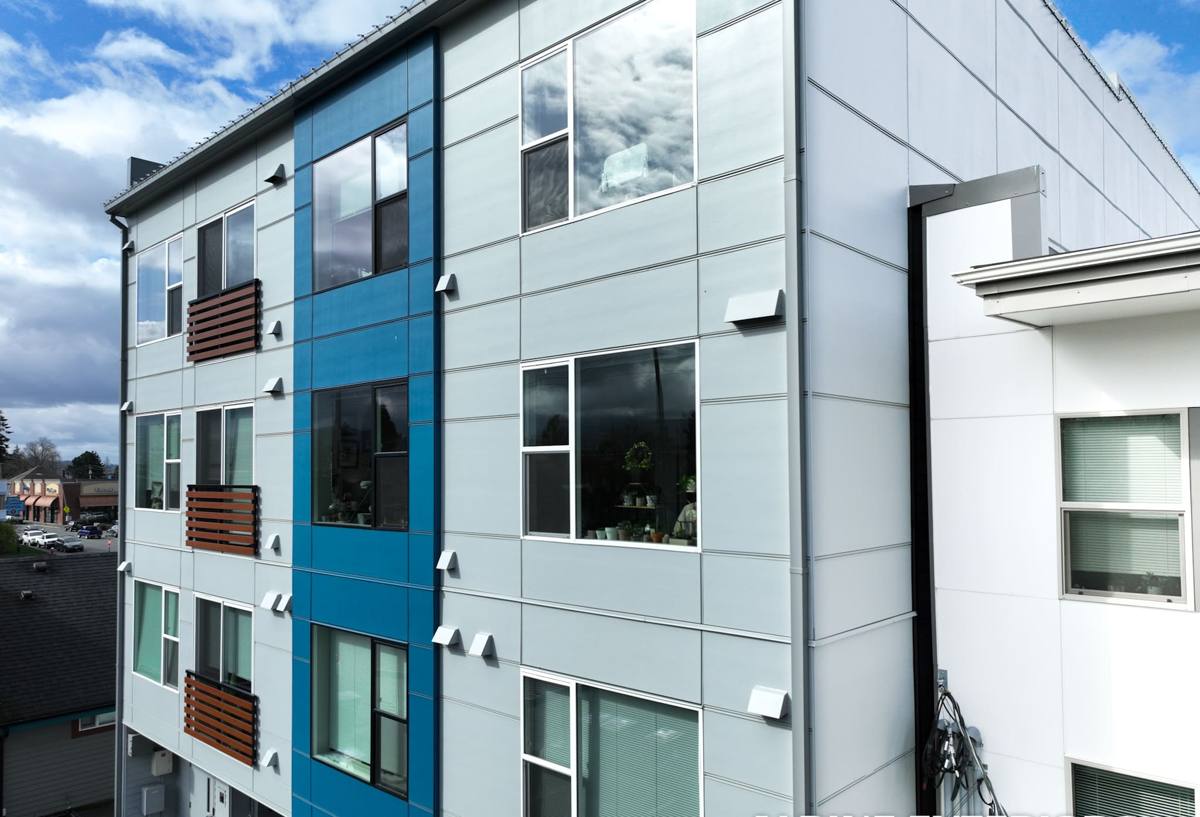
Fiber cement siding is only as good as the installation behind it. The material itself is dense, stable, and non-combustible, but a rushed or generic install undermines all of that. In a climate like St. Petersburg's, a handful of details separate a job that holds up for decades from one that causes callbacks in two or three years.
Clearances and Drainage
Fiber cement needs a minimum gap above roof lines, decks, and grade, plus a functioning drainage plane behind it — typically a weather-resistant barrier with furring or a rainscreen gap in high-exposure applications. Skip this and wind-driven rain has nowhere to go once it gets past the face of the siding, which is exactly the failure mode that shows up as swollen trim or stained sheathing a few years after installation.
Fasteners and Fastening Pattern
Corrosion-resistant fasteners, driven at the manufacturer's specified pattern and depth, are non-negotiable this close to the water. Overdriven nails crack the board's fiber matrix at the fastener point; underdriven nails leave panels loose enough to rattle and work themselves free in sustained wind. Both are common corner-cutting on jobs rushed to beat a schedule.
Joints, Caulking, and Flashing
Butt joints, inside corners, and every penetration (hose bibs, light fixtures, vents) need to be flashed or sealed with a product rated for the assembly — not just caulked over and painted. Wind-driven rain finds every gap that was skipped, and it finds it during the next named storm, not gradually.
Factory Finish, Not Field Paint
We install ColorPlus factory-finished siding rather than field-painting boards on site. The factory finish is baked on under controlled conditions and holds color and adhesion far better under constant UV exposure than a field-applied coat, which matters in a market where the sun is working on your siding essentially every day of the year.
Why We Standardized on James Hardie
We install James Hardie fiber cement exclusively — we don't install vinyl, LP SmartSide, Cemplank, Allura, or primed wood siding. That's a deliberate standard, not a sales pitch, and it's worth explaining honestly.
Vinyl is inexpensive and low-maintenance, but it softens, warps, and can crack in high heat and high wind, and it offers little in the way of impact resistance during storms. Engineered wood products like LP SmartSide use wood strand cores that are more moisture-sensitive than fiber cement by nature of the material, which raises the stakes on flashing and maintenance in a wet, humid climate. Other fiber cement brands compete reasonably well on the base material, but we've built our entire installation system, warranty process, and color-matching around one manufacturer's engineering and support — and Hardie's HardieZone system specifically engineers panels for regional climate demands, including the humidity and moisture exposure common to Florida's Gulf Coast.
James Hardie fiber cement is non-combustible, dimensionally stable in heat and humidity swings, and backed by a long transferable limited warranty on the substrate and a separate finish warranty on ColorPlus color. For a coastal Pinellas County home, that combination is what we're willing to put our name behind.
Comparing Siding Options for a St. Petersburg Home
| Material | Wind & Storm Resistance | Moisture Behavior | Maintenance | Typical Lifespan |
|---|---|---|---|---|
| James Hardie Fiber Cement | Strong when installed to spec; dense, stable panels | Cement-based, does not rot; relies on correct flashing/drainage | Low; factory finish resists fading | 30+ years with proper install |
| Vinyl | Can crack, warp, or blow off in high gusts | Doesn't rot, but seams and J-channels are common leak points | Low, but fades and chalks with sun exposure | 15–25 years, often less on the coast |
| Engineered Wood (e.g. LP SmartSide) | Moderate; panel-dependent | Wood-strand core is moisture-sensitive; edges and flashing are critical | Moderate; needs prompt attention to moisture | Variable, shorter if moisture gets in |
| Stucco | Good wind resistance when intact | Prone to hairline cracking, which lets water in | Moderate to high; cracks need regular sealing | 20–30 years, crack-dependent |
This is a general comparison, not a claim that every product in every category fails — installation quality and maintenance matter for all of them. It's simply why, for the climate St. Petersburg sits in, we've chosen to specialize in one system rather than offer several.
Our Process for a St. Petersburg Siding Job
We keep the process straightforward and transparent from the first walkaround to final cleanup.
- On-site inspection. We look at your current siding, sheathing condition, trim, and any problem areas — soft spots, past water intrusion, or trouble corners — before we quote anything.
- Product and color selection. We walk you through Hardie's plank profiles, textures, and ColorPlus palette so the finished look fits your home and your neighborhood.
- Prep and weather barrier. Old siding comes off, sheathing is inspected and repaired as needed, and a new weather-resistant barrier goes on correctly lapped and sealed.
- Installation to manufacturer spec. Proper clearances, fastening pattern, joint treatment, and flashing at every penetration — not shortcuts to save a day of labor.
- Trim, caulking, and final detail work. This is where a lot of jobs get sloppy; we don't rush it.
- Walkthrough and cleanup. We review the finished job with you and clear the site of debris and old material.
Why It Matters to Hire a Crew That Already Works St. Petersburg
A crew that regularly works St. Petersburg and greater Pinellas County already understands the local wind exposure requirements that apply to exterior work here, has a feel for how the bay's salt air affects fastener and trim choices over time, and has seen firsthand how wind-driven rain behaves against different wall assemblies during a real storm — not just in a training manual. That local repetition shows up in the details: fastener selection, flashing choices around window and door openings, and how conservatively we handle clearances at grade and roof lines.
It also means fewer surprises with permitting and inspection, since local requirements for wind resistance and attachment are something we work with on every job in this area, not something we're looking up for the first time.
Signs Your Current Siding May Be Struggling With the Climate
- Visible cracking, buckling, or gaps at seams and corners
- Soft or spongy spots when you press on the siding near the bottom edge
- Paint or finish that's chalking, peeling, or fading unevenly
- Staining or discoloration that keeps returning after cleaning
- Rattling or loose-feeling panels during windy weather
- Rust streaks near fasteners or trim, especially on the sides facing the water
Maintaining Fiber Cement Siding in a Coastal Climate
James Hardie siding is genuinely low-maintenance, but "low" isn't "none" — especially this close to salt air. A simple rinse-down once or twice a year removes salt residue, pollen, and grime before it builds up. It's worth doing a quick visual check after major storms for any lifted trim, damaged caulk joints, or debris impact, since catching a small issue early is far cheaper than letting wind-driven rain work on it for a season. Keep an eye on caulking at joints and penetrations, since sealant is the one component that wears out well before the siding itself does and needs periodic renewal.
Get a Straightforward Estimate
If your St. Petersburg home's siding is showing its age, or you're planning ahead for storm season, we're happy to come take a look and give you an honest read on what your home needs. There's no pressure and no obligation — just a straight answer about the condition of your siding and what correct James Hardie installation would look like for your house. Fill out the form below to request a free estimate.