 Largo Window
 Building New on the Gulf Side of Pinellas County
Indian Shores sits on a narrow barrier island, which means every new-construction window opening here faces conditions that inland Largo simply doesn't see to the same degree. You're closer to open water, more exposed to wind-driven rain, and living with salt air that settles on glass, hardware, and sealants year-round. When a home is being framed from the ground up, or an addition is going in, the window package isn't something to figure out after the fact — it's structural, it's code-driven, and it has to be right the first time because tearing out and redoing a new-construction opening is far more disruptive than a retrofit repair later.
We install new-construction windows throughout Largo and the surrounding beach communities, and Indian Shores is one of the areas we're in regularly. That matters more than it might sound like, because coastal new-construction work has its own rhythm — inspection timing, flashing sequence, product selection — that differs from a standard inland build.
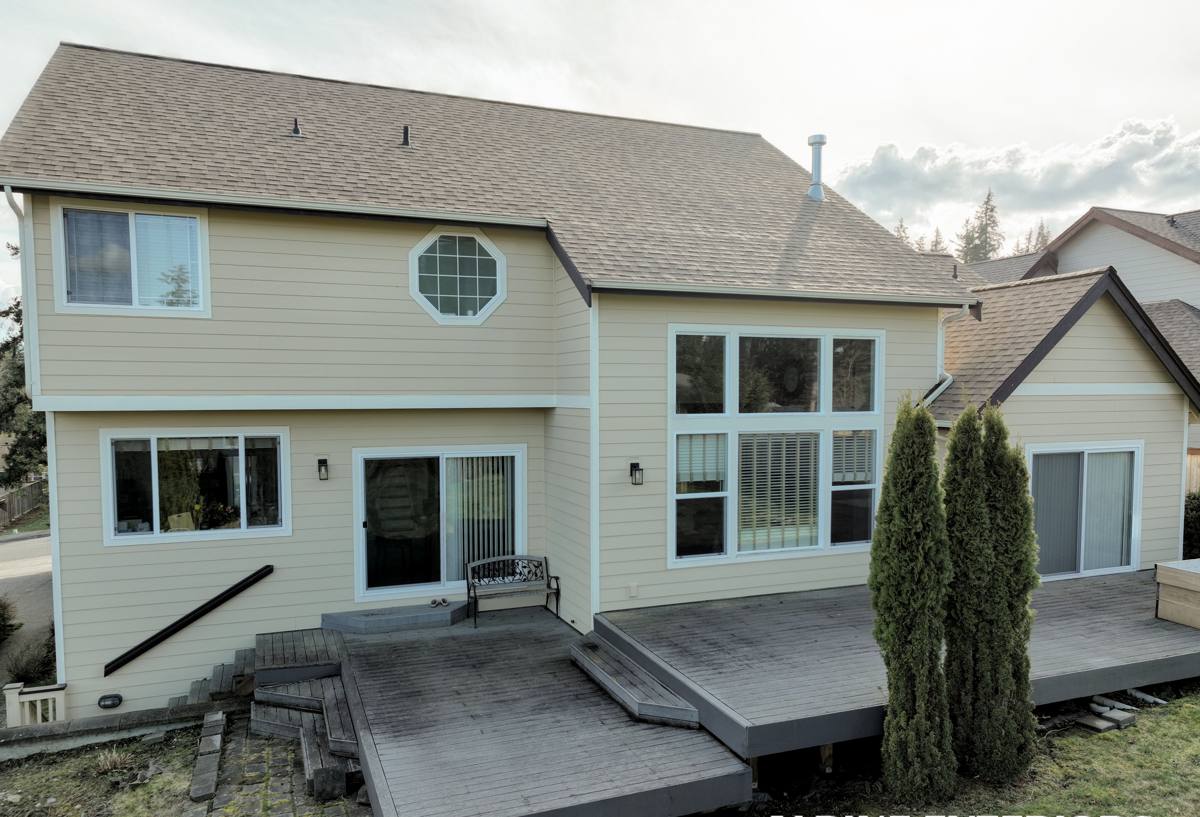
New-Construction Windows vs. Replacement: Why the Distinction Matters
New-construction windows have a nailing fin (or flange) that gets fastened directly to the sheathing before siding, stucco, or exterior finish goes on. They're installed during the framing and dry-in stage, before the building envelope is closed up. Replacement windows, by contrast, are built to fit into an existing rough opening without disturbing the surrounding wall finish — they're a different product with a different installation method entirely.
On a true new build or a room addition in Indian Shores, new-construction units are almost always the correct choice. They tie into the weather-resistive barrier and flashing system as part of the original construction, which gives you a cleaner, more reliable water-management path than trying to retrofit that same protection into finished walls later.
When New-Construction Windows Apply
- Ground-up new home construction
- Room additions or bump-outs with new rough openings
- Full teardown-and-rebuild projects
- Enclosed lanai or Florida room conversions where the opening is framed new
What Florida Building Code Requires This Close to the Water
Pinellas County, including Indian Shores, falls under Florida's stricter coastal wind provisions. Depending on the specific site and its wind exposure category, new-construction windows here typically need to meet impact-resistance or wind-borne debris protection requirements — either through impact-rated glass or an approved separate protection system. Every window we install carries a valid Florida Product Approval or Miami-Dade Notice of Acceptance (NOA) appropriate to the design pressure and wind zone for that specific opening.
Design pressure ratings aren't one-size-fits-all across a house, either. A window on a gable end or near a roof corner often needs a higher pressure rating than one on a protected wall, because wind loads concentrate differently around a building's geometry. Getting this wrong doesn't just risk a failed inspection — it risks a window that isn't actually rated for what it needs to withstand in a real storm.
What We Confirm Before Ordering
- Correct design pressure (DP) rating for each specific opening, not a blanket rating for the whole house
- Valid NOA or Florida Product Approval documentation matching the installed product
- Anchoring and fastening schedule matching the substrate (wood frame vs. block/CBS)
- Compatibility with the home's specific wall assembly and exterior finish
Choosing the Right Frame and Glass Package
For new construction, you're picking the window and its performance package before walls are even closed, so there's more flexibility than a replacement project — but also more decisions to get right. Frame material affects long-term maintenance in a salt-air environment more than almost anything else in the window assembly.
| Frame Material | Coastal Performance | Maintenance | Relative Cost |
|---|---|---|---|
| Vinyl | Good; won't corrode or pit from salt exposure | Low — occasional rinse-off | Lower |
| Aluminum | Strong structurally but prone to pitting/corrosion near the coast over time without proper coating | Moderate — needs periodic inspection of finish | Moderate |
| Fiberglass | Very good; dimensionally stable, resists salt-driven degradation well | Low | Higher |
| Wood-clad | Requires more upkeep in humid, salty air; not our first recommendation this close to the water | Higher — finish maintenance needed | Higher |
We steer most Indian Shores new-construction projects toward vinyl or fiberglass frames specifically because of how little upkeep they demand against salt spray and constant UV. That's a professional judgment call based on how these materials hold up in this exposure, not a knock on any manufacturer — every material has a place, and if a design calls for wood-clad or a specific aluminum system, we'll install it correctly and tell you honestly what maintenance that choice will require going forward.
On the glass side, impact-rated laminated glass is standard for coastal new construction, and we typically pair it with a Low-E coating and warm-edge spacer system. That combination cuts down on the heat load coming through south- and west-facing glass, which matters in a house that's going to run air conditioning year-round.
Our New-Construction Installation Process
New-construction installs happen at a specific point in the build sequence — after framing and rough opening dimensions are set, before exterior finish goes on. Timing and sequence matter as much as the window itself.
- Rough opening verification — we confirm every opening is square, plumb, and sized correctly against the ordered unit before anything is set.
- Weather-resistive barrier integration — the house wrap or barrier is prepped so flashing will shingle correctly with the window's nailing fin.
- Sill pan flashing — a sloped, sealed sill pan is set first so any water that gets past the window has a path back out, not into the wall cavity.
- Setting and fastening — the unit is set plumb, level, and square, then fastened per the manufacturer's NOA-approved schedule.
- Flashing the head and jambs — flashing tape is applied in the correct shingle-lap order so water sheds outward at every layer.
- Interior and exterior sealant — appropriate sealants are applied at the frame perimeter, sized and placed per the product's installation instructions.
- Final inspection walkthrough — we check operation, seal continuity, and documentation before the opening is closed in by siding or stucco.
That sill pan and flashing sequence is where most long-term window failures actually originate — not in the window unit itself, but in water finding a way behind it. On a barrier island with regular wind-driven rain, a shortcut here doesn't show up as a problem on day one. It shows up two or three years later as staining, soft framing, or a slow leak that's expensive to trace.
Mistakes We See on Coastal New-Construction Jobs
Some of these come from crews that don't normally work this close to the water and treat a coastal install like a standard inland one.
- Using a single design pressure rating for the whole house instead of matching each opening's actual wind load
- Skipping or under-sizing the sill pan flashing because it "usually" doesn't leak inland
- Fastening schedules that don't match the actual wall substrate (wood frame vs. CBS block)
- Sealant choices that aren't rated for sustained UV and salt exposure
- Ordering standard glass instead of confirming the impact rating required for that specific elevation
- Missing or incomplete NOA documentation at final inspection, which delays certificate of occupancy
Salt Air, UV, and What Happens After the Windows Are In
Once a new-construction window is installed correctly, it should require very little from a homeowner — but "very little" isn't "nothing" this close to the Gulf. Salt air accelerates corrosion on hardware and can dull certain finishes faster than it would even a few miles inland. Constant UV exposure is hard on sealants and gaskets over the years, which is part of why we lean toward materials and glazing systems that hold up well without heavy maintenance.
A simple rinse-down of frames and hardware every few months, and keeping weep holes clear of sand and debris, goes a long way toward getting the full service life out of a new-construction window package in this environment.
Coordinating with Builders and GCs
New-construction window work almost never happens in isolation — we're one trade in a sequence that includes framers, the weather-barrier installer, and whoever's doing exterior finish next. On Indian Shores projects we coordinate directly with the general contractor on timing, because setting windows too early (before the opening and barrier are truly ready) or too late (holding up the finish trades) both cause problems. We also handle our own scheduling around the county inspection points that apply to window installation, so documentation is in hand when the inspector shows up rather than chased down afterward.
Why a Local Largo Crew Matters for This Job
Anyone can hang a window. What's harder to fake is knowing, from repeated experience on this specific stretch of coastline, which design pressure ratings actually apply where, how Pinellas County inspectors want documentation presented, and how a flashing detail needs to be built to survive a wind-driven rain event rather than just pass a dry-day inspection. We work Largo and the surrounding beach communities regularly, including Indian Shores, and that familiarity shows up in fewer surprises during inspection and fewer callbacks after move-in.
If you're planning a new build, addition, or full rebuild in Indian Shores and want to talk through window specifications before your rough openings are even framed, we're glad to walk through it. Reach out for a free, no-pressure estimate — there's a short form below to get started.