 Largo Window
 Board & Batten in Oldsmar: A Style That Has to Earn Its Keep
Board and batten has become one of the most requested looks in Oldsmar, and it's easy to see why. The vertical lines read as clean and modern on newer builds, but the same profile also suits the ranch and cottage-style homes scattered through the older parts of the neighborhood. It works as a full exterior, as an accent on a gable end or dormer, or as a contrast band against lap siding on a front elevation. Homeowners like it because it looks intentional rather than generic.
But board and batten is not a look you can bolt onto any material and expect to hold up here. Oldsmar sits inland from Tampa Bay but still gets the full package of West Central Florida weather: hurricane-force wind events, sustained wind-driven rain, relentless UV exposure nearly year-round, and salt-laden air carried in off the bay and the Gulf. A siding profile with more seams, more exposed edges, and more vertical joints than standard lap siding has more places for that weather to find a weakness. Get the material and the installation right and board and batten will outlast most other exterior upgrades you could make. Get it wrong and it becomes the first thing on the house to fail.
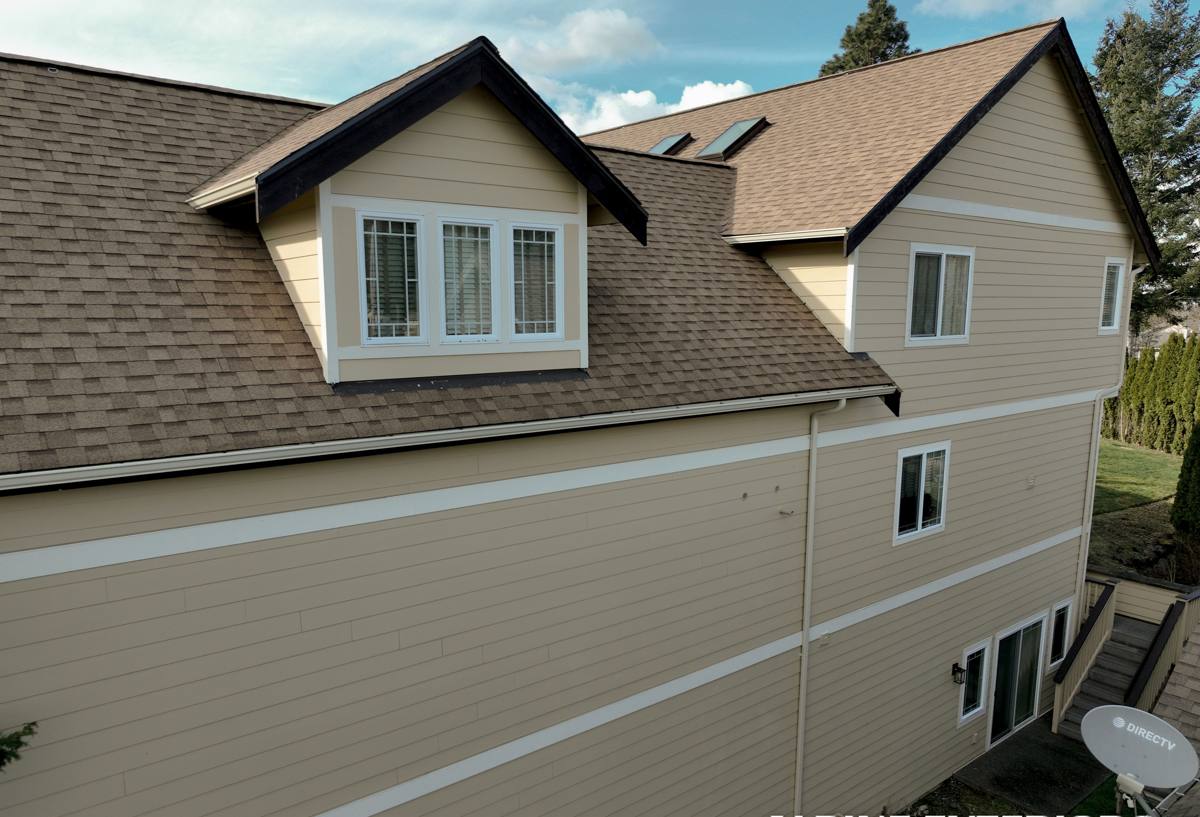
What Pinellas County Weather Actually Does to Vertical Siding
It helps to understand the specific stresses board and batten siding faces in this part of Pinellas County, because they're different from what a house in a drier, colder climate deals with.
Wind Load on Vertical Panels
During tropical storms and hurricane-force wind events, siding doesn't just get rained on — it gets pushed and pulled. Vertical board and batten panels have long, continuous fastening lines running up the wall, and if the fastener pattern or panel attachment isn't correct, wind can work a panel loose at the edges over time, or in a bad storm, all at once. This is a material-and-installation issue, not just a material issue.
Wind-Driven Rain and the Vertical Joint
Every seam in board and batten siding — where a board meets a batten, where a batten meets the wall, where any horizontal joint occurs — is a potential entry point for water. In a normal rain, water runs down the face of the wall. In wind-driven rain, which Oldsmar gets regularly during storm season, water is pushed sideways and even upward into those joints. A board and batten system has to be built with real drainage and flashing behind the finish surface, not just a good caulk job on top of it.
Year-Round UV
Florida sun doesn't take an off-season. Vertical siding faces get direct, sustained sun exposure across multiple elevations throughout the day. Paint systems that aren't factory-cured for UV resistance tend to chalk, fade, and eventually crack years before their labeled lifespan, especially on south- and west-facing walls.
Salt Air
Oldsmar's proximity to Tampa Bay means airborne salt is a constant, low-level factor even away from the immediate waterfront. Salt accelerates the breakdown of fasteners, coatings, and any wood-based product that isn't fully sealed on every cut edge. Over years, that's the difference between a siding job that still looks tight after a decade and one that's showing soft spots and peeling finish.
Why We Install Board & Batten Only in James Hardie Fiber Cement
We install James Hardie exclusively — no LP SmartSide, no vinyl, no Cemplank, no Allura, no primed spruce or cedar boards. For board and batten specifically, that decision matters even more than it does for standard lap siding, because vertical profiles put more stress on material stability and edge protection.
James Hardie fiber cement is non-combustible and dimensionally stable, meaning it doesn't expand, contract, warp, or cup the way wood-based products can when Florida humidity swings from a muggy afternoon to a cooler evening. That stability keeps the batten reveals straight and even for the life of the siding instead of gapping or bowing. Hardie's HZ5 product line is engineered specifically for high-humidity, storm-prone climates like ours, and the factory-applied ColorPlus finish is baked on and warranted against fading and peeling — a real advantage on walls that see direct Florida sun most of the year.
We're not going to tell you every alternative product is worthless. Wood-based composite sidings like LP SmartSide have real strengths — they're lighter, easier to cut on site, and cost less up front. Vinyl and cedar have their own fans for good reasons. But board and batten profiles concentrate exactly the weaknesses those products carry: exposed cut edges that need field-sealing, seams that rely on installer-applied caulking rather than engineered overlaps, and paint or coating systems that weren't cured under factory conditions. In a climate that delivers wind, rain, sun, and salt in the same calendar year, those are the failure points we'd rather not build into a home. That's why board and batten, like everything else we install, goes on in James Hardie.
What a Correctly Installed Board & Batten System Actually Involves
A board and batten job that lasts in Oldsmar's climate comes down to details most homeowners never see once the crew packs up. Here's what should be happening behind the finish surface:
- Water-resistive barrier first. A continuous weather barrier goes over the sheathing before any siding, lapped correctly at every seam and around every penetration.
- Flashing at every horizontal transition. Window heads, roof lines, and any horizontal board break need proper flashing, not just sealant, to direct water out and away from the wall.
- Correct fastener type, spacing, and penetration. James Hardie specifies fastener type and spacing for board and batten installs, and it's tighter near corners and edges where wind uplift is highest. This is where an inexperienced crew cuts corners and where hurricane-force wind finds them.
- Proper clearance at the bottom edge. Board and batten siding needs a minimum gap above grade, decks, patios, and roof lines so the bottom edge isn't sitting in standing water or trapped moisture.
- Sealed and primed cut ends. Every field cut exposes raw fiber cement that needs to be sealed per manufacturer spec before installation, especially at battens and corners.
- Batten spacing and reveal consistency. Even spacing isn't just cosmetic — it affects how water sheds off the wall and how the panels perform as a system.
Vertical Panel vs. True Board & Batten
There are two common ways to achieve the board and batten look with Hardie products, and it's worth knowing the difference before you get quotes:
| Approach | How It's Built | Best For |
|---|---|---|
| HardiePanel vertical siding + battens | Large flat panels installed vertically over furring strips, with battens fastened over the panel seams | Full-elevation board and batten look, larger wall areas |
| Individual board and batten trim system | Narrower boards installed with spaced battens directly over sheathing/barrier | Accent walls, gables, smaller sections, traditional narrow-board look |
Both are legitimate approaches — the right one depends on the elevation, the look you want, and how the wall transitions to roof lines, windows, and adjoining siding profiles. We'll walk through which one fits your home during the estimate rather than defaulting to one option.
Our Process, Start to Finish
- On-site assessment. We look at every elevation you want covered, check existing sheathing and water barrier condition, and identify problem areas — old flashing, soft trim, prior water intrusion — before quoting anything.
- Product and layout plan. We recommend the Hardie product and batten spacing that fits the home's style and the specific wall, and confirm color and reveal with you before ordering.
- Tear-off and prep. Old siding comes off, sheathing is inspected and repaired as needed, and a new continuous water-resistive barrier goes on correctly lapped.
- Flashing and furring. Flashing goes in at every horizontal break and penetration; furring strips are installed where the panel-and-batten approach calls for them.
- Siding installation. Panels and battens go up to manufacturer fastening spec, with cut edges sealed as they're made, not after the fact.
- Final inspection and cleanup. We walk the finished job with you, check reveals and caulk lines, and clean the site before we call it done.
What Drives the Cost of a Board & Batten Job
Board and batten typically runs somewhat higher than standard lap siding on labor, mostly because of the extra material (battens) and the extra care needed at seams and edges. A few factors that move the number in either direction:
| Factor | Why It Matters |
|---|---|
| Full elevation vs. accent area | Full-wall board and batten costs more than a single gable or accent section |
| Existing wall condition | Rotted sheathing or old moisture damage found during tear-off adds repair costs |
| Batten spacing chosen | Tighter batten spacing means more material and more labor hours |
| Wall complexity | Corners, window trim, and roofline transitions all add cutting and flashing time |
| Color: ColorPlus vs. field-painted | Factory ColorPlus finish costs more up front but skips a paint job and holds color longer under Florida sun |
We give firm, itemized estimates after seeing the actual walls in person — not a ballpark over the phone. There's no cost to have us come take a look.
Maintenance and What the Warranty Actually Covers
One reason we point homeowners toward James Hardie is what happens after installation, not just during it. ColorPlus finishes carry a manufacturer finish warranty separate from the substrate warranty, and Hardie's fiber cement itself carries a long-term, transferable product warranty — meaning if you sell the home, the coverage can move to the next owner. That transferability matters in a market like Oldsmar's, where exterior condition and warranty coverage are both things buyers and their inspectors ask about.
Ongoing maintenance is genuinely light: periodic rinsing to clear salt residue and pollen, an eye kept on caulking at trim and penetrations over the years, and prompt attention if a fastener ever backs out or a panel takes an impact. That's a much shorter list than what wood-based or field-painted sidings typically require in this climate.
Why Local Experience with Oldsmar Homes Matters
A lot of siding problems in this area trace back to a crew that installed the product correctly for a different climate but not for ours. Fastener schedules, flashing details, and clearance requirements that are optional in a drier region aren't optional here. A crew that already works in and around Largo and Oldsmar knows the wind exposure patterns on different lot orientations, how the local building department reviews siding permits, and where older Oldsmar homes tend to have sheathing or moisture issues hiding under the existing siding before the tear-off even starts. That's knowledge you don't get from a crew passing through on a one-off job.
Quick Checklist Before You Hire Anyone for Board & Batten
- Ask what water-resistive barrier and flashing details they use at every horizontal break
- Ask for the specific fastener spec they follow for board and batten, especially at corners
- Confirm whether cut edges get sealed on site as installed
- Ask whether they're recommending a panel-and-batten system or true individual boards, and why
- Get the warranty terms in writing, including whether it's transferable
If you're weighing board and batten for your Oldsmar home, we're happy to come take a look, walk the elevations with you, and give you a straight, itemized estimate — no pressure, no upsell. Use the form below to get started.