 Largo Window
 Siding Repair Built for the Palm Harbor Climate
Homes in and around Palm Harbor take a beating that inland Florida homes simply don't. Between the wind-driven rain rolling off the Gulf, the intense year-round UV load, salt air working its way into every seam and fastener, and the occasional hurricane-force wind event, siding here ages differently than siding in Ohio or even Orlando. When we get a repair call from a homeowner near Palm Harbor, we're not guessing at what caused the damage — we've seen the same failure patterns on street after street in this part of Pinellas County.
This page is about one thing: repairing siding correctly on homes in this specific area. Not a general "we fix siding" pitch — the actual causes, the actual fixes, and the actual process a local crew uses when it already knows what Palm Harbor homes are up against.
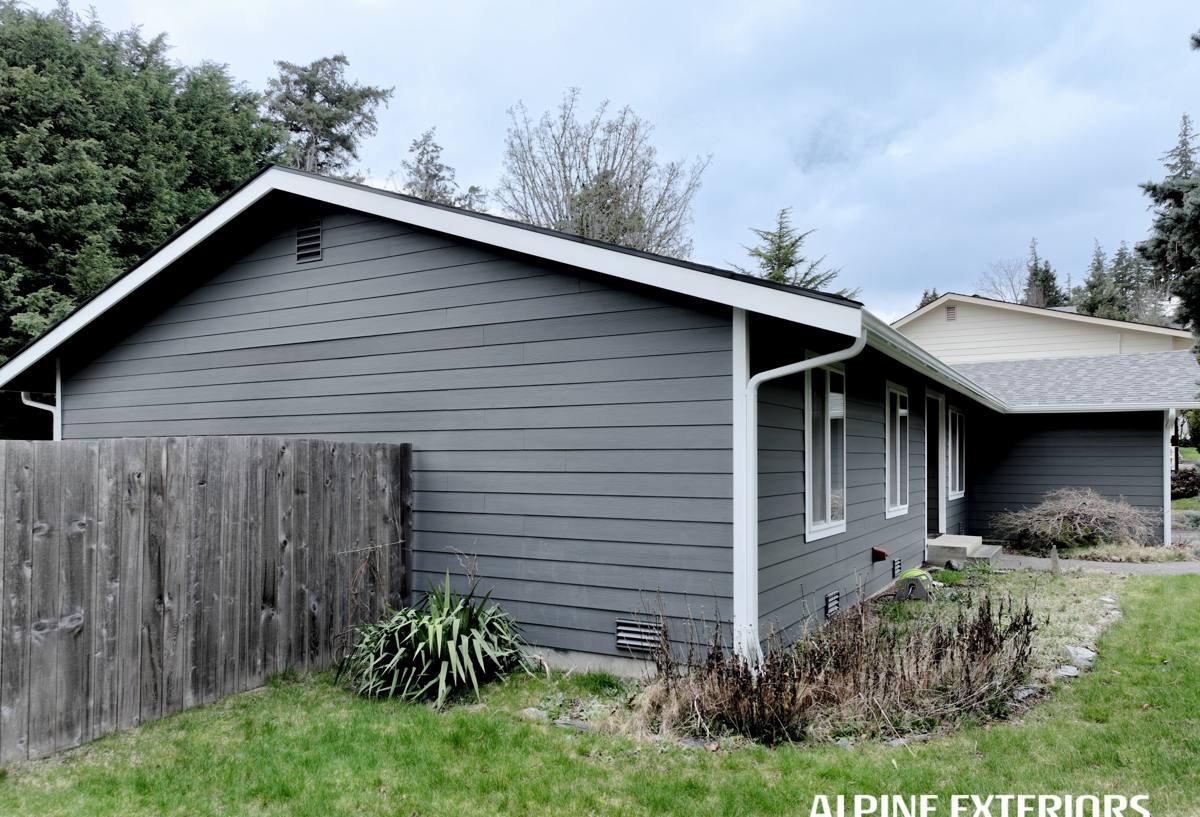
What Damages Siding in This Part of Pinellas County
Salt Air and Corrosion
Proximity to the Gulf means salt-laden air moves through this area constantly, even on days without a storm. Salt is corrosive to fasteners, trim flashing, and any exposed metal components tied into the siding system. Over years, corroding fasteners loosen, staining runs down the siding face, and small gaps open up that let water behind the cladding. This is one of the most common root causes we find when a homeowner calls about "siding that just looks bad" — the visible problem is cosmetic, but the cause is a corroded fastener nobody can see from the ground.
Wind-Driven Rain
Ordinary rain falls straight down and sheds off siding as designed. Wind-driven rain during Gulf storms and summer thunderstorms drives moisture sideways and upward, forcing water into laps, seams, and any gap in caulking or flashing that would otherwise stay dry. Repeated wind-driven rain events are why siding failures here so often start at butt joints, around window and door trim, and at inside corners — the exact spots where wind pushes water hardest.
UV Exposure
Florida's sun is intense and constant, not seasonal. UV breaks down caulking, dries out and cracks unprotected wood trim, and fades unprotected finishes faster than manufacturers' national averages assume. A caulk joint rated for a 10-year service life in a mild climate can fail years early under this level of sun exposure, which opens the door for water intrusion behind the siding.
Storm and Wind Events
Hurricane-force winds don't have to make direct landfall to cause damage. Straight-line gusts during a tropical system passing offshore can lift panel edges, rack loose sections, and drive debris into siding. Even minor storm damage that looks superficial can compromise a panel's water-shedding ability if it's not addressed before the next event.
Signs Palm Harbor Homeowners Should Watch For
- Streaking or dark staining running down from seams, corners, or trim
- Soft or spongy spots when you press on siding near the bottom courses or around windows
- Visible gaps, cracking, or missing caulk at butt joints and trim lines
- Panels that look slightly warped, bowed, or no longer flat against the wall
- Peeling or bubbling paint/finish, especially on south- and west-facing walls
- Rust streaks below fastener heads or metal flashing
- A musty smell or visible mold near baseboards on interior walls that share an exterior siding wall
Any one of these on its own might be minor. Several together, especially after a named storm has passed through the area, are worth a professional look before the next wind-driven rain event pushes more water behind the wall.
What a Correct Siding Repair Actually Involves
A lot of "siding repair" in this market is really just cosmetic patchwork — caulk over the crack, maybe a coat of paint, call it done. That approach doesn't hold up here, and it usually just delays a bigger repair by a year or two while moisture keeps working behind the surface. A repair done right has a few non-negotiable steps:
- Find the actual entry point. Visible damage and the actual water path are often in different spots. We trace moisture back to its source — a failed seam, a corroded fastener, a gap in flashing — instead of just patching what's visible.
- Check what's behind the siding. If water has been getting in, the sheathing and house wrap behind the siding need to be inspected. Repairing the surface over compromised sheathing just hides a bigger problem.
- Replace, don't just patch, damaged sections. Cracked, soft, or delaminated siding gets cut out and replaced with matching material, properly integrated with the surrounding panels — not smeared over with sealant.
- Reseal and reflash correctly. Any seam, joint, or trim intersection that's opened up gets proper flashing and a sealant rated for exterior, high-UV use — not a generic caulk tube grabbed off a shelf.
- Match the finish. Repairs should blend with the surrounding siding, not stand out as an obvious patch.
Repair or Replace: How We Help You Decide
Not every damaged section needs a full re-side, and we're not going to tell you it does. But there's a point where repeated repairs cost more over time than addressing the underlying siding system. Here's the general framework we use when we're standing at a Palm Harbor-area home:
| Situation | Usually a Repair | Usually Worth Discussing Replacement |
|---|---|---|
| Isolated damage (impact, one bad seam, one cracked panel) | Yes | — |
| Damage limited to one wall or elevation | Yes, in most cases | If that wall has failed more than once |
| Widespread staining, soft spots, or warping across multiple walls | — | Yes |
| Siding material is original and 20+ years old | Case-by-case | Often, once repair costs start stacking up |
| Recurring failures at the same location after prior repairs | — | Yes — indicates a systemic issue, not a one-off |
| Underlying sheathing shows rot or sustained water damage | — | Yes |
We'll always give you the honest read on which side of that line your home falls on, with our reasoning, not just a sales pitch toward the bigger job.
Why We Repair With — and Recommend — James Hardie Fiber Cement
When a repair calls for replacing sections of siding, or when a homeowner decides the underlying material has run its course, we work exclusively in James Hardie fiber cement. It's not the only siding product on the market, and we're upfront about why we standardized on it rather than offering everything: fiber cement is non-combustible, holds up to sustained humidity and salt air better than wood-based or vinyl alternatives, and doesn't warp or soften the way some materials can after repeated wind-driven rain exposure. Hardie's ColorPlus factory finish is engineered for high-UV climates like ours, which matters when you're trying to avoid the same fade-and-crack cycle in five years that brought you to a repair in the first place.
Practically, this also means repair work blends cleanly — we're not trying to match a patch of one manufacturer's product to another's, and any replaced sections come with the same manufacturer-backed warranty coverage as the surrounding siding.
Our Process for Palm Harbor-Area Repairs
- Inspection: A full walk of the exterior, not just the section you called about — we look at every elevation, corners, and trim intersections, since problems here rarely stay isolated for long.
- Honest diagnosis: We explain what we found, what caused it, and whether it's a spot repair or something bigger — in plain language, with photos of the actual damage, before any work starts.
- Written estimate: Scope and cost factors laid out clearly before we touch anything.
- Repair work: Damaged material removed, underlying structure checked and addressed if needed, replacement siding installed and sealed to spec.
- Final walkthrough: We review the completed repair with you before we consider the job done.
Why a Crew That Already Works Palm Harbor Matters
Siding repair isn't a generic skill you either have or don't — the right approach depends heavily on what a region throws at a house. A crew that mostly works inland, or mostly works in a different climate, doesn't have the same instinct for where salt-air corrosion tends to start, how far wind-driven rain actually travels up a wall during a Gulf storm, or which trim details fail first under constant coastal UV. Working this area regularly means we're not learning those patterns on your house — we already know where to look first, which shortens the diagnostic time and reduces the chance of missing a secondary problem.
It also means we're a known, findable quantity if a repair needs a warranty follow-up down the line, rather than a crew that did one job in the area and moved on.
Get an Honest Look at Your Siding
If you're seeing staining, soft spots, cracked seams, or storm damage on your Palm Harbor-area home, it's worth getting eyes on it before the next round of wind-driven rain makes the problem bigger. We'll give you a straight assessment of what's actually going on, what it will take to fix it, and whether that means a targeted repair or a longer conversation about your siding's overall condition — no pressure either way. Use the form below to request a free estimate.