 Largo Window
 Composite Decking in Pinellas Park: What the Climate Actually Demands
Pinellas Park sits in the middle of a peninsula that takes weather from two directions — Gulf humidity and salt air rolling in from the west, and open exposure to summer storm systems that bring hurricane-force gusts and sideways rain. A deck built here does a different job than a deck built in a dry, inland climate. It has to shed water fast, resist UV breakdown from nearly year-round sun exposure, and keep its fasteners and framing from corroding in salt-laden air. Composite decking is a strong fit for this environment when it's specified and installed correctly, but "composite" isn't one product — board quality, capping, and installation details make the difference between a deck that looks good for fifteen years and one that fades, swells at the edges, or works loose within a few seasons.
We work on decks throughout Pinellas Park and the surrounding Largo area regularly, so this page is about what actually matters for a composite deck build in this specific climate — not a generic rundown you'd get anywhere in the country.
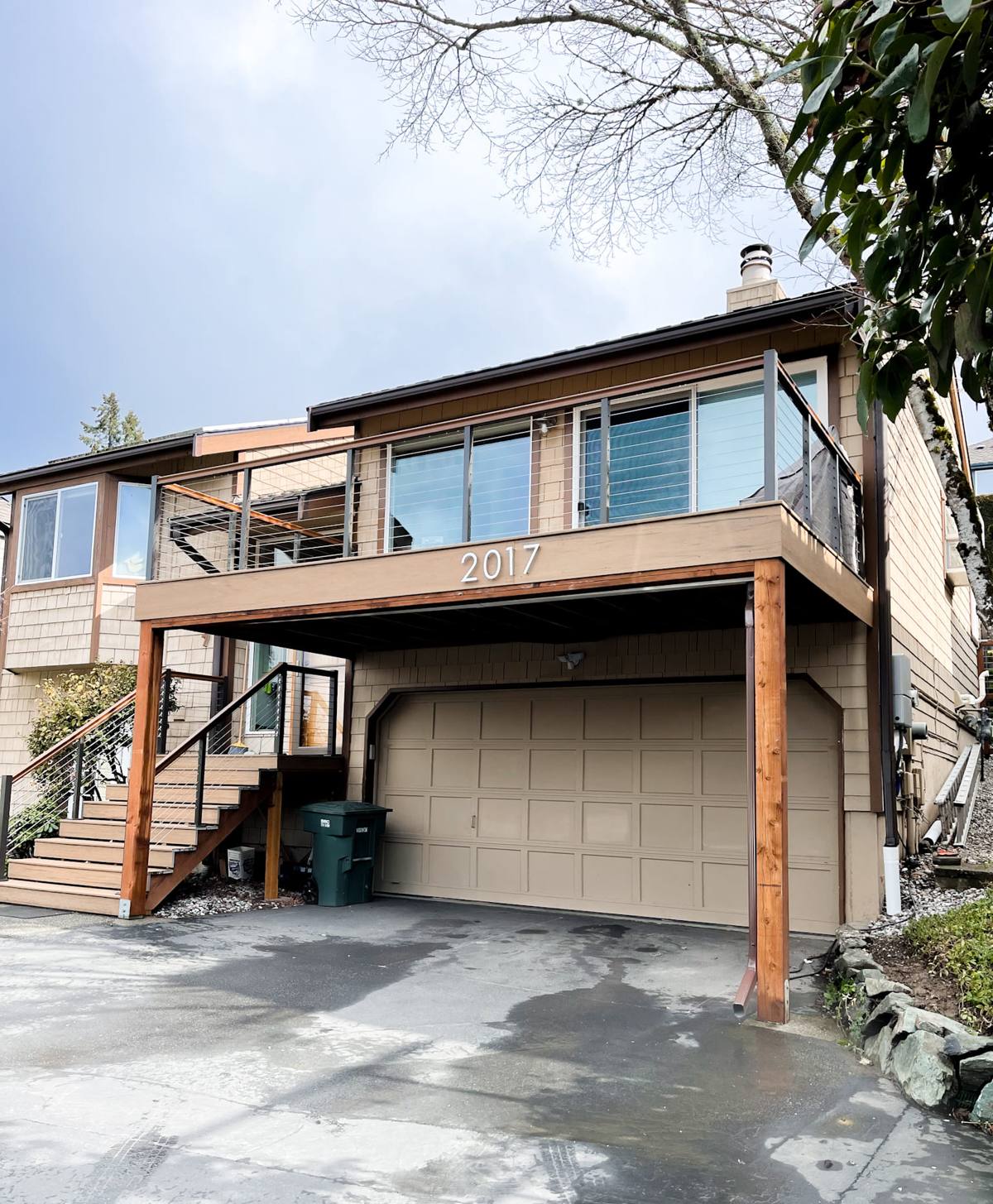
The Three Things That Wear Out a Deck Here
UV Exposure
Central Florida gets intense, direct sun for most of the year. Lower-grade composite boards without a full cap can fade unevenly, especially on the side of the deck that gets the most afternoon sun. Capped composite boards — where a protective polymer shell surrounds the wood-plastic core — hold color far better over time and don't need refinishing the way wood or uncapped composite does.
Wind-Driven Rain
Storms here rarely come straight down. Wind pushes rain sideways and up under rail caps, around post bases, and into any gap that isn't properly flashed or sealed. Water that gets trapped between a deck board and the joist below it, or behind a ledger board against the house, is what causes rot in the framing and staining or cupping in the boards themselves — even when the board material is rated for moisture.
Salt Air
Pinellas County is a peninsula, and salt-laden air travels farther inland than most homeowners assume. It attacks unprotected metal — screws, joist hangers, railing brackets — well before it does any visible damage to the decking material itself. A deck that looks fine on the surface can have corroding hardware underneath if the wrong fasteners were used at install.
What a Correct Composite Deck Build Involves
Framing and Ledger Attachment
The substructure matters more than the decking brand on top of it. Pressure-treated framing rated for ground contact where applicable, proper joist spacing for the specific composite board being used (composite typically needs tighter joist spacing than wood — usually 16" on center, sometimes less depending on the product), and a correctly flashed ledger board where the deck attaches to the house. A poorly flashed ledger is one of the most common sources of hidden water damage on any deck, composite or otherwise.
Fastening and Expansion Gaps
Composite boards expand and contract with heat more than wood does, and Florida decking sees real temperature swings between a summer afternoon and a cool winter night. Board spacing has to account for that movement — too tight and boards buckle in the heat, too loose and the deck feels sloppy underfoot. Hidden fastener systems (versus face-screwing) give a cleaner look and reduce the number of penetration points where water and salt air can reach the substructure.
Ventilation Underneath
Composite decking needs airflow underneath it to shed the moisture that inevitably gets trapped from wind-driven rain and humidity. Skirting or low clearance without ventilation gaps traps moisture against the underside of the boards and the framing, which shortens the life of both.
Choosing the Right Composite Board for This Climate
Not every composite product is built the same way, and the differences matter more here than in a milder climate. The table below is a general comparison of the material categories homeowners in this area usually compare.
| Material | UV/Fade Resistance | Moisture Behavior | Maintenance | Typical Lifespan Here |
|---|---|---|---|---|
| Uncapped composite | Moderate — fades and can chalk over time | Can absorb moisture at cut ends if not sealed | Occasional cleaning; some color loss expected | 15–20 years |
| Capped composite | Strong — polymer shell resists fading and staining | Very good; shell resists moisture intrusion | Low — soap and water cleaning | 25+ years |
| PVC decking | Strong, though can show heat sensitivity in direct sun | Excellent — no wood content to absorb water | Low | 25+ years |
| Pressure-treated wood | Poor without regular refinishing | Prone to cupping, splintering, rot at fastener points | High — annual sealing/staining recommended | 10–15 years with upkeep |
For most Pinellas Park homeowners, capped composite hits the right balance of upfront cost, low maintenance, and durability against sun and salt air. We'll walk through the specific product lines that fit your budget and the look you want during the estimate — we're not going to push one brand over another without a reason tied to your project.
Railings, Fasteners, and Hardware That Actually Hold Up
The decking boards get most of the attention, but hardware failure is one of the more common problems we see on older decks in coastal Pinellas County. Standard zinc-coated screws and brackets corrode faster in salt air than most homeowners expect, especially on decks facing open exposure. Stainless steel or coated marine-grade fasteners cost more upfront but avoid the rust streaking, weakened connections, and premature hardware replacement that come with using standard-grade hardware in this environment. The same logic applies to railing systems — aluminum or composite railing with corrosion-resistant hardware holds up better here than wood rail systems that need repainting or resealing on a regular cycle.
Permitting and Wind Considerations in Pinellas County
Most deck construction and reconstruction work in Pinellas County requires a building permit, and inspections check structural connections — ledger attachment, post footings, joist hangers, and railing height and spacing — against current code. Because this area sees hurricane-force wind events, railing and guard attachment points get real scrutiny; a rail that looks fine but isn't properly through-bolted into blocking is a common point of failure in high wind. We handle the permitting and inspection process as part of the job so you're not left chasing paperwork or guessing whether your deck meets current wind and safety requirements.
Our Process for a Pinellas Park Deck Project
- On-site assessment — we look at the existing structure (if any), grade, drainage, and sun/wind exposure specific to your property.
- Material walkthrough — we go over composite options, colors, and hardware based on your budget and how the deck will be used.
- Permit and plan — we handle the permit submission and structural plan where required by Pinellas County.
- Framing and installation — proper joist spacing, flashing, ventilation, and fastening for the specific board system chosen.
- Final walkthrough — we check board spacing, fastener seating, and railing security before calling the job done.
Maintenance Checklist for Composite Decks in This Climate
Composite decking is low-maintenance, not no-maintenance. A short seasonal routine keeps a deck performing the way it's supposed to in Pinellas Park's conditions:
- Rinse off salt residue and pollen buildup every few weeks, especially after storms
- Clean with mild soap and water a few times a year — avoid pressure washing at close range, which can damage the cap layer
- Check railing posts and hardware annually for corrosion or looseness, particularly on decks with open Gulf-facing exposure
- Keep the area under and around the deck clear of debris to maintain airflow
- Inspect ledger flashing and any wall connection point after major storms
- Address any standing water or drainage issues near footings promptly — moisture at the base of posts is a slow, hidden problem
Why a Crew That Already Works Pinellas Park Makes a Difference
Deck problems in this climate rarely show up where you'd expect. A crew that's used to working in coastal Pinellas County knows to check ledger flashing before it becomes a hidden rot problem, to spec hardware for salt exposure without being asked, and to build railing connections that meet the wind requirements this area actually sees — not just the minimum. That's less about brand loyalty and more about having done this work, in this specific climate, enough times to know where the mistakes usually happen.
If you're planning a new composite deck or replacing an aging one in Pinellas Park, we're happy to take a look and give you a straightforward assessment — no pressure, no upsell. Request a free estimate using the form below and we'll set up a time to come take a look at your property.