 Largo Window
 Why Decks Wear Out Faster in Redington Beach
Redington Beach sits on a narrow barrier island between the Gulf of Mexico and the Intracoastal Waterway, and that location is exactly why decks here have a shorter useful life than decks built twenty or thirty miles inland. Salt-laden air moves across the island constantly, not just during storms. It settles into fastener heads, works its way into joist hangers, and accelerates corrosion on any metal that wasn't specified for a marine environment. Combine that with Florida's intense, near year-round UV exposure and you get wood fibers that dry out, cup, and crack faster than the same lumber would in a shaded, humid inland yard.
Then there's the water itself. Wind-driven rain during summer thunderstorms and tropical systems doesn't fall straight down — it gets pushed sideways into ledger boards, railing posts, and any seam that isn't properly flashed or sealed. On a barrier island, that rain event happens more often and with more force than it does for homes further from the coast. A deck that was built to a generic spec, without those local conditions in mind, tends to show problems well before its structural life should be over: soft spots near the house, rusted-through hardware, splitting boards, and railings that have started to wiggle.
None of this means a deck can't last in Redington Beach. It means the materials, fasteners, and construction details have to be chosen for this specific environment rather than copied from a standard build sheet.
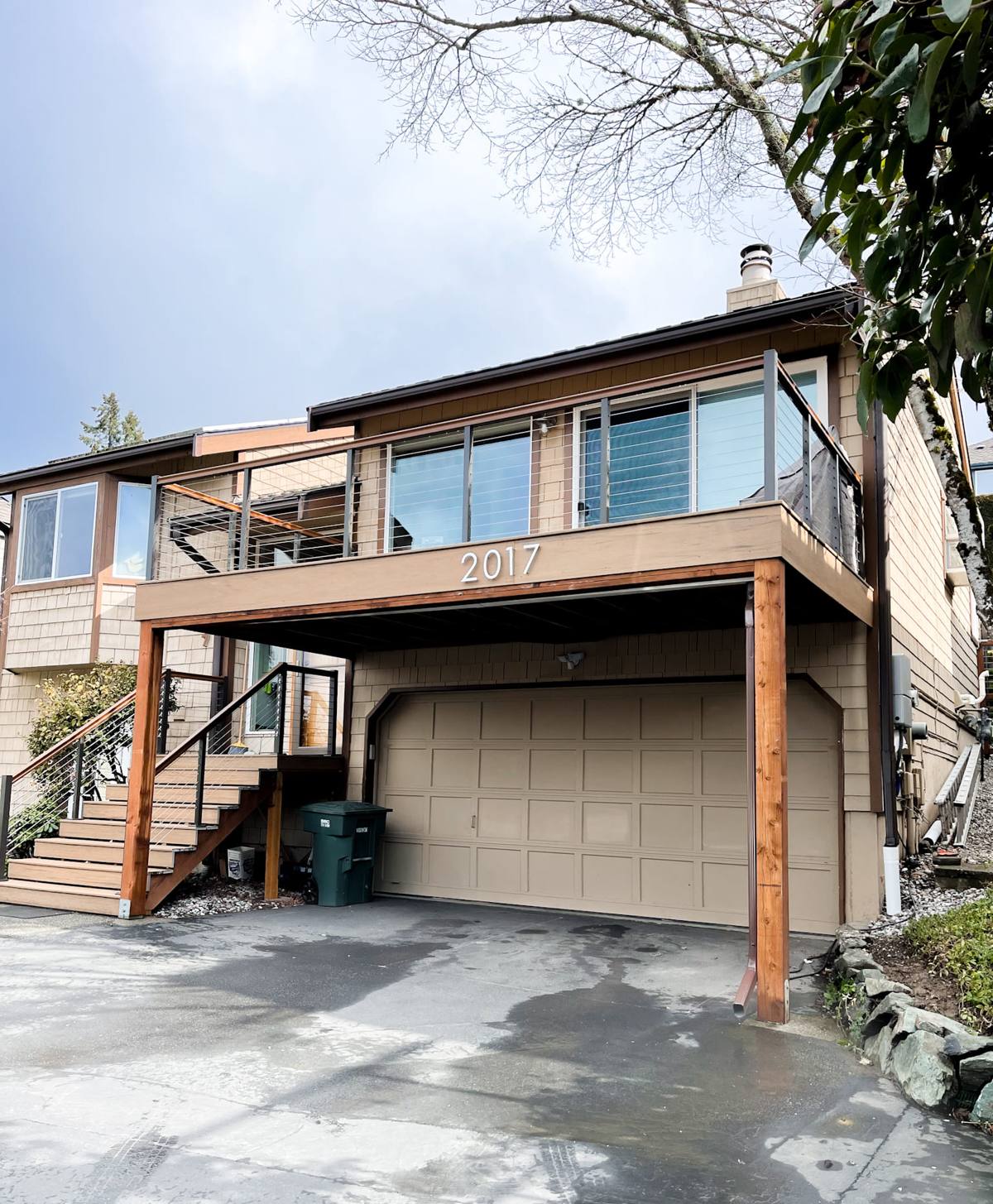
What a Correct Deck Replacement Looks Like Here
A deck replacement done right for a coastal Pinellas County home isn't just about tearing off old boards and nailing down new ones. The structure underneath and the way it's attached to your house matter more than the decking surface itself, especially in an area that sees hurricane-force wind gusts.
Framing and Fasteners That Can Handle Salt Air
Standard electro-galvanized fasteners and hangers corrode quickly in a salt-air environment — sometimes within a few years, well before the deck boards themselves are due for replacement. For a Redington Beach rebuild, that means using stainless steel or heavy-duty coated hardware rated for coastal and treated-lumber contact, along with structural screws instead of nails at critical connections. It's a small cost difference upfront that avoids a failure point hidden under the decking down the road.
Wind Load and Attachment to the Home
The ledger board — the piece that attaches the deck framing to your house — is one of the most common failure points in decks that weren't built or inspected properly, and it's also one of the most important connections to get right in a high-wind coastal zone. It needs correct flashing to keep wind-driven rain from working its way behind your siding, and it needs fastening and, where required, engineered attachment sufficient for local wind load requirements. Post connections, joist hangers, and railing posts all need to be specified for uplift and lateral loads, not just vertical weight, since wind is the force most likely to damage a deck here.
Choosing a Decking Material for a Barrier Island Home
There's no single "best" decking material for every home — it depends on your budget, how much upkeep you want to take on, and how close you are to the water. Here's how the common options actually perform in this climate.
| Material | Salt Air / Moisture Behavior | Maintenance | Typical Lifespan Here |
|---|---|---|---|
| Pressure-treated wood | Prone to fastener corrosion and moisture absorption if not sealed regularly | Annual cleaning and re-sealing recommended | Shorter than inland; depends heavily on upkeep |
| Capped composite | Resists moisture absorption and salt staining well; core is protected by a cap layer | Occasional washing, no sealing or staining | Long, consistent performance with minimal care |
| PVC decking | Fully synthetic, does not absorb moisture or salt; very stable in coastal air | Low — mostly rinsing off salt film and debris | Long, with consistent appearance over time |
| Aluminum decking | Excellent moisture resistance when properly coated; won't rot or splinter | Very low | Long, though a less common look for residential decks |
We don't push one product on every homeowner. Wood has a real cost advantage and a look some homeowners want, but it does require more consistent maintenance to hold up this close to the Gulf. Composite and PVC cost more upfront but trade that for lower long-term upkeep — which matters more here than in most parts of the country, since salt air punishes anything that's neglected. We'll walk through the honest trade-offs for your specific deck rather than defaulting to whatever's easiest to install.
Our Deck Replacement Process
- On-site assessment — We inspect the existing deck structure, ledger connection, posts, and footings to understand what's actually driving the failure, not just what's visible on the surface.
- Plan and material selection — We go over decking material options, railing style, and any structural upgrades needed for wind load or code compliance, and provide a clear written scope.
- Permitting — We handle the permit application and any required documentation for your jurisdiction before work begins.
- Demolition and disposal — Full removal of the old deck, including hardware and any compromised framing, hauled off site.
- Structural rebuild — New framing, properly flashed ledger attachment, and coastal-rated fasteners and connectors installed to code.
- Decking and railing installation — Boards and railing system installed per manufacturer spec, with attention to fastening patterns and spacing for expansion.
- Final walkthrough and inspection — We review the finished deck with you and coordinate any required building department inspection.
Permits, Codes, and Working Locally
Deck replacement in Redington Beach and the surrounding unincorporated areas of Pinellas County generally requires a building permit, and the structure has to meet Florida Building Code wind load provisions for this coastal wind zone. That's not paperwork for its own sake — it's the standard that determines whether your deck's framing, connections, and railing can actually hold up during a tropical storm or hurricane event. Skipping or shortcutting the permit process can leave you with a deck that looks finished but isn't actually built to the load requirements your property is subject to, which becomes a real problem at resale or after storm damage when insurance and code compliance get scrutinized.
A contractor who regularly pulls permits in this specific area already knows the local requirements, inspection expectations, and any additional considerations tied to being on the barrier island. That familiarity keeps the project moving instead of stalling on avoidable back-and-forth with the building department.
Signs Your Existing Deck Needs Replacing, Not Just Repair
Not every deck problem means a full replacement — but in a coastal environment, problems tend to compound quickly once they start. Here's what tells us a repair won't be enough:
- Soft, spongy, or discolored decking near the point where the deck meets the house
- Visible rust streaking from fasteners, hangers, or brackets
- Railing posts that flex or wiggle when pushed
- Gaps opening up between the ledger board and the house siding
- Multiple boards that are cupping, splitting, or delaminating rather than just a few isolated ones
- A deck more than 15-20 years old that has never had its structural connections inspected
- Any sagging or unevenness across the deck surface
If you're only seeing one or two of these on an otherwise sound structure, targeted repair may be enough. If several show up at once, that usually points to a framing or fastener problem that repair alone won't fix — and that's when replacement is the more honest recommendation.
Why a Crew That Already Works Redington Beach Matters
Building a deck for a barrier island home isn't the same job as building one twenty miles inland, even though the blueprint might look similar on paper. A crew that regularly works Redington Beach and the surrounding coastal Pinellas County communities already knows which fasteners hold up, which flashing details actually keep wind-driven rain out, and what the local building department expects to see at inspection. That experience shows up in fewer surprises during the project and a deck that's built for the conditions it will actually face — not a generic spec pulled from somewhere else in the state.
It also means faster response if you ever need a warranty check or have a question after a big storm. A contractor who's already familiar with your neighborhood doesn't need to relearn the local conditions on your dime.
Maintaining Your New Deck in a Coastal Climate
Whatever material you choose, a few habits go a long way toward getting the full lifespan out of a coastal deck:
- Rinse salt film off the deck surface and railings periodically, especially after storms
- Keep gutters and downspouts near the deck clear so runoff doesn't pool against framing
- Check railing posts and stair connections yearly for looseness
- For wood decking, stay on top of sealing or staining on the schedule the product calls for
- Have the structure looked at after any major storm, even if nothing looks obviously wrong
A little routine attention keeps small issues from turning into the kind of structural problems that force an early replacement.
If your deck is showing its age, or you just want a straight answer about whether repair or replacement makes more sense for your Redington Beach home, we're glad to take a look. Use the form below to request a free, no-pressure estimate — we'll walk the deck with you, explain what we find, and lay out honest options before any work begins.