 Largo Window
 Why Decks Near Redington Shores Wear Out Faster Than Inland Decks
A deck built five miles inland and a deck built near the barrier island a short drive from our Largo home base are not living the same life, even though they might look identical on install day. Pinellas County's coastal stretch throws four things at outdoor structures that inland neighborhoods deal with in smaller doses: salt-laden air, near-constant UV exposure, wind-driven rain, and the periodic gut-check of hurricane-force wind loads. None of these is exotic to Florida contractors, but together, close to the water, they compress a deck's normal wear timeline. Fasteners corrode sooner. Finishes chalk and fade sooner. Framing that isn't detailed correctly traps moisture sooner. None of this means a deck near Redington Shores can't last — it means the build has to account for conditions a generic decking crew from outside the area might not think twice about.
Salt Air and Corrosion
Salt in the air settles on everything, including metal that never touches standing water. Standard fasteners and hardware corrode faster this close to the Gulf, which is why the hardware spec matters as much as the decking material itself. A board that looks fine on the surface can be sitting on a fastener that's quietly failing underneath.
UV and Heat
Florida sun is intense year-round, not just in summer, and a west- or south-facing deck near the water gets little relief. UV breaks down color pigments and surface finishes over time, and heat buildup affects how comfortable a deck surface is to walk on barefoot — a real consideration for boards chosen without testing them in full sun first.
Wind-Driven Rain
Rain in this part of Pinellas County rarely falls straight down during a storm. Wind pushes it sideways and up under fascia, into ledger connections, and between boards if gapping and drainage aren't handled correctly. A deck that isn't detailed for wind-driven rain will show it in the substructure years before it shows on the surface.
Storm Wind Loads
Railings, posts, and ledger attachments all have to resist uplift and lateral load during high-wind events. This isn't a cosmetic detail — it's a structural one, and it's part of why decking work here follows Florida Building Code wind provisions rather than generic national defaults.
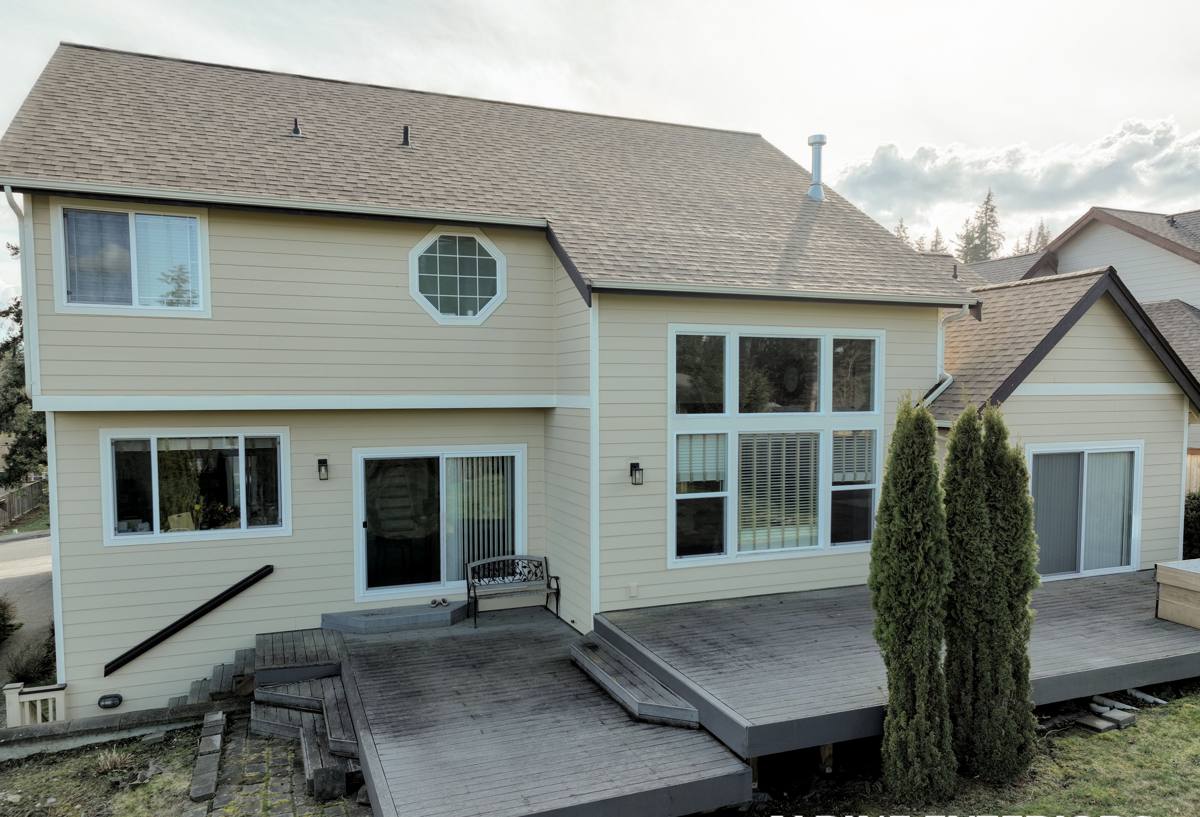
Why Composite Decking Fits This Part of the Coast
Composite decking isn't automatically the right call everywhere, but in a salt-air, high-UV, high-humidity environment it solves problems that wood and pressure-treated lumber struggle with. It doesn't need annual staining or sealing to hold up, it resists the cupping and splintering that humid coastal air causes in real wood, and quality composite boards are engineered specifically to resist fading and moisture absorption. That's a meaningful advantage this close to the Gulf, where a deck gets far more sun and salt exposure than the same product would see even twenty minutes inland.
| Factor | Composite Decking | Pressure-Treated Wood | Natural Hardwood |
|---|---|---|---|
| Maintenance | Periodic cleaning, no staining/sealing required | Annual sealing/staining to prevent rot | Regular oiling to prevent graying and cracking |
| Moisture & salt-air resistance | Engineered to resist moisture absorption | Vulnerable if sealant lapses | Moderate, species-dependent |
| UV fade resistance | Strong with capped boards | Grays without maintenance | Fades and grays over time |
| Upfront cost | Higher material cost | Lowest material cost | Highest material cost |
| Splinter/cupping risk | Low | Moderate to high in humidity | Moderate |
We're not going to tell you wood decking is a bad product — plenty of homeowners like the look and are willing to keep up with the maintenance. What we will say honestly is that for a deck sitting this close to salt air and full Gulf-facing sun, composite removes a maintenance burden that wood simply doesn't let you skip. That's a trade-off worth understanding before you choose, not a sales pitch.
What a Correct Composite Deck Build Actually Involves
Composite boards are only as good as what's underneath them. Most composite deck problems we get called out to fix started with a substructure that wasn't detailed for this climate, not with the decking material itself.
Substructure and Fasteners
Framing needs to be sized and spaced for the specific composite board being installed — manufacturers publish joist spacing requirements, and shortcutting them causes bounce, sagging, and premature wear. Near the coast, fastener selection matters even more than usual; corrosion-resistant hardware rated for the environment isn't optional, it's the difference between a deck that holds together structurally in ten years and one that doesn't.
Ventilation and Drainage
Composite decking sheds water differently than wood, and trapped moisture underneath a deck — especially in Florida's humidity — creates conditions for mold, mildew, and hardware corrosion even though the boards themselves won't rot. Correct builds leave airflow beneath the deck and grade the ground or substructure so water has somewhere to go instead of pooling.
Fascia, Picture-Framing, and Board Gapping
Board spacing has to account for thermal expansion, which is more pronounced in composite than in wood, especially under direct Gulf-facing sun. Get the gapping wrong and boards either buckle in the heat or open up unevenly over a season. Picture-framing the border and detailing fascia correctly also protects the exposed cut ends of boards, which are more vulnerable to moisture intrusion than the capped faces.
Railings and Code Compliance
Railing height, baluster spacing, and post attachment all fall under Florida Building Code requirements, and near the coast the attachment hardware needs to be rated for wind uplift, not just static load. This is a place where cutting corners doesn't show up until a storm tests it.
Our Process, Start to Finish
- On-site assessment. We walk the space, check existing structure if it's a rebuild, and talk through how you actually use the deck — grilling, entertaining, pool access, direct sun exposure.
- Design and material selection. We help you choose board style, color, and railing system based on your home, budget, and how much sun and salt exposure that specific spot gets.
- Permitting. We handle the permit application and inspections required for decking work in the local jurisdiction — this isn't a step homeowners should have to manage themselves.
- Substructure build. Framing, ledger flashing, and fastener installation done to the wind and moisture standards this coastline requires, not a generic national spec.
- Decking, fascia, and railing installation. Boards, picture-framing, and railings installed with proper gapping and code-compliant hardware.
- Final walkthrough. We inspect the finished deck with you, confirm everything meets code, and answer any maintenance questions before we consider the job done.
Cost Factors for a Redington Shores Composite Deck
Every deck is different, so we're not going to throw out a number that doesn't mean anything without seeing your project. What we can do is walk through what actually moves the price up or down.
| Factor | Why It Affects Cost |
|---|---|
| Deck size and shape | Square footage and complexity of angles/cutouts change board waste and labor time |
| Board tier | Capped composite and premium PVC-composite boards cost more than entry-level composite |
| Substructure condition | A rebuild on an existing footprint costs less than new framing from scratch |
| Height and railing requirements | Elevated decks need more substantial railing systems and code-required attachment hardware |
| Fastener and hardware spec | Corrosion-resistant, coastal-rated hardware costs more than standard hardware but lasts longer here |
| Site access | Tight lots or limited equipment access can add labor time |
The honest range for composite decking, as a broad category, runs well above pressure-treated wood on materials but saves money over the life of the deck in maintenance you're not paying for every year. We'll give you real numbers for your specific project during the estimate — not a ballpark pulled from a general price list that ignores your site.
Maintenance Reality: What Composite Actually Needs
Composite decking is low-maintenance, not no-maintenance, and near the coast there are a couple of extra items worth staying on top of.
- Rinse the deck periodically to clear salt residue, pollen, and organic debris before it builds up
- Sweep or hose off sand and grit, which can act like sandpaper on the surface finish if left to grind underfoot
- Check under-deck ventilation isn't blocked by storage, plants, or debris
- Inspect railing posts and fastener points once or twice a year for looseness or corrosion
- Clean spills promptly, especially oil-based products like sunscreen or grill grease
- Avoid pressure-washing at close range or high PSI, which can damage the board's cap layer
Permitting and Code Considerations in Largo and Pinellas County
Decking work in this area is governed by the Florida Building Code and reviewed by the local jurisdiction, and near the coast that review tends to pay close attention to railing attachment, structural connections, and wind resistance. Skipping the permit process might save a little time upfront, but it creates real problems later — unpermitted decks can complicate home sales, insurance claims, and future renovations. We handle permitting as a standard part of the job because it protects you, not because it's a box we have to check.
Why a Crew That Already Works Redington Shores Matters
There's a difference between a contractor who builds decks in general and one who's built them specifically in this stretch of Pinellas County's coastline. A crew that already works near Redington Shores knows what fastener spec actually holds up here versus what looks fine on paper, knows how the local permitting process runs, and has seen firsthand how a poorly detailed deck fails in this environment within a couple of years instead of a couple of decades. That experience shows up in decisions you'd never think to ask about — board gapping tolerances for Gulf-facing sun, hardware coatings rated for salt exposure, drainage details that keep humidity from turning into a hidden mold problem under the boards. It's the difference between a deck that's built to look right on day one and a deck that's built to still be solid in year fifteen.
Signs an Existing Deck Needs Attention
If you're not building new but wondering whether your current deck is holding up, a few warning signs are worth taking seriously before they become bigger problems.
- Boards that feel spongy, bounce, or flex more than they used to
- Visible rust or corrosion around fastener heads or railing posts
- Gaps between boards that have widened or closed unevenly
- Discoloration or staining underneath the deck that suggests trapped moisture
- Railings that feel loose when you put weight on them
- Fading or chalking on the surface finish beyond normal wear
Any of these is worth a look before it turns into a bigger repair — or a safety issue.
If you're weighing a new composite deck or wondering whether your current one needs work, we're happy to come take a look. The estimate is free, there's no pressure, and you'll get a straight answer about what your deck actually needs.