 Largo Window
 Why Clearwater-Area Siding Has to Work Harder Than Siding Inland
Homes in the Clearwater area of Largo sit close enough to the Gulf that the exterior envelope takes a different kind of beating than a house twenty miles inland. Hurricane-force wind gusts test every fastener and joint. Sun exposure runs nearly year-round at an intensity that breaks down cheaper coatings and substrates within a few seasons. Wind-driven rain gets forced sideways into laps, corners, and trim edges that would stay dry in a normal rainstorm. And salt-laden air corrodes metal fasteners, trim, and hardware faster than most manufacturers' warranty language assumes. None of that is exotic knowledge to anyone who has walked a Pinellas County roofline after a summer storm season — but it's exactly the set of conditions that separates siding that lasts fifteen years from siding that lasts thirty.
This page is about one job in one area: siding installation for Clearwater-area homes in Largo. We're not going to give you a generic rundown of siding materials. We're going to explain what this climate demands from an installation, what we actually do differently because of it, and why the crew doing the work matters as much as the product going on the wall.
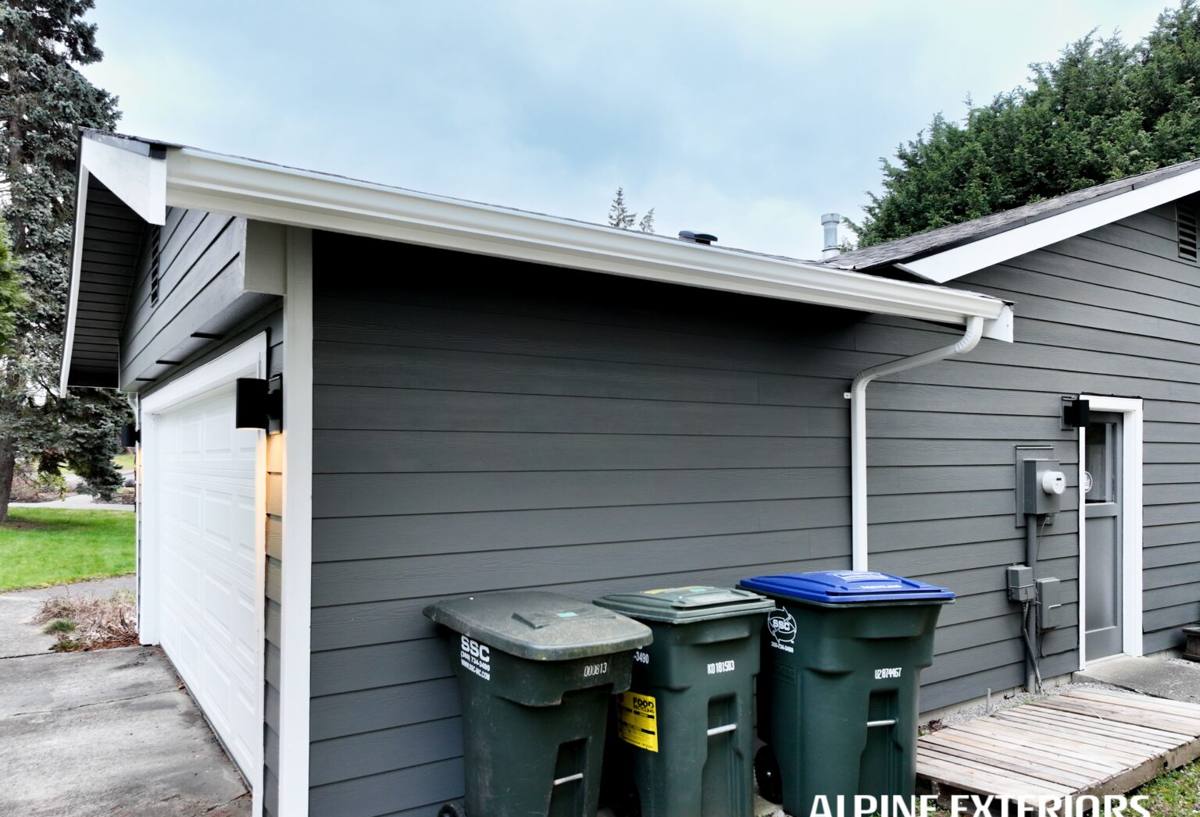
What Local Homes Actually Need From a Siding Job
A siding installation in this part of Florida isn't just a cosmetic upgrade — it's the primary barrier between your framing and a climate that includes hurricane winds, intense UV, and salt air in the same annual cycle. That means the installation has to address a few things a mild-climate job doesn't have to worry about as much:
- Wind uplift resistance — fastener spacing and type have to hold under sustained hurricane-force gusts, not just meet a minimum code baseline.
- Water shedding at every joint — wind-driven rain doesn't fall straight down, so laps, corners, and penetrations need to shed water even when it's coming in sideways.
- UV-stable finish — near-constant sun exposure will chalk, fade, or crack a weak factory finish well before the siding itself wears out.
- Corrosion resistance — salt air attacks unprotected or under-spec fasteners and trim hardware faster than most people expect.
- Moisture tolerance behind the cladding — humidity and occasional wind-driven intrusion mean the water-resistive barrier and flashing details matter as much as the siding itself.
Get any one of those wrong and the failure shows up years later as a soft spot at a butt joint, a streaked and faded wall facing west, or corrosion bleeding through paint at a fastener head. Most siding problems we get called out to inspect in this area trace back to one of these five issues, not to the siding material being inherently bad.
Moisture Management Behind the Cladding
Correct installation starts before a single piece of siding goes up. That means a continuous water-resistive barrier over the sheathing, properly lapped and taped at seams, with flashing integrated at every window, door, and penetration so water is directed out and down rather than trapped behind the cladding. In a climate with regular wind-driven rain, a barrier with a gap or a reverse-lapped seam is a slow leak waiting to happen — often not visible until there's already sheathing damage behind it.
Fastening for Wind, Not Just Code Minimums
Fastener type, length, and spacing all change based on wind exposure category, and Largo's Gulf-adjacent location typically calls for a tighter fastening pattern than homes further inland. We use corrosion-resistant fasteners driven to the manufacturer's specified depth — not the "close enough" hand-nailed approach that's still common on older reroofs and re-sides in this area. Overdriven or underdriven fasteners are one of the most common causes of siding that looks fine at installation but fails in the first major storm.
Trim, Joints, and Caulking Details
Butt joints, corner boards, and trim-to-siding transitions are where most long-term failures start. Correct detailing means back-priming cut edges, using the right sealant for a fiber cement substrate, and leaving proper clearance at the bottom of the wall so the siding never sits in standing water or direct contact with concrete, mulch, or soil.
Why We Install Only James Hardie Fiber Cement
We don't install vinyl, LP SmartSide, Cemplank, Allura, or primed wood siding. That's a deliberate standard, not an oversight. In a climate with hurricane wind exposure, intense UV, and salt air, the trade-offs of those other products show up faster and cost homeowners more over time than the higher upfront cost of doing it right the first time.
James Hardie fiber cement is non-combustible, which matters in wind-driven wildfire and ember exposure scenarios and is increasingly reflected in insurance underwriting. It's engineered specifically for high-humidity, high-UV climates through Hardie's HZ10 product line, which is formulated to resist moisture-related expansion and cracking better than standard formulations. The ColorPlus factory finish is baked on under controlled conditions rather than sprayed on-site, which gives it significantly better UV and fade resistance than field-applied paint — a real advantage given how much sun this area gets year-round. And because it's fiber cement rather than an engineered wood product, it doesn't carry the same vulnerability to sustained moisture exposure that wood-based sidings do.
None of that means other products are junk — vinyl is inexpensive and low-maintenance in mild climates, and engineered wood has a warmer, more traditional look. But for a house that has to survive hurricane season after hurricane season along the Gulf, we've made the call that Hardie is what we're willing to put our name on.
How the Options Actually Compare in This Climate
| Factor | James Hardie Fiber Cement | Vinyl | Engineered Wood (LP-type) |
|---|---|---|---|
| Wind resistance (properly fastened) | High | Moderate — can crack or blow off in high gusts | Moderate to high |
| UV / fade resistance | High (factory ColorPlus finish) | Moderate — can fade or chalk over time | Depends entirely on field-applied paint quality |
| Moisture tolerance | High when installed to spec | High (won't absorb water) | Lower — vulnerable if moisture reaches the substrate |
| Combustibility | Non-combustible | Combustible | Combustible |
| Typical warranty structure | Long-term, transferable | Varies widely by manufacturer | Often installation-sensitive |
Our Installation Process
The process itself isn't dramatically different from a well-run siding job anywhere — the difference is in the details we won't skip because of what this climate demands.
- On-site assessment — we look at existing sheathing condition, current siding type, window and door flashing, and any signs of past water intrusion before quoting anything.
- Tear-off and substrate inspection — old siding comes off and we check the sheathing underneath for rot, delamination, or prior moisture damage before covering it back up.
- Water-resistive barrier installation — a continuous, properly lapped barrier goes on with all seams sealed and flashing integrated at every opening.
- Hardie panel or plank installation — fastened per manufacturer spec at a pattern appropriate for this wind exposure zone, with correct clearances maintained at the foundation, roofline, and all penetrations.
- Trim, corners, and joint detailing — back-primed cuts, proper sealant, and staggered butt joints so no seam lines up in a way that concentrates water.
- Caulking and touch-up — factory-matched caulk at joints and fastener heads, with any field-cut edges sealed.
- Final walkthrough and warranty registration — we document the install and register the manufacturer warranty in your name.
What to Check Before Hiring Anyone for This Job
- Are they licensed and insured to do exterior work in Pinellas County?
- Do they carry manufacturer certification for the specific siding product they're installing?
- Will they show you the fastening pattern and flashing plan before work starts, not just after?
- Do they warranty their labor separately from the manufacturer's material warranty?
- Have they worked on homes in this specific area recently, and can they speak to local wind and permitting requirements without guessing?
- Will cut edges be back-primed and sealed, or just butted together and caulked?
Local Permitting and Wind Requirements
Siding replacement in Largo and the surrounding Pinellas County area typically requires a permit, and the fastening schedule that gets approved is tied to the property's wind exposure category under Florida's building code. This isn't paperwork we treat as a formality — the permitted fastening pattern is the same one that determines whether the siding stays attached in a serious wind event. A crew that pulls permits routinely in this area already knows what the inspector is going to look for; a crew that mostly works elsewhere is learning it on your house.
Maintenance After Installation
Fiber cement siding installed correctly is low-maintenance, but "low" isn't "none," especially this close to the Gulf. A yearly walk-around to check caulking at joints and trim, a rinse to clear salt residue off the surface, and prompt attention to any gutter or downspout issue that's dumping extra water onto a wall section will keep the siding performing the way it's designed to for decades. Repainting, when it's eventually needed, is far less frequent than with field-finished siding because of the factory ColorPlus finish — but it's not never.
Get a Free, No-Pressure Estimate
If you're weighing a siding replacement for a Clearwater-area home in Largo, we're happy to come take a look, walk you through what your specific house needs, and give you a straight answer — no pressure, no upsell. Use the form below to request a free estimate.