 Largo Window
 Siding Repair Built for St. Petersburg's Climate
St. Petersburg sits on a peninsula surrounded by Tampa Bay and the Gulf, which means homes here take on a combination of stresses that inland Florida properties simply don't deal with. Hurricane-force wind gusts test every fastener and seam. Intense, near-constant UV exposure bakes paint and caulk until they crack. Wind-driven rain gets pushed sideways into laps and joints during summer storms. And salt air drifting in off the water accelerates corrosion on anything metal — nails, flashing, trim fasteners — long before it would fail in a drier inland climate. When we're called out for siding repair in St. Petersburg, we're almost always looking at some combination of these four forces working on a home at the same time, which is why a generic patch-and-paint approach often doesn't hold up.
This page focuses specifically on siding repair for St. Petersburg properties — not a full replacement, not a different service area. If your siding is otherwise sound but has isolated damage, deterioration, or moisture problems, this is what a correct repair actually involves and how we approach it locally.
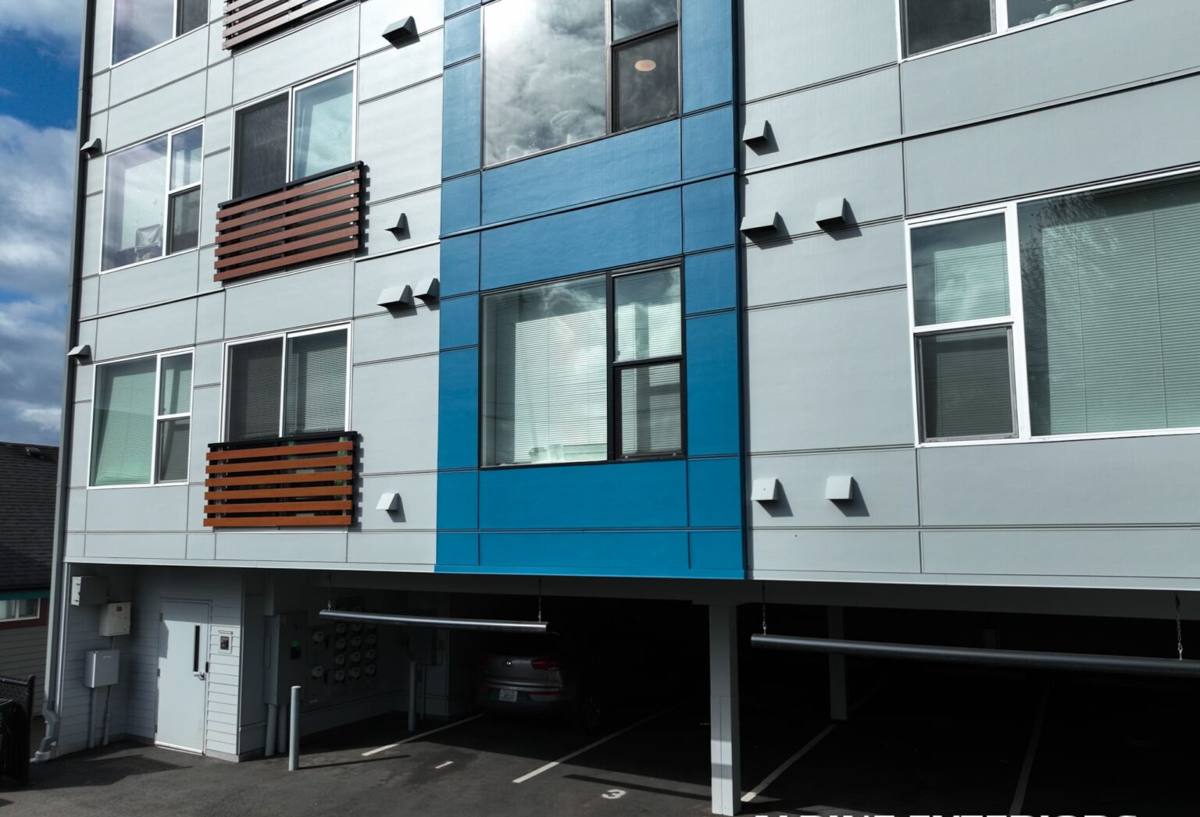
What Siding Repair Actually Covers
"Siding repair" gets used loosely, so it helps to be specific about what we're usually fixing on St. Petersburg homes:
Storm and impact damage
Wind-thrown debris, falling branches, and hail can crack, chip, or knock loose individual panels or boards. This is usually the most obvious type of damage and the easiest to scope, but it's important to check the substrate and house wrap behind the impact point, not just the visible siding.
Moisture intrusion behind seams and joints
This is the damage that worries us most, because it's often invisible until it's advanced. Wind-driven rain forces water into failed caulk joints, poorly lapped seams, or gaps around windows and trim. Once water gets behind the siding, it can rot wood substrate, degrade the weather barrier, and cause staining or soft spots long before anything looks wrong from the curb.
Sun and heat breakdown
Florida's UV load is hard on caulk, sealants, and painted finishes. Caulk that's shrunk, cracked, or pulled away from a joint isn't cosmetic — it's a moisture pathway. Paint that's chalking or peeling on fiber cement usually means the factory or field finish has reached the end of its service life in that spot.
Corrosion-driven failures
Coastal salt air attacks exposed fasteners, flashing, and any galvanized or untreated metal components faster than it would inland. A siding panel that's loose or bowing outward sometimes traces back to a corroded fastener rather than a problem with the panel itself.
Repair or Replace: How We Make That Call
Not every damaged section needs to become a full re-side, and not every "minor" repair should stay a patch job. We look at scope, moisture history, and material condition before recommending either path.
| Factor | Favors repair | Favors replacement |
|---|---|---|
| Extent of damage | Isolated panels or a single elevation | Widespread damage across multiple walls |
| Moisture history | Dry substrate once siding is opened up | Rot, mold, or soft sheathing found behind siding |
| Age of existing siding | Siding is well within its service life | Siding is near or past its expected lifespan |
| Material match | Matching material/profile is readily available | Discontinued color, profile, or product line |
| Fastener/flashing condition | Hardware is sound, isolated corrosion | Widespread fastener corrosion or flashing failure |
When we open up a damaged section and find dry, solid substrate with no history of chronic leaking, a targeted repair is often the right, cost-effective call. When we find rot, mold, or a weather barrier that's failed in multiple spots, patching that area is just delaying a bigger job — and we'll tell you that directly instead of quoting a repair we don't think will hold.
Why the Existing Material Changes the Repair
What your home is currently sided with matters a lot when it comes to repair. If your home has vinyl, LP SmartSide, primed wood, cedar, or another fiber cement brand, an honest repair conversation has to include how that material behaves once it's damaged and reopened to the elements.
Vinyl siding is prone to becoming brittle with UV exposure over time, and matching an older run's color and profile gets harder every year as products are discontinued. Engineered wood products like LP SmartSide perform well when the factory seal stays intact, but once that seal is compromised at a cut edge, fastener hole, or damaged corner, the exposed wood substrate is vulnerable to swelling and rot if moisture gets in and isn't caught quickly. Cedar and primed wood require ongoing paint and caulk maintenance to keep water out, and a repair on a wood product that's already showing wear is often treating a symptom rather than the underlying maintenance gap.
We install James Hardie fiber cement exclusively — it's non-combustible, engineered specifically for high-humidity, high-UV climates through Hardie's HZ10 product line, and finished with a factory-applied ColorPlus coating designed to resist Florida's sun without repainting on a short cycle. When a repair on a non-Hardie home involves replacing a section rather than patching it, we'll walk you through what that section looks like in Hardie versus trying to source a match in the original material — including the honest trade-offs either way. We're not going to tell you your existing siding is garbage; we're telling you what we've standardized on and why, so you can make an informed call about your own home.
Our St. Petersburg Repair Process
A repair that's done right starts with an honest look at what's actually happening behind the siding, not just what's visible from the ground.
- On-site assessment. We inspect the damaged area and the surrounding siding, checking for signs of moisture intrusion beyond the obvious damage point.
- Open and inspect. Where damage suggests possible moisture behind the siding, we open the section to check the substrate, house wrap, and flashing before quoting the scope.
- Scope and honest recommendation. You get a clear explanation of what we found, what needs to happen, and whether that's a targeted repair or a larger section replacement — with reasoning, not upselling.
- Repair to spec. Damaged material is removed, substrate and weather barrier issues are addressed, and new material is installed following manufacturer fastening, clearance, and flashing requirements.
- Seal and finish. Joints are caulked with an appropriate sealant, and any exposed cut edges or fasteners are treated so the repaired section holds up under the same UV and salt exposure as the rest of the home.
What a Correct Repair Actually Involves
Siding repair looks simple from the outside — pull off a damaged piece, put in a new one — but the details are where repairs either last or fail early in this climate.
Fastening and clearance
Fiber cement and most siding materials have manufacturer-specified fastener patterns, spacing, and ground clearance requirements. Skipping these to save time is one of the most common causes of repeat siding failures we see on repair calls.
Weather barrier continuity
If the house wrap or weather barrier was cut or damaged along with the siding, it needs to be properly repaired and integrated with the surrounding barrier — not just covered back over. A siding repair that ignores a torn weather barrier is treating the surface, not the actual leak path.
Flashing at penetrations and transitions
Repairs near windows, doors, or trim transitions need flashing detail that sheds water correctly. This is a common point of failure on wind-driven rain damage, since these transitions take the brunt of sideways-blown water during storms.
Sealant selection and joint prep
Not all caulk performs the same under constant UV and humidity. Joints need to be clean, dry, and sealed with a product rated for the exposure, applied at the right joint width — not just filled to look finished.
Signs Your St. Petersburg Home Needs Siding Repair
- Cracked, chipped, or missing sections of siding after a storm
- Soft or spongy spots when you press on the siding near the base of walls
- Bubbling, peeling, or persistent staining on the siding surface
- Caulk that's cracked, shrunk, or pulled away from joints and trim
- Visible gaps, warping, or buckling in individual panels or boards
- Rust streaks running down from fasteners or metal trim
- A musty smell or visible mold near exterior walls on the interior
- Panels that flex or feel loose when pressed by hand
Any one of these on its own might be minor. Several together, especially after a wind event, usually means it's worth having someone look at what's happening behind the siding, not just at the surface.
Why a Crew That Already Works St. Petersburg Matters
Repair work is judgment-heavy. Deciding whether a section is salvageable, whether the substrate behind it is compromised, and whether a repair will actually hold up through another hurricane season takes experience with how homes in this specific area actually fail — not generic siding knowledge. A crew that regularly works in St. Petersburg and greater Pinellas County has already seen how salt air, wind exposure, and storm patterns play out on homes similar to yours, and knows what to check that isn't always obvious from a quick look. We're also familiar with local permitting expectations and the wind-borne debris and moisture-management standards that apply to exterior work in this part of Florida, so repairs are done in a way that holds up to both inspection and the next storm season.
Get a Straight Answer on Your Siding
If you're dealing with storm damage, a suspicious soft spot, or siding that just isn't holding up the way it used to, we'll come take a real look and give you an honest read on whether it's a repair or something bigger — no pressure either way. Use the form below to request a free estimate for your St. Petersburg home.