 Largo Window
 Belleair Bluffs Decks Take More Abuse Than Most
Belleair Bluffs sits in one of the more exposed pockets of Pinellas County, close enough to the Intracoastal that salt-laden air is a daily fact of life, not an occasional nuisance. A deck here isn't just outdoor furniture with a view — it's a structure that has to survive hurricane-force wind loads, months of intense subtropical UV, wind-driven rain that finds every gap in a fastener or board seam, and a coastal atmosphere that corrodes metal far faster than it would twenty miles inland. Add in Largo's humid, rainy summers and you have a combination that ages decks quickly if they weren't built or repaired with that climate in mind.
Most deck problems we find in this area aren't cosmetic. They start underneath — in the framing, the fasteners, and the connection points — long before they show up as a soft board or a wobbly rail. That's the piece a lot of quick patch jobs miss, and it's the piece we focus on.
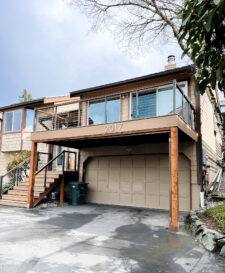
Signs Your Deck Needs Repair (Not Just a Coat of Sealer)
Some deck issues are obvious. Others hide until someone puts weight on the wrong board. Here's what we tell Belleair Bluffs homeowners to check for between professional inspections:
- Boards that feel spongy, springy, or noticeably softer underfoot than the rest of the deck
- Rust streaks bleeding out from screws, nail heads, or bracket hardware
- Railings or posts that flex or wiggle when pushed — this is a safety issue, not a cosmetic one
- Gaps opening up where the deck ledger board meets the house, or daylight visible behind it
- Cupping, splitting, or graying boards that have gone past a simple refinish
- Visible corrosion or discoloration on joist hangers, bolts, or other structural hardware
- Standing water that doesn't drain quickly after rain, or mildew building up in shaded corners
- Stairs that feel loose, uneven, or have started to separate from their stringers
Any one of these on its own might be a small fix. Several together usually mean the deck's underlying moisture management has broken down, which is worth a full inspection before it becomes a bigger repair.
Why Wood Decks Show Damage First
Even pressure-treated lumber has a lifespan, and in a coastal Florida climate that lifespan gets shortened by cycles of soaking rain followed by intense sun. The wood swells, dries, and shrinks over and over, which loosens fasteners and opens hairline cracks that let moisture in deeper each time. Composite and PVC decking resist this differently, but they aren't immune to their own issues — more on that below.
What a Correct Deck Repair Actually Involves
A deck repair that only replaces the boards you can see is a temporary fix. A repair that holds up in Belleair Bluffs weather has to address three layers: the structure underneath, the decking surface itself, and the railings and guards that keep people safe.
Framing and the Ledger Board
The ledger board — the piece that attaches the deck to the house — is the single most important connection on any attached deck, and it's also the piece most likely to be hiding rot or corrosion because it's rarely visible without pulling boards or accessing the underside. We check flashing behind the ledger, the condition of the lag bolts or through-bolts, and whether water has been tracking behind it into the house's rim joist. We also inspect joists, beams, and posts for soft spots, checking with a probe rather than just a visual look, since surface graying can mask deeper decay.
Decking Boards and Fasteners
Replacing individual boards only works if the framing underneath is sound. Once that's confirmed, board replacement should match spacing and fastening patterns to allow for proper drainage and seasonal movement — boards installed too tight will cup and trap water; boards installed too loose invite debris and rot at the edges. Fastener choice matters as much as the board itself in this climate, which we cover below.
Railings, Guards, and Stairs
Railings take constant load from people leaning on them, and in a hurricane-prone area they also take wind load directly. A loose post is rarely just a loose post — it usually means the connection to the framing below has degraded and needs to be rebuilt properly, not just re-screwed into the same soft wood.
Repair or Replace? What We Actually Look At
Homeowners often assume any deck trouble means a full rebuild. Often it doesn't. The honest answer depends on where the damage is and how far it's spread. Here's a general breakdown of the factors that push a project one way or the other:
| Factor | Leans Toward Repair | Leans Toward Replacement |
|---|---|---|
| Ledger board and framing | Solid, dry, no active rot | Soft, rotted, or corroded connections |
| Extent of damage | Isolated boards or hardware | Damage spread across most of the deck |
| Footings and posts | Stable, properly set, no movement | Shifting, undersized, or deteriorated |
| Deck age | Younger deck, one problem area | Older deck nearing the end of its service life |
| Code compliance | Already meets current railing/guard standards | Built before current wind and guard requirements |
| Budget goals | Wants to extend current deck's life | Wants a fresh layout, material upgrade, or added footprint |
We'll tell you honestly which category your deck falls into. A lot of decks we look at in Belleair Bluffs only need targeted structural and surface repair — full replacement isn't automatically the right call just because a deck looks tired.
Our Deck Repair Process
- Full inspection. We check the ledger connection, framing, footings, decking surface, and railings — not just the spot you called about.
- Moisture and damage mapping. We probe suspect areas to find soft wood or corrosion that isn't visible from the surface, so nothing gets missed and covered back up.
- Written scope and estimate. You get a clear breakdown of what needs repair, what's optional, and what we'd flag as a future concern.
- Permitting, if required. Structural repairs involving framing, footings, or railings typically require a permit through the local building department — we handle that process.
- Repair work. Framing and structural repairs happen first, then decking, then railings and finishing details.
- Final walkthrough. We check board spacing, fastener finish, rail stability, and drainage before we consider the job done.
Materials and Hardware That Actually Hold Up Near the Coast
The material you can see is only half the story — the fasteners and hardware underneath are what fail first in salt air, and they're what most patch jobs skimp on.
- Fasteners: We use stainless steel or coated deck screws rated for coastal exposure. Standard zinc-coated screws corrode faster in salt air and are a common cause of streaking and premature failure.
- Structural hardware: Joist hangers, post bases, and connectors should be hot-dip galvanized or stainless rated for ground contact and coastal exposure, not the lowest-grade hardware available at a box store.
- Pressure-treated lumber: For framing repairs, we match treatment ratings to the application — ground contact-rated lumber where it's needed, not just whatever's on the shelf.
- Composite or PVC decking: A reasonable option for the walking surface on many homes, since it resists splintering and doesn't need refinishing as often. It still depends on sound framing and correct fastening underneath, and it still expands and contracts with heat, so installation gaps matter.
We don't push one decking material as universally "the best." Wood costs less upfront and can be repaired board-by-board, but needs periodic sealing and refinishing in this climate. Composite costs more initially and needs less surface maintenance, but a damaged board is a full-board replacement, not a sanding job, and cheaper composite products can fade or stain differently than the manufacturer's samples suggest. We'll walk through the honest trade-offs based on your deck and your maintenance preferences.
Permits and Building Code Basics
Structural deck repairs in Florida — anything touching framing, footings, ledger attachment, or railings — generally require a permit through the local building department, and inspections along the way. This isn't paperwork for its own sake: Florida's building code exists because of exactly the wind loads and storm exposure that Belleair Bluffs and the rest of Pinellas County deal with every hurricane season. Guardrails on most residential decks need to be at least 36 inches high with baluster spacing tight enough that a small child can't pass through, and framing connections need to meet current wind-uplift standards, which are stricter than they were on decks built decades ago. If your deck predates current code, a repair project is often a good opportunity to bring the railing and key connections up to current standards rather than just patching around them.
Why Local Experience in Belleair Bluffs Matters
A crew that regularly works decks in this part of Pinellas County knows what to expect before they even start the inspection — where salt air tends to hit hardest, how sun exposure varies with lot orientation near the water, and which permitting steps the local building department expects for structural repair work. That familiarity saves time and avoids the guesswork that comes with a contractor who mostly works inland and treats every coastal deck like a standard suburban job. It also means we're not learning on your project — we've seen how decks in this exact climate fail, and we build and repair accordingly.
If your deck has soft spots, loose railings, corroding hardware, or just feels like it's past its best days, we're happy to take a look and give you a straight answer about what it actually needs — no pressure, no inflated scope. Reach out for a free estimate using the form below, and we'll walk your deck with you and explain exactly what we find.