 Largo Window
 Why Composite Decking Makes Sense for Clearwater Homes
If you've owned a wood deck in Clearwater for more than a season or two, you already know the routine: sanding, staining, chasing down splinters, and watching boards cup or crack no matter how careful you are. Composite decking was developed specifically to get homeowners out of that cycle. It's an engineered material, typically a blend of wood fiber and recycled plastic, designed to resist moisture, hold its color, and skip the annual refinishing that wood demands.
For homes in Clearwater and the surrounding Pinellas County area, that resistance isn't a luxury — it's a practical response to a climate that is genuinely hard on outdoor building materials. Between the heat, the humidity, and the salt-laden air coming off the Gulf, a deck here works harder than a deck almost anywhere else in the country. Composite decking, installed correctly, is built to take that punishment without turning into a weekend project every spring.
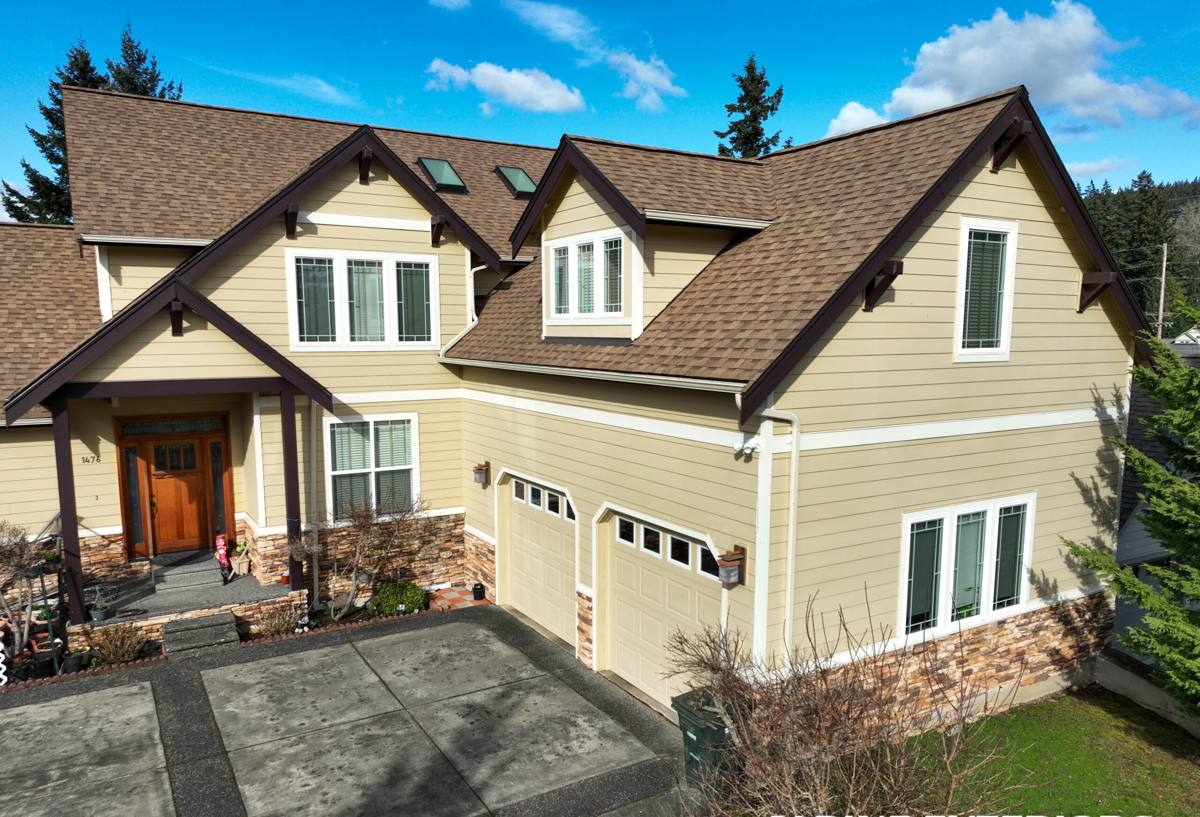
What Pinellas County Weather Actually Does to a Deck
It's worth being specific about what "Florida weather" means for a deck, because each stress does different damage.
Hurricane-Force Winds
Wind isn't just a concern during a named storm. Sustained coastal gusts put real lateral and uplift stress on a deck structure over time. If the framing, ledger connection, and fasteners aren't sized and spaced for that load, movement happens gradually — loose railings, squeaking joints, boards that work themselves free years before they should.
Wind-Driven Rain
Rain in this region rarely falls straight down. It gets driven sideways and up under railings, fascia, and board edges. A deck that isn't detailed with drainage and airflow in mind will trap moisture in exactly the places you can't see — under boards, behind ledger boards, inside post bases — long before any surface staining shows up.
Intense, Year-Round UV
Florida sun is stronger and more constant than in most of the country. Cheaper composite products and untreated wood both fade, chalk, or become brittle under that kind of exposure. UV resistance isn't a marketing line here — it's the difference between a deck that looks the same in year eight and one that looks tired by year three.
Salt Air
Even a few miles inland from the Gulf, salt in the air accelerates corrosion on any exposed metal. Standard fasteners and hardware rust and stain long before the decking itself wears out, which is one of the most common reasons a deck looks "old" well before its structure actually is.
Composite vs. Wood vs. PVC: How They Hold Up Locally
There's no single "best" decking material for every situation, but here's how the three most common options actually perform under Clearwater conditions.
| Material | Moisture & Humidity | UV Fade Resistance | Maintenance | Typical Lifespan Locally |
|---|---|---|---|---|
| Pressure-Treated Wood | Absorbs moisture, prone to swelling/warping | Fades and grays without regular refinishing | Annual staining/sealing recommended | 8-15 years with upkeep |
| Composite (capped) | Highly moisture resistant, won't rot or splinter | Strong resistance in quality products | Periodic washing only | 25-30+ years |
| PVC | Essentially impervious to moisture | Good, though can run hotter underfoot | Periodic washing only | 25-30+ years |
We tend to steer homeowners toward capped composite for most Clearwater projects because it balances moisture performance, cost, and a wood-like appearance well. PVC is a reasonable option for pool decks or fully uncovered, high-sun areas where minimizing heat retention and maximizing moisture immunity matters most. We'll walk through the honest trade-offs for your specific deck rather than push one product across the board.
What a Correctly Built Composite Deck Actually Involves
Composite boards get most of the attention, but the board itself is rarely where a deck fails. Problems almost always trace back to the structure underneath or the details around it.
Substructure and Framing
Composite boards flex differently than wood and often require tighter joist spacing than the manufacturer's minimum wood-decking standard. Framing sized for wood but decked with composite is one of the more common corner-cuts we see on jobs we're asked to inspect or repair — it works fine at first, then bounces and sags over a few Florida summers.
Fasteners and Hardware
Given the salt air along the Gulf coast, standard galvanized fasteners are a liability. We use stainless steel or coated, corrosion-rated hardware throughout, along with hidden fastener clip systems on the board faces themselves, both for the cleaner look and because face screws are one more point where water can work its way in over time.
Ledger Attachment and Flashing
Where a deck attaches to the house is the single most important detail on the entire structure. Proper flashing keeps wind-driven rain from tracking behind the ledger board and into your home's framing — a slow, hidden failure that's expensive to fix once it's found. This is not a place to save time.
Drainage and Airflow
Composite decks over concrete pads or low-clearance areas need deliberate attention to drainage and ventilation underneath. Trapped moisture in a humid climate breeds mold and mildew even on materials that can't rot, and it shortens the life of the substructure regardless of what's on top of it.
Permitting and Code
Decking, railing height, guard spacing, and structural attachment are all governed by Florida Building Code and local Pinellas County/Largo permitting requirements, particularly around wind load in coastal zones. A permitted, inspected deck isn't paperwork for its own sake — it's a second set of eyes confirming the structure was actually built to handle what this climate throws at it.
How Our Process Works
1. On-Site Assessment and Design
We look at your existing structure (if there is one), ground conditions, sun exposure, and how you actually plan to use the space, then talk through board tiers, railing options, and layout.
2. Material Selection
We'll show you real samples and explain the honest differences in price, warranty, and performance rather than steering you toward whatever has the best margin.
3. Permitting
We handle the permit application and coordinate inspections so you're not chasing down the city or county yourself.
4. Framing and Installation
Structure first, always — proper joist spacing, corrosion-rated hardware, and correct ledger flashing before a single composite board goes down.
5. Final Walkthrough
We check every rail, fastener, and edge with you before we consider the job done, and go over basic care so the deck ages the way it's supposed to.
What Affects the Cost of a Composite Deck
Every project is different, but these are the main factors that move the price up or down:
| Factor | Why It Matters |
|---|---|
| Deck size and shape | More square footage and more corners/angles increase material and labor |
| Board tier | Entry-level capped composite vs. premium composite or PVC changes material cost significantly |
| Substructure condition | New framing vs. reusing/reinforcing existing framing affects labor and material |
| Railing type | Composite, aluminum, or cable railing all price differently |
| Height and access | Elevated decks or difficult site access add labor time |
| Permitting and inspections | Required for most Pinellas County deck projects, factored into overall cost |
Rather than quote a broad range that doesn't mean much without seeing your property, we'll walk your site and give you real numbers based on what your specific deck needs.
Caring for a Composite Deck in a Salt-Air, High-UV Climate
One of the appeals of composite decking is how little upkeep it needs compared to wood — but "low maintenance" isn't "no maintenance," especially this close to the Gulf.
- Rinse or wash the deck surface periodically to clear salt residue, pollen, and organic buildup before it feeds mildew growth
- Use a soft-bristle brush and a cleaner rated for composite decking — avoid pressure washing settings strong enough to strip the cap layer
- Check railing posts and fastener points after major storms or hurricane season for any movement
- Keep planters, grills, and furniture feet from trapping moisture against the board surface for long stretches
- Confirm gaps between boards stay clear so water continues to drain instead of pooling
Questions to Ask Before You Hire a Deck Contractor
A deck is a structural project, not just a surface upgrade, so it's worth vetting whoever you hire the way you would any contractor working on your home's frame.
- Are you licensed and insured to do structural work in Pinellas County?
- Will you pull the permit and coordinate the required inspections?
- What fastener and hardware grade do you use, and why?
- How do you handle ledger attachment and flashing against the house?
- What's covered under your labor warranty versus the manufacturer's material warranty?
- Have you built decks in this area that have gone through a hurricane season or two?
Why a Crew That Already Works in Clearwater Matters
A deck built to a generic national spec isn't necessarily built for this coastline. A contractor who already works throughout Clearwater and the greater Largo area knows the local permitting process, understands the wind and flood zone considerations specific to Pinellas County, and has already seen how framing, fasteners, and finishes actually perform here after a few real Florida summers and storm seasons — not just in a brochure. That experience shows up in the details you don't see on install day but will absolutely notice five or ten years down the road.
If you're weighing a new composite deck or replacing a wood deck that's finally worn out, we're happy to take a look and talk through what makes sense for your home. Request a free, no-pressure estimate using the form below and we'll go from there.