 Largo Window
 Deck Repair Built for Seminole's Climate, Not a Generic Fix
A deck in Seminole doesn't age the way a deck in a drier, cooler climate does. Between hurricane-force winds during storm season, intense UV exposure nearly year-round, wind-driven rain that finds its way into every joint and seam, and the steady presence of salt air off the Gulf, a deck here is under constant low-grade attack. None of those forces alone destroys a deck overnight — it's the combination, repeated season after season, that eventually shows up as soft boards, wobbly railings, and rusted-out hardware. Repairing a deck correctly in this part of Pinellas County means understanding which of those forces did the damage, because the fix is different depending on the cause.
This page is specifically about deck repair for homes in and around Seminole. It's not a generic "how decks work" page — it's what we've learned matters most for decks built and maintained in this particular stretch of coastline, where salt exposure and storm intensity are higher than they are further inland.
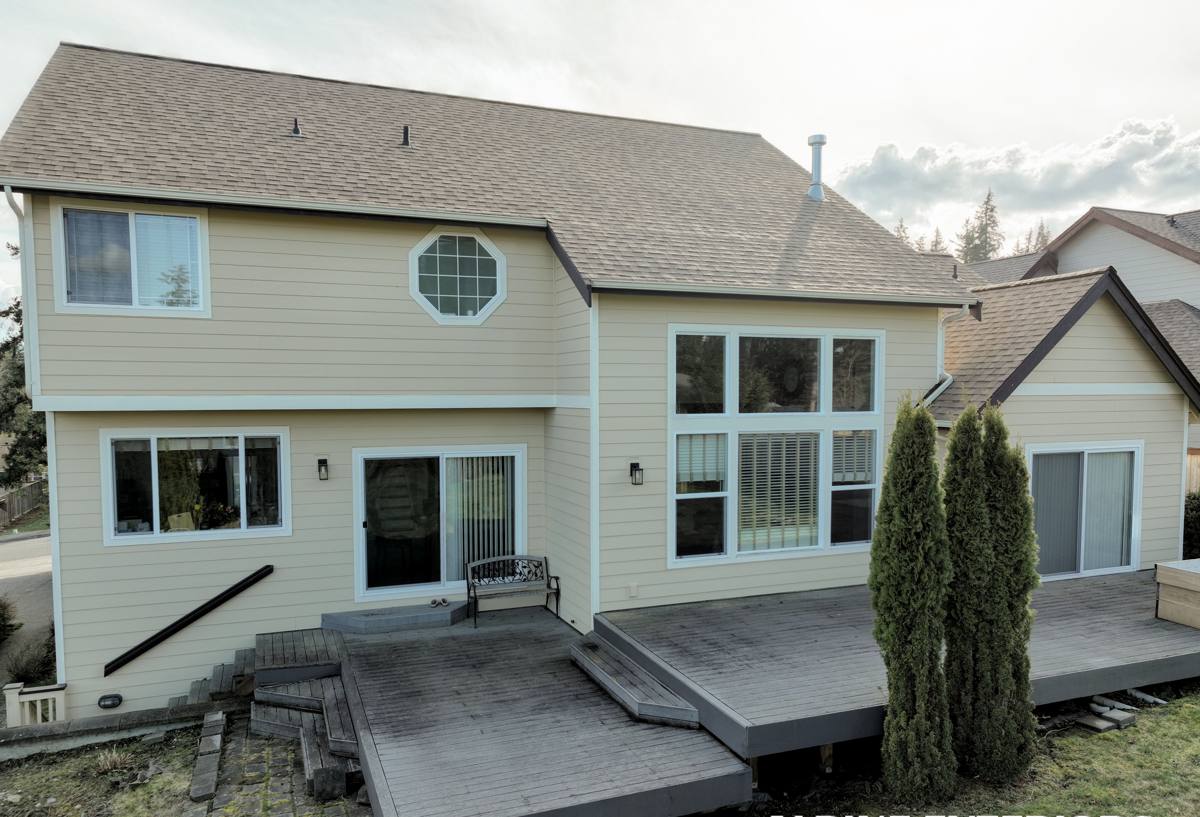
What Florida Weather Actually Does to a Deck
Salt Air and Corrosion
Even homes that aren't directly waterfront pick up salt in the air, and that salt settles on every exposed metal fastener, bracket, and connector on a deck. Standard galvanized coatings break down faster under coastal salt exposure than they would inland, which means nails, screws, and joist hangers can start corroding from the inside out years before the wood around them shows obvious wear. A deck can look structurally fine on the surface while the fasteners holding it together are quietly failing underneath.
UV Exposure
Florida sun breaks down the surface fibers of wood decking and dries out the natural oils that keep boards flexible. Over time this shows up as graying, splintering, and a decking surface that cups or checks (splits along the grain). Composite and PVC decking resist this better than wood, but even those materials can fade or become brittle at the surface over many years of full sun exposure.
Wind-Driven Rain and Moisture
Straight-down rain is manageable for most decks. Wind-driven rain isn't — it gets pushed sideways and upward into board gaps, under railings, and behind ledger boards where the deck attaches to the house. That's where rot usually starts, because that moisture doesn't dry out as fast as water on the open deck surface does. Ledger board attachment is one of the most common failure points we find on repair calls, and it's also one of the most serious, since the ledger carries a large share of the deck's structural load.
Hurricane-Force Wind Loads
Even when a storm doesn't cause visible damage, repeated wind loading racks a deck's frame slightly with each event — stressing connections between posts, beams, and joists. Railings take direct wind load too, and loose or wobbly railings are frequently the first visible sign that connections elsewhere in the structure have loosened.
Signs Your Seminole-Area Deck Needs Repair
Some of these are obvious from a walk-through; others require getting underneath the deck or testing with a screwdriver. If you notice more than one or two of the following, it's worth having a contractor take a real look before it becomes a safety issue rather than a repair job:
- Boards that feel spongy, soft, or flex noticeably underfoot
- Visible splitting, cupping, or graying on the decking surface
- Railings or balusters that wobble or feel loose when pushed
- Rust streaks running down from screws, nails, or metal brackets
- Gaps opening up where the deck meets the house (ledger board separation)
- Stairs that feel less solid than they used to, or steps with uneven spacing
- Visible mold, mildew, or dark staining in shaded or low-airflow areas
- A musty smell coming from underneath the deck
- Fasteners that back out on their own or spin freely without biting into wood
A screwdriver test is one of the simplest ways to check questionable boards yourself: press the tip into the wood at a joint or low spot. If it sinks in easily without much resistance, there's likely rot underneath that a fresh coat of stain or sealant won't fix.
Decking Materials: What Holds Up in Pinellas County
When we repair a deck, part of the conversation is often whether to match the existing material or use the repair as a chance to upgrade a section to something more resistant to this climate. There's no single right answer — it depends on budget, how much of the deck needs work, and how long you plan to stay in the home.
| Material | Upfront Cost | Maintenance | Salt Air & Moisture Resistance | Typical Lifespan Locally |
|---|---|---|---|---|
| Pressure-treated pine | Lowest | Needs sealing/staining every 1-2 years | Fair — treatment resists rot but fasteners still corrode | 10-15 years with upkeep |
| Composite decking | Higher | Occasional cleaning, no staining | Good — doesn't rot, resists moisture well | 20-25+ years |
| PVC/vinyl decking | Highest | Lowest — cleaning only | Best — fully moisture-proof surface | 25+ years |
| Hardwoods (e.g. ipe) | High | Periodic oiling to maintain color | Very good naturally, but installation-sensitive | 20-25+ years if maintained |
For repairs, we typically recommend matching structural framing lumber (joists, beams, posts) to pressure-treated wood regardless of what the surface decking is, since that's what carries the load and it's rarely visible day to day. The surface decking — what you actually walk on and see — is where the maintenance-versus-cost tradeoff matters most, and where it makes sense to consider composite or PVC if you're already replacing a significant section of boards.
Fasteners and Hardware
Given how much salt-air corrosion drives deck failures in this area, we don't cut corners on hardware during a repair. That means stainless steel or coated fasteners rated for coastal/treated-lumber contact, and structural connectors sized correctly for the load they're carrying — not just whatever matches what was there before, if what was there before is part of why the repair is needed.
What a Correct Deck Repair Actually Involves
A repair that only replaces the boards you can see from above is a cosmetic fix, not a real repair, if the underlying structure has issues. A thorough deck repair looks at the whole system:
- Ledger board and house attachment — checking for rot, proper flashing, and secure fastening where the deck meets the structure, since this connection carries significant load
- Posts, beams, and footings — checking for movement, rot at ground contact points, and whether footings have settled or shifted
- Joists and framing — inspecting for rot, corrosion at hangers, and adequate spacing/support under the decking
- Decking boards — replacing individual boards or full sections based on condition, not just appearance
- Railings and guards — testing for looseness and confirming they meet safe spacing and height standards
- Stairs — checking stringers, tread attachment, and stability
- Fasteners and connectors throughout — replacing corroded hardware, not just the boards it was holding
Skipping any of these steps means you might end up with a deck that looks refreshed but still has the underlying weakness that caused the visible symptoms in the first place.
Repair vs. Replace: How We Make That Call
Not every deck problem means starting over, and not every deck is worth patching. The honest answer usually comes down to how much of the structural frame — as opposed to just the surface decking — is affected.
| Factor | Leans Toward Repair | Leans Toward Replacement |
|---|---|---|
| Extent of damage | Isolated boards or a single section | Widespread rot across framing and decking |
| Structural frame condition | Posts, beams, joists are sound | Multiple structural members compromised |
| Age of the deck | Newer deck, one problem area | Deck is old and multiple systems are failing at once |
| Ledger board condition | Attachment point is solid | Ledger is rotted or improperly flashed |
| Code compliance | Meets current railing/spacing standards | Original build predates current safety requirements |
We'll always tell you honestly when a repair makes more sense financially, and we'll also tell you when patching a deck that has deeper structural problems is just delaying an inevitable, more expensive replacement. That call isn't made by guessing — it's made by getting underneath the deck and checking the framing directly.
Our Deck Repair Process
Here's how a typical repair visit works, from first contact through completed work:
- Initial assessment — we walk the full deck, check underneath where accessible, and test suspect boards, railings, and connections
- Honest scope and estimate — you get a clear picture of what's actually wrong, what needs to be repaired versus replaced, and a straightforward cost range before any work starts
- Structural work first — any framing, post, beam, or ledger issues get addressed before cosmetic work, since surface repairs on a weak frame don't hold
- Decking and railing repair — damaged boards, railings, and balusters are replaced with appropriately rated material and corrosion-resistant fasteners
- Final check — we test railings for stability, confirm the deck surface is sound throughout, and walk you through what we did
We don't upsell a full rebuild when a targeted repair will genuinely hold up, and we don't patch over a structural problem just to keep the job small. The goal is a deck that's actually safe and sound for the Florida weather it's going to keep taking, not one that looks fixed for a season.
Permits and Local Requirements
Structural deck work — particularly anything involving framing, footings, or railings — commonly requires a permit in Pinellas County and within Largo's jurisdiction, and inspections are typically part of that process for good reason: a deck that isn't structurally sound is a real safety risk, especially with the wind loads this area sees. Purely cosmetic repairs, like replacing a handful of surface boards without touching the frame, generally have lower or no permit requirements, but structural repairs usually do. We'll tell you plainly when a repair we're scoping crosses into permit territory rather than leaving you to find out later.
Why Hire a Crew That Already Works in Seminole
Deck problems here aren't generic — they're shaped by this specific stretch of the Gulf coast. A crew that repairs decks across a wide range of climates might default to standard fasteners, standard maintenance schedules, and standard assumptions about how fast wood dries out after rain. None of that translates directly to a home dealing with salt air, near-constant UV, and the wind loads that come with Florida storm season. Working regularly in Seminole and the surrounding Largo area means we're used to spotting the specific failure patterns this climate causes — corroded hardware before it's visually obvious, ledger rot from wind-driven rain, railing connections loosened by repeated storm wind — rather than treating every deck the same way regardless of where it sits.
Local familiarity also means straight answers about permitting, realistic expectations about how long a repair will hold up given what this climate does to decks, and a crew that's not learning the area's quirks on your project.
Maintaining Your Deck After Repair
A repair holds longer with a little regular attention, especially in this climate:
- Rinse off salt residue periodically, particularly after storms or high-wind events
- Reseal or restain wood decking on a regular schedule rather than waiting until it visibly grays
- Check railings and stair connections for looseness a couple of times a year
- Keep gutters and drainage clear so water isn't pooling near posts or footings
- Trim back vegetation that keeps sections of the deck shaded and slow to dry after rain
If you're noticing soft spots, loose railings, rust stains, or you're just not sure whether what you're seeing is cosmetic or structural, we're happy to take a look. We offer free, no-pressure estimates for deck repair in Seminole and the greater Largo area — use the form below to get started.