 Largo Window
 Oldsmar sits along the north shore of Tampa Bay in Pinellas County, and homes here take on a specific combination of exterior stress that doesn't let up for long stretches of the year. Hurricane-force wind events, intense and nearly year-round UV, wind-driven rain, and salt-laden air off the bay all work on a home's siding at the same time, and they don't take turns. That combination is exactly why siding material and installation quality matter more here than in a milder climate, and it's why this page focuses on one thing specifically: what a correct fiber cement siding job looks like on an Oldsmar home, and why we only install James Hardie to get there.
What Oldsmar's Exterior Walls Are Up Against
Four things drive most of the siding wear we see on homes in this part of Pinellas County, and they compound rather than acting one at a time. Hurricane-force winds put direct pressure on siding panels and, more importantly, on every seam, corner, and fastener line — a wall can look fine in calm weather and still have marginal details that only get exposed during a real wind event. Intense, near year-round UV breaks down unstabilized finishes and lesser sealants faster than in a more temperate part of the country, which shows up as chalking, fading, and brittle caulk well before a homeowner expects it. Wind-driven rain pushes water sideways into laps and trim lines that were only ever designed to shed water falling straight down, which is a different and harder problem than a simple rain shower. And salt air moving in off Tampa Bay accelerates corrosion in fasteners and metal trim continuously, not just during storms — it's a slow process that never really stops on a home this close to the water.
None of that makes siding a bad investment in Oldsmar. It does mean the material and the installation both have to be matched to what the climate actually does, rather than to what works fine in a drier, calmer region.
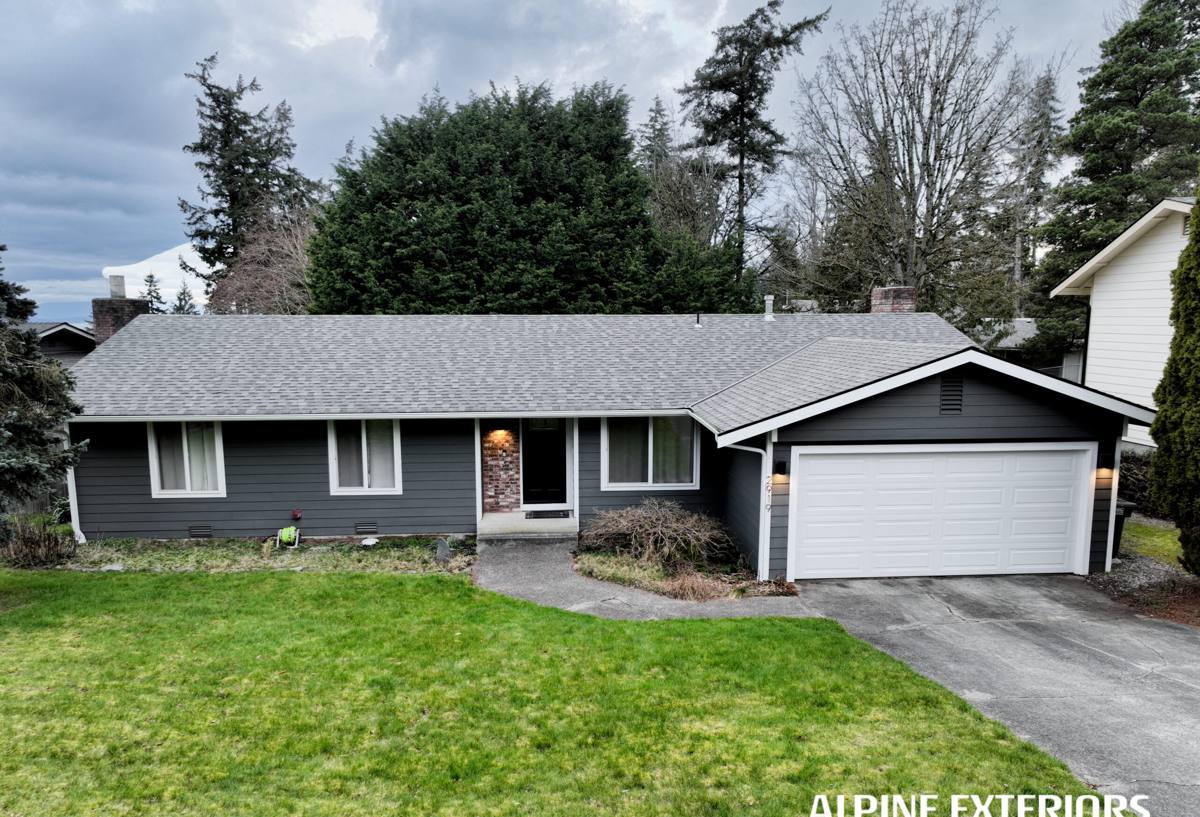
Why Fiber Cement Fits This Climate — and Why We Only Install James Hardie
Fiber cement is made from cement, sand, and cellulose fiber rather than a wood core, which means it doesn't absorb and release moisture the way wood-based or wood-fiber products do. That dimensional stability matters in a climate that swings between saturating rain and intense sun within the same afternoon — materials that swell and shrink with every wet-dry cycle tend to show cupping, checking, and cracked caulk joints much sooner here than they would somewhere calmer. Fiber cement is also non-combustible, which is worth something on its own regardless of climate.
We've standardized on James Hardie specifically, and we don't install other fiber cement brands, vinyl, engineered wood, or solid wood siding. That's a deliberate choice, not a default. Hardie backs its siding with a strong transferable warranty, its ColorPlus factory finish is engineered to hold color and resist fading under sustained UV better than a field-applied paint job, and its HZ5 product line is engineered for the higher moisture and humidity conditions found along the Gulf Coast. Put together, that's a system built with this exact climate in mind rather than a general-purpose product we're asking to perform in conditions it wasn't designed for.
The HZ5 Difference
Hardie makes climate-specific versions of its siding, and the HZ5 formulation is the one engineered for higher-humidity, higher-moisture regions like the Tampa Bay area. It's built to resist moisture-related damage more effectively than a version of the product designed for a drier climate, which matters when a home is dealing with both wind-driven rain and sustained humidity for most of the year.
ColorPlus Factory Finish
A factory-applied, baked-on finish holds up to UV exposure more consistently than a coat of field-applied paint, and it comes with its own finish warranty separate from the substrate warranty. In a climate where UV is close to a year-round condition rather than a summer-only issue, that finish durability is a real factor in how long a home looks good between repaints — if it needs one at all within the warranty period.
What a Correct Installation Looks Like Here
The siding material only does half the job. The other half is installation detail, and in Oldsmar's climate the margin for error on those details is smaller than it would be inland or in a milder region. A correct Hardie installation on a home here accounts for:
- Flashing at windows, doors, and any wall penetration, sequenced correctly with the house wrap so water sheds outward instead of behind the siding
- Corrosion-resistant fasteners, at the type, spacing, and depth Hardie specifies for the product line, since standard-grade fasteners degrade faster in salt air
- Properly sealed and primed cut edges, since an unsealed cut is one of the more common places moisture works its way into fiber cement over time
- Correct clearance between the bottom of the siding and grade, decks, or roof lines, where water tends to collect and sit
- A drainage gap behind the siding so incidental moisture can drain and the wall can dry rather than staying trapped against the sheathing
- Caulk joints detailed for a climate where UV and wind both work on sealant continuously, not just occasionally
Skipping any one of these doesn't usually show up on install day. It shows up two, five, or ten years later, which is exactly why they're worth asking about before work starts rather than after a problem appears.
Situations We See Regularly on Oldsmar Homes
- Re-siding after storm or wind damage — cracked panels, lifted trim, or compromised flashing following a wind event
- Replacing aging vinyl or wood siding — homeowners moving to a material that holds up better to sustained sun, salt air, and wind without the maintenance cycle they've been dealing with
- Additions and renovated wall sections — new construction that needs to be sided to match the rest of the home while meeting current wind and moisture detailing standards
- Full re-sides on older homes — properties where the original siding and its flashing details have simply reached the end of their service life
- Partial repairs that reveal larger issues — a targeted repair that, once opened up, shows flashing or sheathing problems worth addressing before new siding goes back on
Our Process, Start to Finish
- On-site assessment — we look at the existing siding, the wall's wind exposure, and any visible flashing or moisture issues before recommending anything
- Honest scope and product recommendation — which Hardie product line and profile fits the home, explained in plain terms, including why that's the right call for this specific wall
- Material order and scheduling — a realistic timeline, since ColorPlus finishes and certain profiles are built to order rather than pulled from generic stock
- Removal and substrate check — old siding comes off carefully, and any sheathing, framing, or water-resistive barrier issues underneath get addressed before new siding goes up, not discovered after
- Installation — flashing, fastening, and clearance detailed to spec for this climate, not just to the manufacturer's bare minimum
- Finish and walkthrough — trim, caulking, and a final walkthrough so you know exactly what was done and why
Cost Factors on a Fiber Cement Siding Job
| Factor | What Changes the Price |
|---|---|
| Home size and wall complexity | More corners, penetrations, and trim lines mean more flashing and detail work, not just more square footage |
| Existing siding condition | Rot, prior flashing failures, or damaged sheathing found during tear-off add repair work before new siding goes on |
| Product line and profile | Lap width, texture, and trim style all affect material cost; ColorPlus finishes cost more upfront than field-painted siding but reduce repaint cycles |
| Wind exposure | Walls with more direct storm exposure may call for more attention to fastening and flashing detail than a sheltered elevation |
| Access and site conditions | Two-story sections, tight lot lines, and landscaping close to the house can add labor time |
Why Hiring a Crew That Already Works This Area Matters
Manufacturer installation instructions are written for average conditions, and a home on Tampa Bay's north shore doesn't always experience average conditions. A crew that hasn't worked this stretch of Pinellas County regularly can install Hardie siding that looks right on day one and still miss the calls that actually matter here — how much extra attention a flashing lap needs on a wall that catches prevailing wind-driven rain, which fastener spacing actually holds up under real salt exposure versus the code minimum, where a drainage detail needs to be more generous because of how humid the air stays for most of the year.
We work in Oldsmar and the surrounding Pinellas County area regularly, which means those decisions aren't guesses. They're based on what we've seen hold up on homes like yours through actual hurricane seasons, not just what a spec sheet says should work in theory.
If your Oldsmar home needs a full re-side, storm-damage repair, or you're just trying to figure out whether your current siding still has good years left in it, we're happy to take a look and give you a straight answer. Reach out below for a free, no-pressure estimate.