 Largo Window
 Decking Built for Life on the Beach
Indian Rocks Beach sits right on the Gulf, which means any deck here lives a harder life than one ten miles inland. Salt-laden air settles on every surface. Summer sun bakes exposed boards for most of the daylight hours, nearly year-round. Afternoon storms roll in fast and drop hard, wind-driven rain, and every few seasons a tropical system tests how well the whole structure was actually built. A deck that's merely "installed" tends to show its age within a few years out here. A deck that's installed correctly, with the coastal environment in mind from the first support post, holds up the way homeowners expect it to.
This page is specifically about composite decking for homes in and around Indian Rocks Beach. We're not going to give you a generic rundown of composite decking in general terms — we'll walk through what this particular stretch of Pinellas County coastline demands, what a correct installation actually involves, and why local experience matters more here than almost anywhere else in the region.
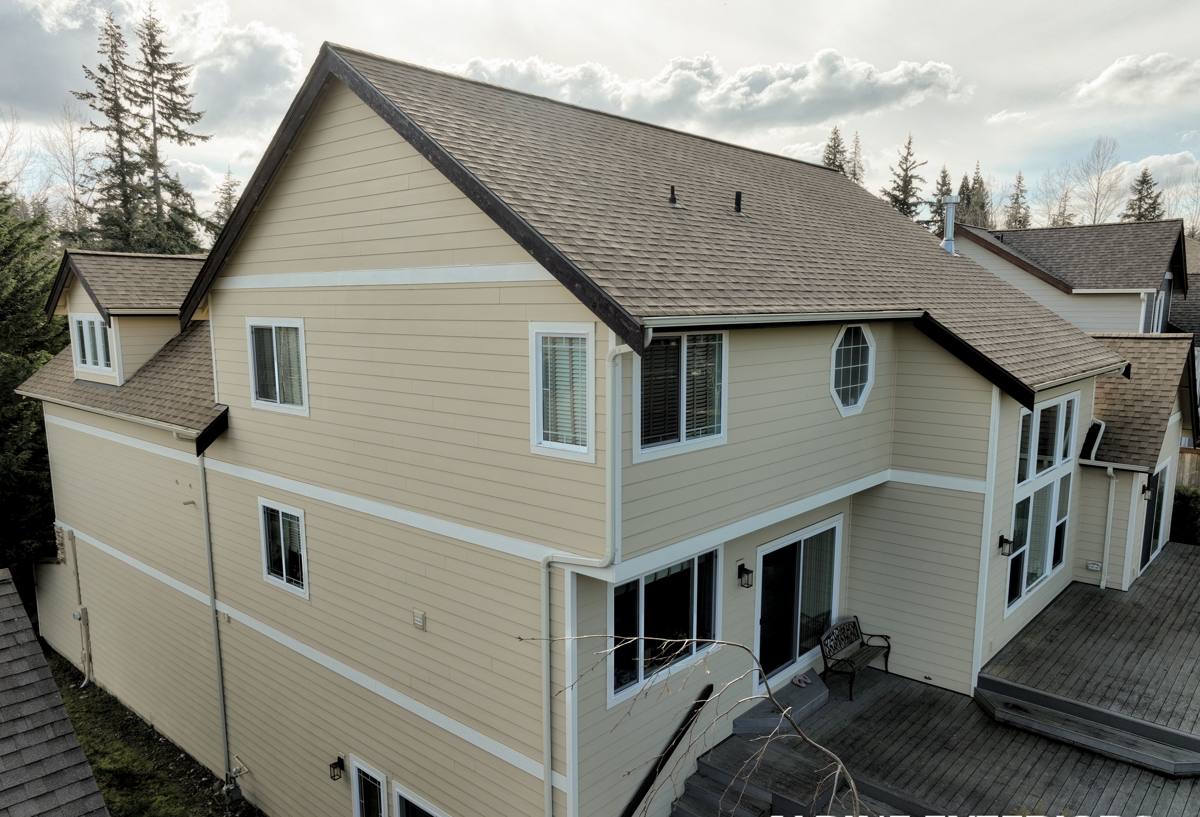
What the Coastal Environment Does to a Deck
Before talking about materials and methods, it helps to understand exactly what a deck in Indian Rocks Beach is up against:
Salt Air and Corrosion
Airborne salt doesn't just affect boats and railings. It settles into every screw head, bracket, and joist hanger on an outdoor structure. Standard fasteners and hardware corrode faster this close to the Gulf than they would even a few miles inland. Over time, corroded fasteners loosen their grip, and a deck that looked fine on the surface can have a weakening frame underneath.
UV Exposure
Florida sun is intense for most of the year, and a west- or south-facing deck near the beach gets little relief from tree cover in most yards. UV breaks down lesser-quality composite materials over time, causing fading, surface chalking, or in poorly made products, a slightly rough or brittle feel underfoot.
Wind-Driven Rain and Moisture Cycling
Composite boards themselves resist rot, but the substructure underneath — joists, beams, ledger boards, and fasteners — still needs to be protected and ventilated properly. Wind-driven rain gets pushed sideways under railings and into gaps that a calm, straight-down rain would never reach. Add in humidity that rarely lets surfaces fully dry out, and any weak point in flashing or fastening becomes a moisture trap.
Hurricane-Force Wind Loads
Pinellas County's building requirements reflect the fact that this is a hurricane-prone coastline. Decking attached to the home, railing systems, and support posts all need to be engineered and fastened to withstand real wind loads — not just look sturdy on a calm day.
Why "Any Composite Decking" Isn't Enough Here
Composite decking as a category is popular because it doesn't need staining or sealing the way wood does, and it resists rot and insect damage. But not every composite product is built the same, and not every installation accounts for the coastal factors above. The board itself is only part of the equation — the fastening hardware, the substructure, the ventilation, and the flashing details all determine whether a deck holds up five years from now, or ten.
Our standard for coastal installs, including anything we build in Indian Rocks Beach, is to use marine-grade or coastal-rated fasteners and hardware rated for high-corrosion environments, hidden fastener systems where appropriate to reduce surface penetration points, and joist and beam spacing that meets or exceeds the manufacturer's requirements for the board profile being installed — never stretched thinner to save material.
What a Correct Composite Decking Installation Involves
1. Site and Structural Assessment
Every project starts with a look at what's actually there — existing framing (if it's a resurface), ledger board condition, drainage around the footprint, and how the deck ties into the home. On barrier island and near-Gulf properties, we also look at elevation and how water moves across the yard during heavy rain, since standing water near posts and footings accelerates problems.
2. Substructure Built for the Coast
Pressure-treated or coastal-rated framing lumber, corrosion-resistant hardware, and joist spacing matched to the composite board manufacturer's specifications. This is the part of the deck nobody sees once it's finished, and it's also the part that determines whether the deck is still solid in ten years.
3. Proper Ventilation and Drainage
Composite boards don't rot, but trapped moisture underneath a deck can still cause problems for framing, fasteners, and anything stored below. We build in airflow and drainage paths so water doesn't pool against the structure.
4. Fastening Method
Hidden fastener systems give a clean surface appearance and reduce the number of penetration points where moisture and salt can work into a board over time. Where face-screwing is appropriate, we use fasteners rated for the coastal environment, not standard hardware.
5. Railings and Guards
Railing systems need to meet Florida's structural and safety code requirements and be secured in a way that holds up to real wind loads — not just decorative attachment.
6. Final Details
Fascia boards, stair treads, picture-frame borders, and trim all get finished with the same coastal-grade hardware as the field of the deck. A deck that looks finished but was fastened inconsistently is the kind that develops problems unevenly over time.
Composite vs. Wood for a Beach-Area Deck
Homeowners near Indian Rocks Beach often ask us to walk through the honest trade-offs between composite and traditional wood decking, given what the coastal climate does to both. Here's how we explain it:
| Factor | Composite Decking | Wood Decking |
|---|---|---|
| Salt air exposure | Resists corrosion in the board itself; hardware still needs to be coastal-rated | Requires regular sealing to resist salt intrusion and graying |
| UV fading | Quality boards resist fading better; lower-grade products can chalk over time | Fades and grays without consistent refinishing |
| Moisture and rot | Board material won't rot; substructure still needs proper protection | Prone to rot and softening if maintenance lapses, especially in humid conditions |
| Maintenance routine | Periodic cleaning; no staining or sealing required | Sealing or staining every 1-2 years in this climate to stay protected |
| Upfront cost | Higher material cost | Lower material cost, higher lifetime maintenance cost |
| Insect resistance | Not a food source for wood-boring insects | Vulnerable without ongoing treatment |
There's no single right answer for every homeowner — some people enjoy the upkeep of a wood deck and like the traditional look. For most Indian Rocks Beach homeowners we talk to, though, the appeal of composite comes down to spending less time maintaining a structure that's already working hard against sun, salt, and storms.
What This Costs, and What Drives the Price
Composite decking pricing depends on several factors, and we'll walk through all of them during an on-site estimate rather than quoting a number blind. In general, the biggest cost drivers are:
- Square footage and deck shape — multi-level decks, curves, and complex layouts take more labor and material than a simple rectangle
- Board tier and brand — composite products range from entry-level to premium, with differences in color retention, warranty length, and surface texture
- Substructure condition — a full tear-out and rebuild costs more than resurfacing sound existing framing
- Railing style — composite or aluminum railing systems vary widely in price and complexity
- Fastening method — hidden fastener systems add labor cost but improve the finished look and reduce surface penetration points
- Site access and elevation — decks built higher off the ground or in tighter side-yard spaces take more time to frame safely
We'll give you an honest, itemized estimate so you know exactly what you're paying for and why, not a single lump number.
Our Process, Start to Finish
- On-site consultation — we assess your existing structure or space, talk through composite board and railing options, and answer questions about how the coastal climate factors into the build
- Written estimate — a clear breakdown of materials, labor, and timeline, with no pressure to decide on the spot
- Permitting — we handle the permitting process required for decking work in Pinellas County so the project is done to code
- Demolition or prep — removal of old decking if applicable, and preparation of the substructure
- Framing — coastal-rated framing and hardware installed to manufacturer and code specifications
- Decking and railing installation — boards, trim, stairs, and railings installed with attention to fastening detail throughout
- Final walkthrough — we go over the finished deck with you, including basic care guidance, before considering the job complete
Simple Maintenance That Keeps It Looking Right
One of the real advantages of composite decking is how little upkeep it needs compared to wood — but "low maintenance" isn't "no maintenance," especially this close to the Gulf. A short seasonal routine goes a long way:
- Rinse or sweep off salt residue and debris periodically, especially after storms
- Wash the surface with mild soap and water a few times a year to prevent buildup in the board texture
- Check railing hardware and fasteners annually for any signs of loosening or corrosion
- Keep gutters and drainage paths near the deck clear so water isn't funneled directly onto or under it
- Trim back vegetation that traps moisture or salt spray against the deck surface
Why Local Experience Matters for This Job
A composite deck built the same way you'd build one in a landlocked subdivision doesn't hold up the same way in Indian Rocks Beach. The difference isn't the board itself — most composite products are engineered to handle sun and moisture reasonably well. The difference is everything around the board: the hardware grade, the fastening method, the substructure protection, and the attention paid to wind and drainage details that matter far more a few blocks from the Gulf than they do inland.
We work throughout Largo and the surrounding Pinellas County coastline, and we build decks with this specific climate in mind every time — not as an upgrade option, but as our standard approach. That's the difference between a deck that needs attention again in a few years and one that's still solid a decade from now.
If you're considering composite decking for your Indian Rocks Beach home, we're happy to walk your property, look at what you're working with, and give you a straightforward, no-pressure estimate. There's no obligation — just an honest look at what the job would involve.