 Largo Window
 Kenneth City Siding Has to Survive Pinellas County Weather, Not Just Look Good
Kenneth City sits in the middle of one of the toughest climates in the country for exterior building materials. Homes here deal with hurricane-force wind gusts during tropical systems, sun exposure that runs hot and intense nearly year-round, wind-driven rain that gets forced sideways into wall assemblies during storms, and a steady dose of salt air rolling in off the surrounding Tampa Bay waterways. Any one of those on its own is manageable. All four hitting the same wall system, year after year, is what actually wears siding out.
That combination is why so many homes in this part of Pinellas County show siding problems well before homeowners expect them: chalking and fading paint, soft or swollen panels at the bottom edge, caulk lines that have shrunk and cracked, and seams that have started to separate. None of that is really about the age of the house. It's about whether the siding and the installation behind it were ever suited to this climate in the first place.
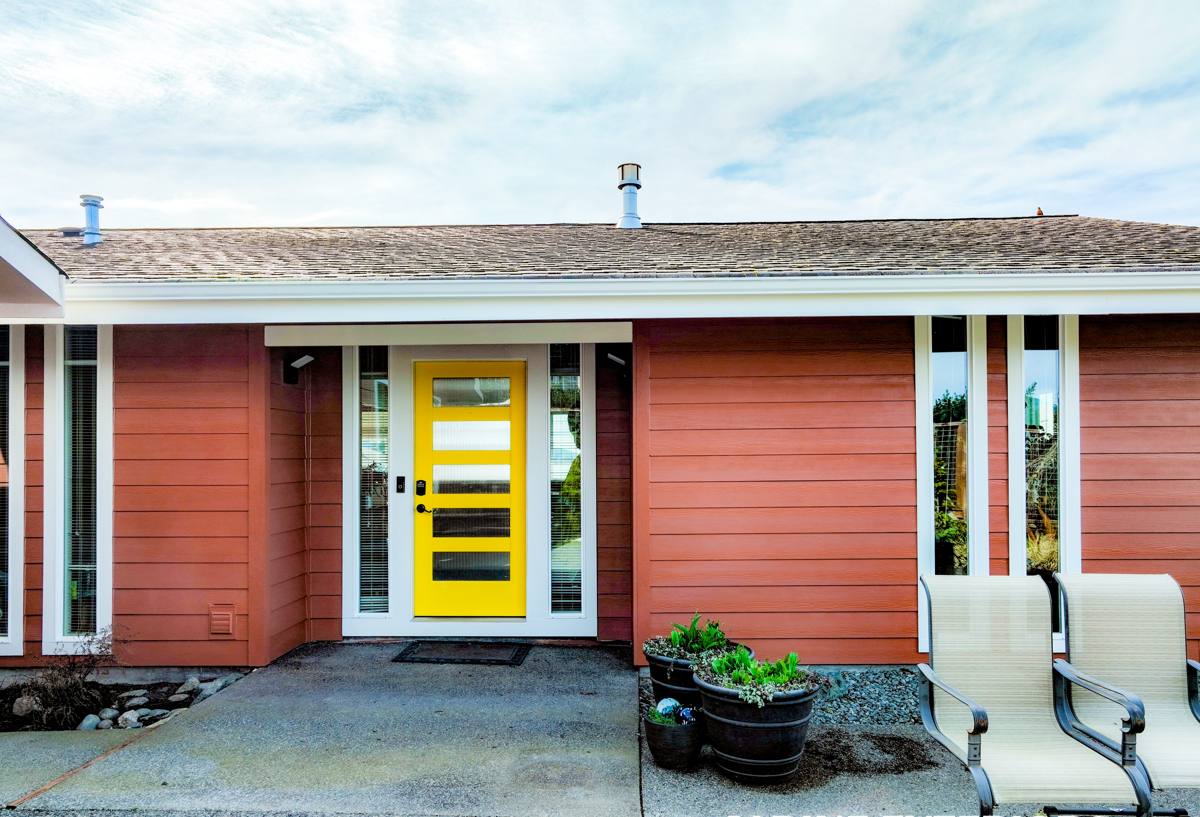
Why We Only Install James Hardie Fiber Cement Siding
We made a deliberate decision to install one siding system, on every job, in every neighborhood we work: James Hardie fiber cement. We don't install vinyl, LP SmartSide, Cemplank, Allura, or primed wood siding. That's not a marketing position — it's a standard we hold because of what we've seen this specific climate do to siding over time, and what actually holds up against it.
A Non-Combustible, Storm-Tough Core
James Hardie siding is made from cement, sand, and cellulose fiber, not vinyl or wood. That composition makes it non-combustible, which matters for insurance and safety, and it gives the panels real rigidity against wind load and flying debris — something that matters directly during Florida's storm season. It doesn't melt, warp, or buckle under direct summer heat the way some other siding materials can.
HardieZone HZ5: Engineered for Exactly This Climate
James Hardie engineers its products for specific climate zones through what it calls the HardieZone system. Homes in this part of Florida fall into the HZ5 zone, which accounts for high humidity, heavy rain exposure, and the kind of freeze-thaw-free, moisture-heavy conditions we get here. The product formulation and installation guidance are built around that reality rather than a one-size-fits-all national spec.
ColorPlus Technology: A Factory Finish That Doesn't Rely on Field Paint
Most siding failures we see in Pinellas County aren't structural — they're finish failures. Paint fades, chalks, or peels years before the underlying material is actually worn out. James Hardie's ColorPlus finish is baked on at the factory in a controlled environment, which gives it far better resistance to UV fading and coastal salt exposure than a field-applied paint job, and it comes with a color-specific warranty rather than a generic one.
What Kenneth City Homes Typically Need From Their Siding
Kenneth City is a small, established community wedged close to Largo and the rest of central Pinellas County, and the housing stock reflects decades of Florida building practice — block construction with siding accents, additions, gable ends, and second-story sections finished in wood or older fiber-cement products. Those siding sections take the brunt of sun and storm exposure that the block walls underneath don't have to deal with.
Warning Signs Your Current Siding Is Losing the Fight
- Paint that's chalking, fading unevenly, or peeling at seams and edges
- Soft, spongy, or swollen spots, especially near the bottom courses and around windows
- Visible cupping, warping, or panel separation after storms
- Caulk joints that have shrunk, cracked, or pulled away from trim
- Staining or streaking that keeps coming back after cleaning
- Rust bleed around fastener heads
What "Correct" Looks Like in This Climate
Correct siding for a Kenneth City home isn't just the right product — it's the right product installed with the right moisture strategy underneath it. Wind-driven rain during a tropical system doesn't just hit the face of the siding; it gets pushed up under laps and around penetrations. If the water-resistive barrier, flashing, and clearances behind the siding aren't done right, the siding itself can look fine while the wall assembly behind it is taking on water.
What a Correct James Hardie Installation Involves
Moisture Management Starts Before the First Board Goes Up
A proper installation starts with the water-resistive barrier and flashing details around every window, door, and penetration — done correctly before any siding is hung. This is the step that gets rushed or skipped on low-bid jobs, and it's usually invisible once the siding is up, which is exactly why it matters to hire people who won't cut that corner.
Fastening, Clearances, and Joints
James Hardie specifies exact fastener types, spacing, and penetration depth, along with minimum clearances from grade, roof lines, and other flatwork so water has somewhere to go instead of wicking into the bottom edge of the siding. Butt joints get treated and sealed according to manufacturer detail, not just butted together and caulked over.
Trim, Caulking, and Finish Details
The trim package, caulk selection, and touch-up paint all need to be compatible with the ColorPlus finish system to preserve both the look and the warranty. Cheap or mismatched caulk is a common source of early failures at joints and penetrations — it's a small material cost that isn't worth saving on.
James Hardie vs. Other Siding Options for This Climate
| Factor | James Hardie Fiber Cement | Vinyl | Engineered Wood (LP SmartSide) |
|---|---|---|---|
| Wind/impact resistance | High — rigid, dense material | Moderate — can crack or blow off in high wind | Moderate |
| Moisture behavior | Engineered for wet climates (HZ5) | Doesn't absorb water, but seams can leak | Wood-based core is moisture-sensitive if breached |
| UV/color retention | Factory ColorPlus finish resists fading | Fades and can grow brittle in intense UV | Depends on field-applied or factory paint quality |
| Salt air tolerance | Strong, widely used in coastal Florida | Can become brittle faster near salt air | Moisture at cut edges is the main risk point |
| Combustibility | Non-combustible | Combustible | Combustible (wood-based) |
| Warranty structure | Long, transferable, factory-backed finish warranty | Varies widely by manufacturer and grade | Manufacturer-dependent, moisture exclusions common |
We don't say any of this to trash the other materials — vinyl and engineered wood both have legitimate uses and plenty of manufacturers stand behind them. We simply decided, after years of seeing how siding actually performs in Pinellas County's specific mix of sun, salt, and storms, that James Hardie is the one product we're willing to put our name behind on every job.
Our Process for Kenneth City Siding Projects
- On-site assessment — we look at your current siding, the wall assembly behind it where accessible, and any problem areas around windows, corners, and roof lines.
- Product and color selection — we walk you through the relevant James Hardie product lines and ColorPlus color options for your home and budget.
- Tear-off and prep — old siding comes off, the substrate is inspected, and any water-resistive barrier, flashing, or sheathing repairs happen before new material goes up.
- Installation — siding is hung to James Hardie's fastening, clearance, and joint specifications for the HZ5 climate zone.
- Final walkthrough and warranty registration — we review the finished work with you and make sure your product warranty is properly registered.
What to Ask Before You Hire Anyone to Side Your Home
Siding is a big-ticket, long-lifespan investment, and the installation quality matters as much as the product choice. Before you hire any contractor for a job like this, ask directly:
- Are you licensed and insured to do exterior work in Florida?
- Do you specialize in one siding system, or install whatever's cheapest that week?
- What's your specific process for moisture management and flashing behind the siding?
- Can you explain why you'd recommend one product line over another for my home?
- Will I get a written scope of work, not just a verbal estimate?
- Who registers the manufacturer warranty, and what does it actually cover?
A crew that already works regularly in Kenneth City and the surrounding Pinellas County area has already seen how local wind exposure, sun angle, and salt air affect siding on homes like yours — that's not something you can shortcut by hiring the lowest bid from outside the area.
Maintenance and Long-Term Care in a Salt-Air, High-UV Climate
Even the right siding, correctly installed, benefits from basic upkeep in this climate. A periodic rinse-down helps clear salt residue and airborne debris before it builds up on the finish. It's worth walking the exterior after major storms to check caulk lines and trim for new gaps, and keeping gutters and downspouts clear so water isn't dumping directly against the bottom courses of siding. None of this is heavy maintenance — it's the kind of five-minute check that keeps small issues from becoming expensive ones.
If your Kenneth City home's siding is showing its age, or you're planning ahead of the next storm season, we're happy to take a look and give you a straightforward, no-pressure estimate — just fill out the form below.