 Largo Window
 Belleair sees a steady mix of custom new builds, additions, and full teardown-rebuilds, and in almost every one of them the windows are one of the few components that get exactly one chance to be installed correctly. Once the stucco or siding closes around the opening, any shortcuts in flashing, fastening, or product selection are hidden until a storm finds them. This page covers what new-construction window installation actually involves in Belleair specifically, and what it takes to get it right the first time.
New-Construction Windows vs. Replacement Windows: Why the Job Is Different
"New-construction" windows are not a different product line so much as a different installation method. They're built with a nailing fin — a flange around the perimeter of the frame — that gets fastened directly to the wall sheathing before the house wrap, flashing, and exterior finish go on. That's fundamentally different from a replacement or retrofit window, which gets set into an existing finished opening around a wall that's already closed up.
The practical difference is sequencing. On a replacement job, we're working around finished drywall, trim, and siding, and the priority is minimizing disruption to a home that's already occupied. On a new-construction job, we're working directly with the framing crew's schedule, tying into the weather-resistive barrier as it's being installed, and making decisions that get buried permanently once the exterior skin goes on. There's no going back to "just recaulk it" later — the waterproofing detail either gets built correctly at the wall assembly stage or it doesn't.
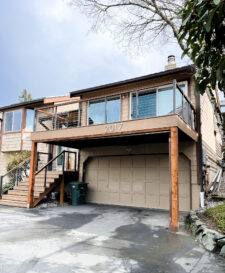
What Belleair's Coastal Climate Demands From New-Construction Windows
Pinellas County sits squarely in Florida's wind-borne debris region, and Belleair's proximity to open water means a new build here deals with the full stack of coastal stress: hurricane-force wind loading, wind-driven rain that gets forced sideways into any gap in the assembly, intense year-round UV that degrades sealants and finishes faster than in shaded inland climates, and salt-laden air that accelerates corrosion on hardware and fasteners. None of these are unique to Belleair, but the combination — and the fact that these are often larger, more exposed lots — means the margin for error on flashing and product selection is smaller than on an inland Largo build a few miles away.
A window that's correctly rated and correctly installed handles all of this quietly for decades. A window that's under-rated for its wind exposure, or correctly rated but poorly flashed, tends to reveal the problem during the first serious wind-driven rain event — as staining, softened drywall, or a failed frame — rather than gradually.
Florida Building Code, Wind Loads, and Impact Requirements
Every new-construction window installed in Pinellas County has to meet a design pressure (DP) rating tied to the specific site's wind exposure category, and it has to carry a valid Florida Product Approval (or accepted Miami-Dade NOA) documenting that the assembly has been tested to withstand that load. This isn't paperwork for its own sake — the rating on the window has to match what the engineer or architect specified for that opening, on that elevation, on that lot. A window pulled from a generic spec sheet without checking it against the actual site conditions is a common source of failed inspections and change orders.
Meeting the wind-borne debris requirement generally comes down to one of a few approaches, each with real trade-offs:
| Approach | How It Meets Code | Day-to-Day Trade-Off |
|---|---|---|
| Impact-rated (laminated) glass | Glass and frame tested as an assembly to resist debris impact and cyclic wind pressure | Higher upfront cost; no separate shutters to store, deploy, or maintain |
| Standard glass + code-compliant shutters | Shutters or panels rated to protect the opening, installed before a storm | Lower glass cost, but requires someone on-site to deploy shutters before every storm |
| Impact glass + shutters combined | Belt-and-suspenders approach some owners choose for extra protection | Highest cost; rarely necessary once impact glass is already specified |
We'll walk through which approach fits the project's budget and the architect's or builder's plans, but the rating and documentation have to be right regardless of which direction is chosen — that's what the inspector is checking, and it's what protects the opening in an actual storm.
Getting the Waterproofing Right: Flashing, Fins, and Wind-Driven Rain
Impact-rated glass gets most of the attention, but wind-driven rain intrusion is the more common failure point on new construction, and it has almost nothing to do with the glass itself. The window opening needs a sill pan to direct any water that gets past the frame back out to the exterior instead of into the wall cavity, and the flashing tape at the head, jambs, and sill has to be integrated with the house wrap in the correct shingle-lap order — each layer overlapping the one below it so water is always directed downward and outward, never trapped behind the wrap.
This sequencing matters more in Belleair than it would somewhere inland, because a wall assembly here is more likely to see sustained wind-driven rain pushed sideways under real pressure, not just vertical rainfall. A flashing detail that would hold up fine in a light rain can still leak under horizontal wind pressure if the laps are reversed or a corner isn't sealed. Because this work disappears behind stucco or siding within days of being done, it's also one of the hardest things for a homeowner or even a general contractor to verify after the fact — which is why it matters who's doing it, not just what product is being installed.
Frame Material and Hardware for Salt Air
Salt air doesn't stop at the waterfront — it travels well inland on prevailing coastal winds, and it's a factor for any Belleair build, waterfront lot or not. Frame material and hardware choice affects how much of that exposure shows up as maintenance down the road.
| Frame Material | Corrosion Behavior in Salt Air | Maintenance Consideration |
|---|---|---|
| Vinyl | Doesn't corrode; UV-stable formulations resist the intense Florida sun | Low maintenance; color and reinforcement quality vary by manufacturer |
| Aluminum | Can pit or corrode over time without proper marine-grade coating | Look for coastal-rated finishes; standard mill finish is not a good fit this close to the coast |
| Fiberglass | Very stable dimensionally and resistant to corrosion | Higher material cost; fewer color/style options than vinyl |
Hardware is just as important as the frame itself. Standard steel screws, hinges, and locks corrode noticeably faster in a coastal air environment, so we specify stainless steel or coated hardware on new-construction jobs in and around Belleair as a standard practice, not an upgrade. It's a small line-item difference that saves a homeowner from replacing seized or rust-streaked hardware within a few years.
Coordinating With Builders, Architects, and Inspectors
New-construction window work doesn't happen in isolation — it has to fit into a framing and dry-in schedule that's often being driven by weather, other trades, and a builder's own deadlines. That means reviewing the window schedule against the architect's specs before ordering (catching mismatched DP ratings or egress requirements before they become a change order), confirming rough openings are framed to the tolerances the manufacturer requires, and being ready to install as soon as the opening is framed so the building envelope can be closed up on schedule.
It also means being available for the inspections that Pinellas County and the City of Largo require at the relevant stages — buck/flashing inspection before the wall is closed, and final inspection once the windows are set. A missed or failed inspection on this stage of a build can hold up the entire dry-in schedule, so scheduling that work correctly the first time matters as much as the installation itself.
Our New-Construction Installation Process
- Review the architect's or builder's window schedule against site-specific wind exposure and code requirements before anything is ordered.
- Confirm each rough opening is framed square, plumb, and to the tolerances the window manufacturer specifies.
- Install sill pan flashing and integrate head, jamb, and sill flashing tape with the house wrap in correct shingle-lap sequence.
- Set and fasten the window per the manufacturer's tested installation instructions — this is what the product approval is actually based on.
- Seal and insulate the perimeter, then document the install for the builder's records ahead of inspection.
- Coordinate directly with the framing crew and building inspector so the wall can close on schedule without gaps in the timeline.
A Practical Checklist Before You Sign a New-Construction Window Contract
- Does the quoted design pressure (DP) rating match the wind exposure category for this specific lot, not just a generic Pinellas County minimum?
- Is the Florida Product Approval or NOA number for the specific window listed on the proposal, not just referenced generally?
- Does the proposal specify the flashing and sill pan method that will be used, or just say "flashed per code"?
- Are stainless steel or coated fasteners and hardware included as standard, given the coastal environment?
- Who is responsible for scheduling and passing the buck/flashing inspection — the window installer or the general contractor?
- What does the warranty cover separately for glass, frame, and labor, and for how long?
Why a Local Largo Crew Matters for a Belleair Build
Wind exposure category, flashing detail, and inspection expectations all vary block by block along the Pinellas County coastline — a crew that regularly works Belleair and the surrounding Largo area already knows which exposure tier applies to a given lot, what the local building department wants to see at buck inspection, and how to sequence work around the framing crews and general contractors active in the area. That familiarity shows up as fewer surprises during inspection and fewer callbacks after the first real storm season, because the details that matter here were treated as standard practice from the start, not worked out on the fly.
If you're planning a new build, addition, or teardown-rebuild in Belleair, we're happy to walk through the window schedule with your builder or architect and put together a straightforward, no-pressure estimate — just fill out the form below.