 Largo Window
 Siding Replacement for Kenneth City Homes
Kenneth City sits in the middle of Pinellas County, tucked between Largo and the rest of the Tampa Bay peninsula, close enough to open water that salt air, humidity, and storm winds are a daily fact of life for every exterior surface on a house. Siding here isn't just a cosmetic layer — it's the first line of defense against sun, water, and wind, and it takes a beating that siding in most other parts of the country never has to deal with. When it's time to replace it, the job needs to be done by people who understand exactly what this climate does to a wall system over time, not just how to nail up new panels.
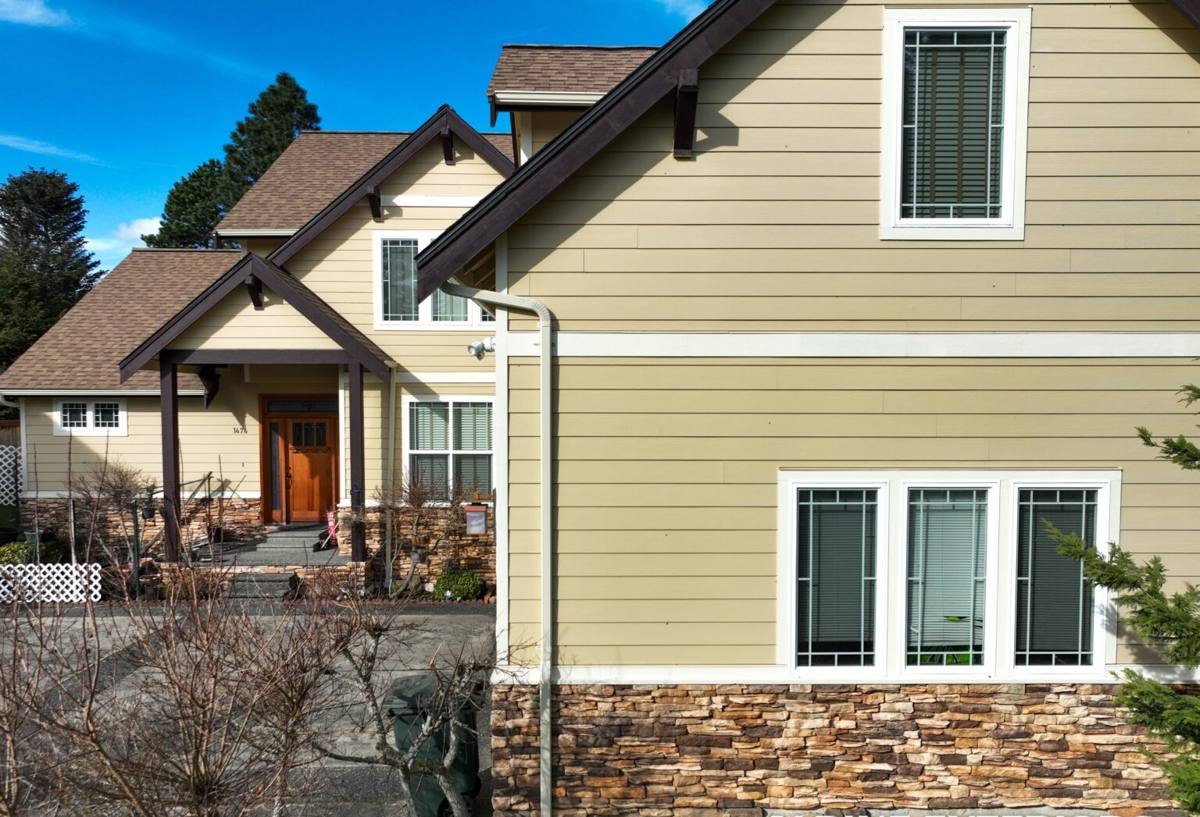
This page focuses specifically on siding replacement for Kenneth City properties — what local homes actually need, what a correct replacement job looks like from tear-off to final caulk line, and why we build every job around James Hardie fiber cement rather than the lighter-duty materials sold at most box stores.
What This Climate Does to Siding
Four things drive siding failure in this part of Pinellas County, and they compound each other:
- Hurricane-force wind events that flex panels, work loose fasteners, and drive rain sideways into any gap in the water管理 system — the joints, corners, and butt seams where most siding failures actually start.
- Intense, near-constant UV exposure that fades paint and breaks down the surface resin of lower-grade composite and wood-based products year-round, not just in summer.
- Wind-driven rain that gets forced up and under lap edges and around penetrations (hose bibs, light fixtures, vents) far more aggressively than in calmer inland climates.
- Salt-laden air that accelerates corrosion of fasteners, trim flashing, and any exposed metal, and slowly degrades paint film and caulk adhesion.
None of these forces is exotic — they're just relentless. A siding system that's marginal on day one, or installed with shortcuts, tends to show real problems in this part of Florida years before it would in a milder climate.
Signs a Kenneth City Home Needs Replacement, Not Repair
Not every siding problem calls for a full tear-off. Part of doing this job honestly is telling a homeowner when a section can be patched versus when the whole elevation needs to come down. Replacement is usually the right call when you see:
- Soft, spongy, or delaminating panels — a sign moisture has been getting behind the siding for a while, often invisible from the street.
- Widespread paint failure or chalking across multiple elevations, not just one sun-exposed wall.
- Warping, buckling, or panels that have visibly pulled away from the wall after wind events.
- Persistent staining, streaking, or a musty smell along interior walls that back up to exterior siding.
- Siding that's simply reached the end of its practical service life — old wood, older composite panels, or vinyl that's brittle and cracking in the sun.
If damage is isolated to one small area and the rest of the wall system is sound, targeted repair can make sense. But when the underlying material itself is failing — which is common with wood-based composite and older vinyl in this climate — patching just delays a bigger tear-off later, usually after more water has gotten into the wall assembly.
What a Correct Siding Replacement Actually Involves
Siding replacement is not just stripping old panels and nailing up new ones. Done right, it's a full inspection and rebuild of the wall's water management system. That means:
Full Tear-Off and Wall Inspection
Every old panel comes off so the sheathing, framing, and existing water-resistive barrier can actually be seen. This is the point where hidden rot, soft sheathing, or old moisture damage gets found — problems that are invisible once new siding goes back up. Skipping this step and re-siding over an existing wall just seals in whatever's already wrong underneath.
Weather Barrier and Flashing Repair
Any compromised house wrap gets replaced, not patched over. Flashing at windows, doors, and roof-to-wall transitions gets checked and corrected — this is the detail work that determines whether wind-driven rain actually gets shed away from the wall or finds its way in.
Correct Fastening and Clearances
James Hardie siding has published fastening patterns, minimum clearances from grade, roof lines, and decks, and specific caulking and flashing requirements at every seam and penetration. In a high-wind coastal climate, following these specs isn't optional paperwork — it's what keeps panels attached and watertight through storm season after storm season.
Trim, Corners, and Finish Work
Corner boards, trim, and soffit/fascia details get replaced or repaired to match, sealed with exterior-rated sealants suited to sun and salt exposure, and finished so the whole elevation reads as one clean system rather than a patchwork.
Why We Install Only James Hardie Fiber Cement
We standardized on James Hardie for every siding replacement we do, including here in Kenneth City, and we don't install vinyl, LP SmartSide, or other composite or wood-based alternatives. That's a deliberate professional standard, not a sales pitch — here's the reasoning:
- Non-combustible material. Fiber cement doesn't feed a fire the way wood-based products can, which matters for insurance and for peace of mind.
- Engineered for this exact climate. James Hardie makes HZ5 product specifically formulated for high-humidity, high-UV, hurricane-prone regions like the Florida Gulf Coast — it's not a generalized national product retrofitted for local conditions.
- Factory-applied ColorPlus finish. The color and UV protection are baked on in a controlled factory process, which holds up to constant sun exposure far better than field-applied paint on wood or composite siding.
- Dimensional stability. Fiber cement doesn't swell, warp, or rot the way wood-based composite can when it gets wet repeatedly, which is a near-certainty in a climate with year-round humidity and wind-driven rain.
- A strong, transferable warranty backed by a large, established manufacturer — meaningful when a product needs to perform for decades in this environment.
We're not going to pretend every alternative product is worthless — vinyl is cheap and lightweight, and modern composite has improved. But when we weigh installation sensitivity, long-term moisture behavior, and how each product actually ages under Gulf Coast sun and storms, fiber cement is what we're willing to put our name behind and warranty our workmanship on.
Choosing the Right Hardie Product for Your Home
James Hardie makes several product lines, and picking the right one depends on the home's style and exposure:
| Product | Typical Use | Why It Fits This Area |
|---|---|---|
| HardiePlank lap siding | Most common wall covering on ranch and traditional homes | Classic horizontal lap look, engineered HZ5 formulation for humidity and storm exposure |
| HardiePanel vertical siding | Modern facades, gable accents, garages | Clean vertical lines, same fiber cement durability |
| HardieShingle | Accent gables, dormers, coastal-style detailing | Textured look without the moisture issues of real wood shingle |
| HardieTrim | Corner boards, fascia, window/door trim | Matches the siding's fire resistance and finish so trim doesn't fail first |
ColorPlus finishes come in a range of factory colors engineered to resist fading under intense Florida sun, which matters more here than in most parts of the country simply because of how many direct-sun hours a Pinellas County wall sees over a year.
Our Siding Replacement Process
Every job follows the same sequence, whether it's a full-house replacement or a single elevation:
- On-site inspection and estimate — we walk the exterior, check for hidden moisture or soft spots where possible, and give an honest assessment of what the job actually requires.
- Scope and product selection — choosing the right Hardie profile, color, and trim package for the home's style and exposure.
- Permitting — siding replacement in Pinellas County typically requires a permit, and wind-load and fastening details get documented to meet current code.
- Full tear-off — removing all existing siding and trim down to the sheathing.
- Wall inspection and repair — addressing any rot, damaged sheathing, or compromised weather barrier found underneath.
- Weather barrier and flashing installation — rebuilding the water management system correctly before a single new panel goes up.
- Hardie installation to manufacturer spec — correct fastening, clearances, and joint treatment throughout.
- Trim, caulking, and finish detailing — corners, penetrations, and transitions sealed and finished.
- Final walkthrough — reviewing the completed job with the homeowner before we consider it done.
What Drives the Cost of a Siding Replacement
Every home is different, but the same handful of factors determine where a project lands within a broad cost range:
| Factor | Why It Matters |
|---|---|
| Home size and wall complexity | More square footage and more corners, gables, and dormers mean more material and labor |
| Condition of the wall underneath | Rotted sheathing or framing found during tear-off adds repair work before new siding can go on |
| Product and profile choice | Plank width, panel style, and shingle accents vary in material cost |
| Trim and accessory scope | Full trim, fascia, and soffit replacement costs more than siding alone but avoids mismatched patch jobs |
| Accessibility | Multi-story sections, tight lot lines, or obstructed access can add labor time |
We give firm, itemized estimates after an in-person inspection rather than guessing over the phone — hidden wall damage is common enough in this climate that a real number requires a real look.
Why a Crew That Already Works Kenneth City Matters
Hiring a contractor who already does regular work in and around Kenneth City and greater Largo isn't just a convenience — it affects the outcome. A local crew already understands Pinellas County's permitting process and wind-load requirements, doesn't need a learning curve on scheduling around Gulf Coast storm season, and has a reputation in the area to protect, which matters when the job includes a workmanship warranty. It also means faster response if something needs a follow-up look after a storm, rather than waiting on a contractor based an hour away.
Before You Hire: A Quick Checklist
- Ask whether the quote includes full tear-off and wall inspection, not just panel replacement over existing siding.
- Confirm the contractor is licensed and insured to work in Florida, and ask to see proof.
- Get the product line and profile in writing — not just "Hardie siding" but which specific product and finish.
- Ask who pulls the permit and how wind-load fastening requirements are handled.
- Get a clear scope on trim, flashing, and soffit/fascia work, since these details determine long-term water performance as much as the siding itself.
- Ask about the workmanship warranty separately from the manufacturer's material warranty.
Get a Free, No-Pressure Estimate
If your Kenneth City home's siding is showing its age, the best next step is an honest, in-person look — not a guess over the phone. Use the form below to request a free estimate, and we'll walk the exterior, explain exactly what we find, and lay out your options with no pressure to commit.