 Largo Window
 Why Clearwater Roofs Wear Differently Than Roofs Inland
A shingle roof in Clearwater doesn't age the same way one does twenty miles inland. Sitting on the Pinellas County coastline means a home's roof is dealing with intense, near-constant UV exposure, salt-laden air moving off the Gulf, wind-driven rain that gets pushed sideways into laps and flashing, and the real possibility of hurricane-force gusts during storm season. None of these forces are hypothetical here — they're the baseline conditions every roof on this stretch of coast has to be built to handle, year after year.
That combination matters because each of these stressors attacks a shingle roof in a different way. UV breaks down the asphalt and drives off the protective granules over time. Salt air accelerates corrosion on exposed metal — fasteners, flashing, drip edge — long before it would fail elsewhere. Wind-driven rain finds any gap in flashing or underlayment and pushes water uphill, against gravity, into places a normal rain never would. And straight-line or hurricane-force wind tests every single nail in the roof, not just the ones along the edges. A roof that's installed to a generic standard, rather than to what Clearwater actually throws at it, tends to show its age early — granule loss, curling edges, lifted tabs, and leaks that show up two or three years before they should.
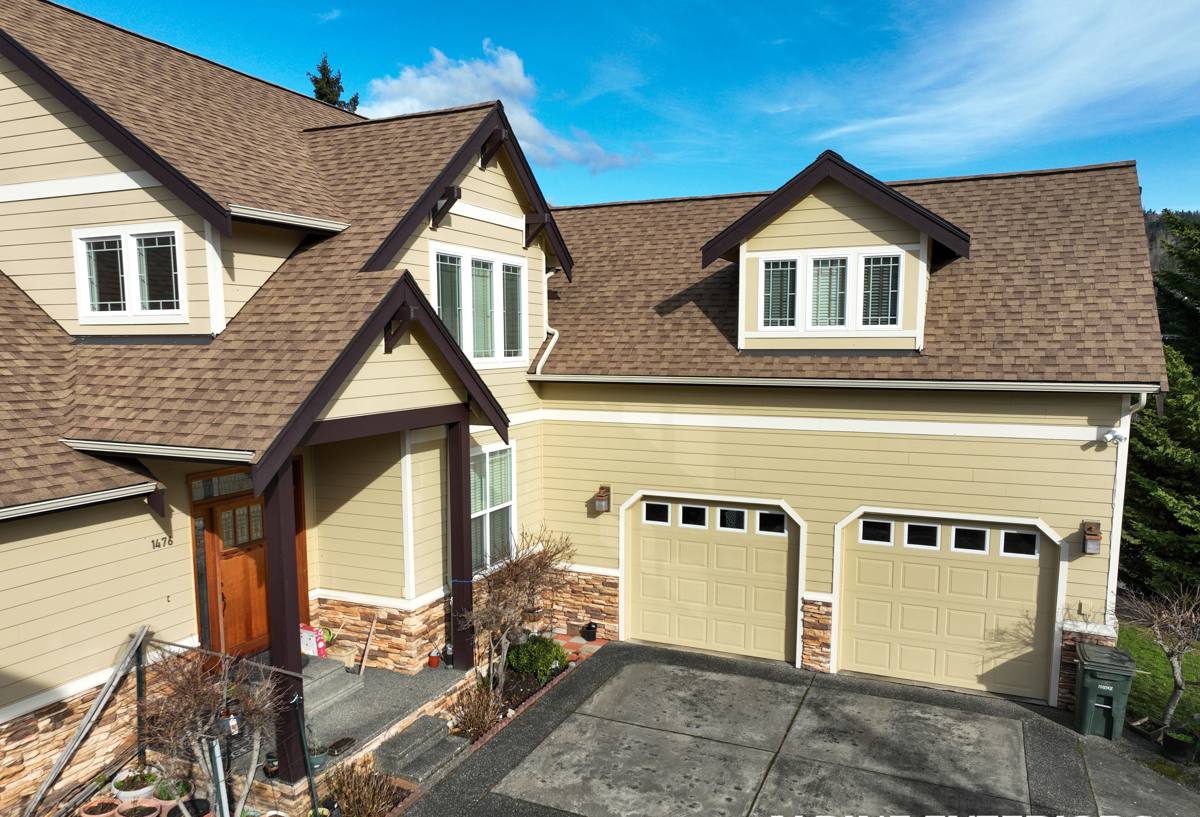
What "Correct" Looks Like for a Coastal Shingle Roof
Deck Inspection and Prep
Everything starts with the roof deck. Shingles are only as good as what's underneath them, and in a humid coastal climate it's common to find soft spots, delamination, or old nail patterns that need to be addressed before a single shingle goes down. Skipping this step to save time is one of the most common shortcuts that leads to early failure — a beautiful new roof over a compromised deck is still a compromised roof.
Underlayment
Given how much wind-driven rain this area sees, underlayment isn't a place to cut corners. A synthetic underlayment with a proper overlap pattern, combined with self-adhering waterproof membrane at vulnerable points — valleys, eaves, around penetrations — gives the roof a real second line of defense if wind ever drives water past the shingles themselves.
Nailing Pattern and Wind Compliance
The fastening schedule is where a lot of roofs quietly fail their wind rating without anyone noticing until a storm hits. The right number of nails, in the right position on each shingle, driven flush (not overdriven or underdriven), is what actually determines how a roof performs at high wind speeds — not just the shingle product itself. This is also an area local building departments pay close attention to during inspection, since it's tied directly to the wind-resistance rating the roofing system needs to meet in this region.
Flashing and Penetration Details
Chimneys, plumbing stacks, skylights, and roof-to-wall transitions are where the overwhelming majority of leaks originate — not out in the open field of the roof. Properly stepped and counter-flashed details, with corrosion-resistant metal suited to a salt-air environment, are what keep those transition points watertight for the life of the roof rather than the first couple of years.
Ventilation
Florida attics run hot, and a shingle roof that can't breathe properly bakes from underneath as well as from the sun above. Balanced intake and exhaust ventilation reduces attic temperatures, protects the underside of the decking from moisture buildup, and helps the shingles themselves last closer to their intended lifespan instead of prematurely aging from trapped heat.
Choosing a Shingle That's Actually Suited to This Climate
Not every asphalt shingle product is a good fit for a home exposed to salt air and regular tropical weather. We steer homeowners toward shingle lines with a strong track record for wind resistance and algae resistance, and we're upfront about the trade-offs between options rather than pushing whatever has the best margin.
| Shingle Type | Typical Wind Performance | Best For | Trade-Offs |
|---|---|---|---|
| 3-tab (economy) | Lower wind rating than laminated options | Budget-driven projects, rental properties | Shorter lifespan in coastal conditions, less impact resistance |
| Architectural / laminate | Higher wind rating, better fastener holding | Most Clearwater homes | Higher upfront cost than 3-tab |
| Impact-resistant (Class 4) | Strong wind and impact performance | Homes seeking possible insurance premium credits | Highest material cost; savings vary by insurer |
We also look at algae-resistant granule treatments as close to standard rather than an upgrade, since Gulf-side humidity makes streaking and algae growth show up faster here than in drier climates. And we're honest when a manufacturer's warranty terms depend heavily on precise installation methods — a warranty is only as good as the labor behind it, so we make sure the install itself meets the documentation the manufacturer actually requires.
Our Process for a Clearwater Roofing Project
We keep the process straightforward and give homeowners a clear idea of what's happening and when.
- On-site inspection. We get on the roof, check the deck, flashing, ventilation, and current shingle condition, and take note of anything a photo from the ground would miss.
- Written estimate. A clear breakdown of scope, materials, and cost — no vague allowances that turn into surprise add-ons later.
- Permitting. Roof replacement in this area requires a permit and inspection through the local building department; we handle that paperwork so it isn't on the homeowner's plate.
- Tear-off and deck check. Old material comes off completely so we can actually see the deck, not just guess at its condition from underneath old shingles.
- Underlayment, flashing, and shingle installation. Done to the fastening and wind-compliance standards the roof needs to meet in this region.
- Site cleanup. Magnetic sweep for nails and full debris removal before we consider the job finished.
- Final walkthrough and inspection. We review the completed roof with the homeowner and coordinate the required building department inspection.
Repair, or Full Replacement?
Not every roofing issue in Clearwater means a full replacement. A lot of leaks and wind-related damage can be repaired if the underlying roof system is still sound. The honest answer depends on the roof's age, how widespread the damage is, and whether the underlying deck and underlayment are still in good shape.
- Isolated missing or lifted shingles after a storm, with a roof under 12–15 years old — usually repairable
- Granule loss concentrated in a few areas, rest of the roof intact — often repairable
- Widespread curling, cracking, or brittle shingles across the whole roof — typically points to replacement
- Recurring leaks in multiple spots, or soft/spongy decking found during inspection — typically points to replacement
- Roof nearing or past its expected lifespan with a major storm on the way — worth a serious replacement conversation before hurricane season, not after damage occurs
Maintenance That Actually Extends Roof Life Here
Coastal shingle roofs benefit from a bit more attention than roofs in milder climates, and most of it is simple.
- Keep gutters and valleys clear so wind-driven rain has a clean path off the roof instead of pooling against shingle edges
- Trim overhanging branches — they trap moisture against shingles and are the source of a lot of storm debris impact
- Have flashing and sealant around penetrations checked periodically, since these fail well before the shingles do
- Rinse off heavy salt residue or organic buildup rather than letting it sit indefinitely
- After any significant wind event, do a visual check (or have one done) for lifted or missing shingles before a small problem becomes a leak
What Drives the Cost of a Shingle Roof in This Area
| Factor | Why It Matters Locally |
|---|---|
| Roof size and pitch | More area and steeper slopes mean more material and labor time |
| Shingle grade selected | 3-tab, architectural, and impact-resistant options carry different material costs |
| Deck condition | Rot or delamination found during tear-off adds repair work before shingles can go on |
| Number of penetrations and valleys | Each one needs individual flashing work, which adds labor |
| Ventilation upgrades | Adding or improving intake/exhaust venting is often worthwhile here but adds cost |
| Permitting and code requirements | Local wind-resistance and inspection requirements affect materials and methods used |
We give real, itemized numbers based on what we actually find on the roof — not a rough guess based on square footage alone.
Why Local Roofing Experience Matters in Clearwater
A crew that works this specific area regularly understands things a roofer unfamiliar with the Gulf Coast simply won't think about: how quickly salt air corrodes the wrong grade of fastener, which flashing details actually hold up against wind-driven rain here, and what the local building department expects to see at inspection. We're also used to working around the realities of coastal weather scheduling — watching forecasts closely and sequencing tear-off and dry-in so a roof is never left exposed longer than it has to be.
That local familiarity isn't a marketing line — it shows up in fewer callbacks, fewer surprises during inspection, and a roof that's actually built for the conditions it has to survive, not just a generic install done the same way it would be done somewhere with none of these pressures.
Getting Started
If your Clearwater home needs a roof inspection, a repair, or a full shingle replacement, we're glad to take a look and give you a straightforward, no-pressure estimate. Use the form below to get started.