 Largo Window
 Belleair Beach Decks Face a Tougher Environment Than Most
Belleair Beach sits on a narrow barrier island in Pinellas County, with the Gulf on one side and the Intracoastal on the other. That location is what makes the neighborhood beautiful, and it's also what makes deck maintenance here a different job than deck repair five or ten miles inland. Salt-laden air moves through the area constantly, not just during storms, and it settles into wood grain, metal fasteners, and railing hardware year-round. Add in some of the most intense UV exposure in the continental United States and wind-driven rain that finds its way into every seam and joint, and you have a set of conditions that ages a deck faster than almost anywhere else in the state.
None of that means a deck on Belleair Beach is doomed to fail early. It means the repair work has to account for those conditions specifically, rather than treating the deck like it's sitting in a shaded inland yard. A patch job that would hold up fine in a low-humidity, low-salt environment can fail again within a season out here if it's not done with the right materials and technique.
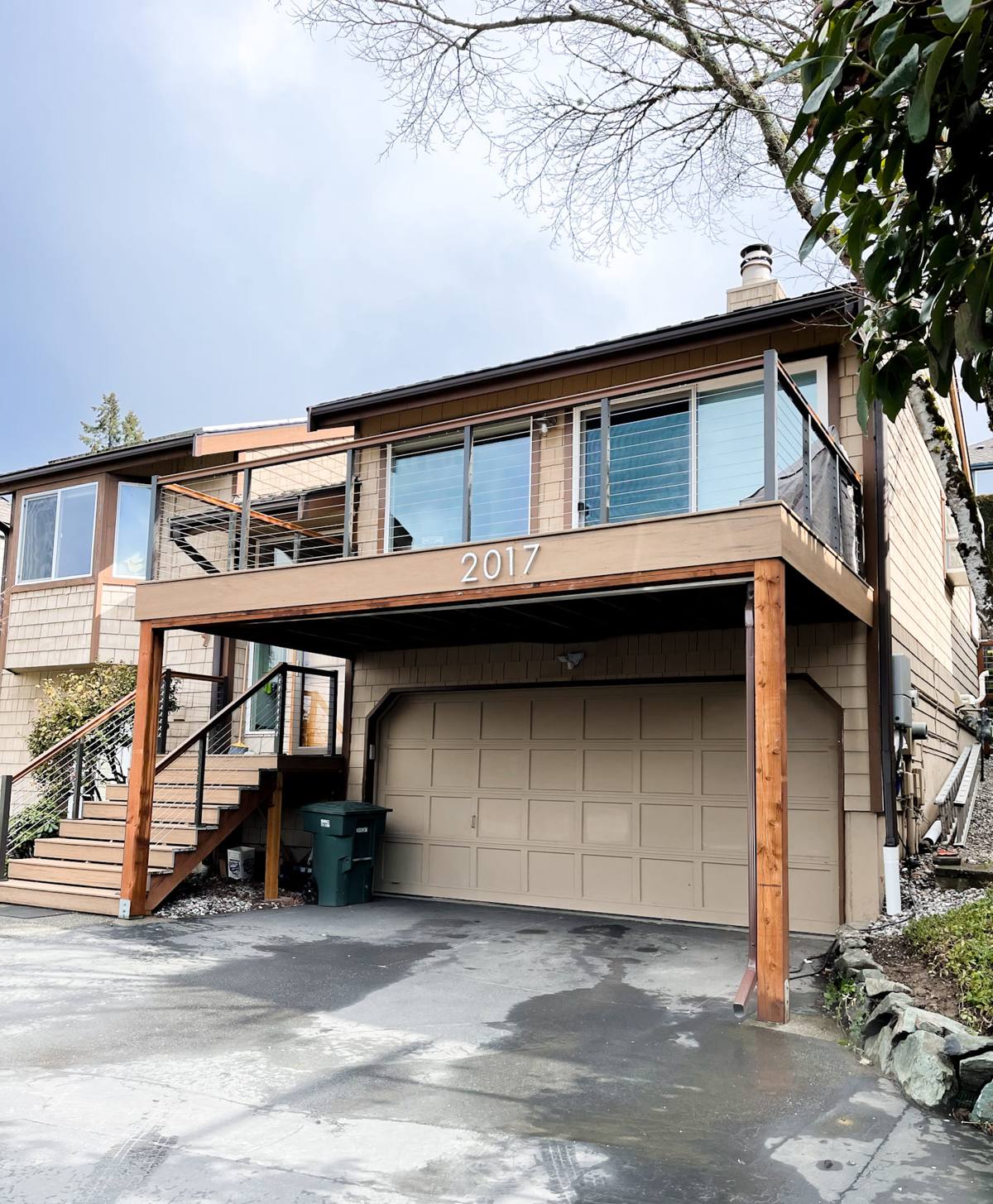
What Salt Air, UV, and Wind-Driven Rain Actually Do to a Deck
Salt Air and Corrosion
Salt is hygroscopic — it pulls moisture out of the air and holds it against whatever it lands on. On a deck, that means fasteners, joist hangers, railing brackets, and any exposed metal hardware corrode faster than the manufacturer's rated lifespan would suggest, especially on standard or lower-grade coated fasteners. Corroding fasteners lose holding strength long before they look obviously rusted, which is why a board that seems solid can still be loose underneath.
UV Exposure
Florida sun breaks down the lignin and natural oils in wood, leaving the surface dry, gray, and prone to splintering and checking. On composite decking, UV exposure over many years can fade color and, on lower-quality products, cause the surface to become brittle. Consistent exposure without any afternoon shade — common on open, waterfront lots — accelerates this well beyond what a shaded deck experiences.
Wind-Driven Rain
Rain that comes in sideways during coastal storms gets forced into places a straight-down rain never reaches: under railings, behind ledger boards, into fastener holes, and along board edges where finish coatings are thinnest. That trapped moisture is what drives rot in wood framing and decking, and it's often invisible from the surface until the damage is well established.
Common Deck Problems We See in This Area
- Soft or spongy decking boards, especially near the perimeter or close to the house
- Rusted or corroded fasteners and joist hangers, sometimes with visible staining on the wood around them
- Loose or wobbly railings and posts, often from hardware that's corroded internally
- Gaps or separation where the ledger board meets the house — a serious structural concern if flashing has failed
- Cupping, splitting, or graying boards from sun exposure combined with moisture cycling
- Surface delamination or fading on composite or PVC decking that's had years of direct sun
Most of these problems start small and stay hidden. A deck can look fine from a few feet away while the framing underneath has been quietly losing structural integrity for a couple of seasons.
Wood vs. Composite: How Each Holds Up on the Island
We get asked often whether it's better to repair with matching wood or convert sections to composite. There's no single right answer — it depends on the deck's age, how much of it needs work, and what the homeowner wants to maintain long-term. Here's how the two generally compare under Belleair Beach conditions:
| Factor | Wood (pressure-treated) | Composite / PVC |
|---|---|---|
| Upfront repair cost | Lower material cost | Higher material cost |
| Salt air resistance | Good if properly sealed and maintained | Very good — doesn't absorb moisture the same way |
| UV fading | Grays over time, needs refinishing | Fades gradually; better with UV-stabilized products |
| Maintenance | Needs periodic sealing/staining | Cleaning only, no sealing required |
| Repair matching | Easier to blend new boards with old | Harder to match faded older boards exactly |
| Structural framing | Framing is almost always wood either way | Framing is almost always wood either way |
One thing worth understanding: even a fully composite deck surface still sits on a wood or occasionally metal frame underneath. Composite decking resists moisture damage well, but it doesn't eliminate the need to inspect and maintain the structure below it.
What a Correct Deck Repair Actually Involves
A repair that's just going to fail again isn't worth doing. Here's what we consider non-negotiable for coastal repair work:
Structural Inspection First
Before replacing a single board, we check the framing underneath — joists, beams, posts, and especially the ledger board connection to the house. Surface repairs on top of compromised framing are a waste of money and, in some cases, a safety issue.
Ledger Board and Flashing
The ledger board is where the deck attaches to the house, and it's one of the most common failure points on any coastal deck. Proper flashing keeps wind-driven rain from getting behind the ledger and rotting it from the inside. If flashing is missing, damaged, or was never installed correctly, we address that as part of the repair, not as an afterthought.
Corrosion-Resistant Fasteners and Hardware
Standard fasteners are a poor choice this close to the Gulf. We use stainless steel or heavy hot-dip galvanized fasteners and connectors rated for coastal or marine-grade exposure, because the cost difference over the life of the deck is minor compared to the cost of doing the repair again in a few years.
Matching and Finishing
Whether we're replacing individual boards or larger sections, we work to match existing material as closely as possible and finish it properly — sealing wood, or ensuring composite edges and cuts are capped or treated so moisture doesn't get into cut ends.
Our Deck Repair Process
- On-site inspection. We walk the full deck, check the framing from underneath where accessible, test boards and railings for movement, and inspect the ledger connection.
- Honest assessment. We tell you what's cosmetic, what's structural, and what can reasonably wait versus what shouldn't. We're not going to sell you a full rebuild if a targeted repair will do the job.
- Written scope and estimate. You get a clear description of what's being repaired, with what materials, before any work starts.
- Repair work. Framing repairs first, then decking, railings, and hardware, using coastal-rated fasteners throughout.
- Final check. We walk the deck with you when it's done so you can see and feel the difference.
Signs Your Deck Needs Attention Now
Some issues can wait for a scheduled repair. Others shouldn't wait, especially heading into storm season. Use this as a general guide:
- Boards that flex, feel spongy, or sound hollow when you walk on them
- Railings or posts that move or wobble when pushed
- Visible rust streaks running down from fasteners or hardware
- Any gap, crack, or separation where the deck meets the house
- Wood that's soft enough to probe with a screwdriver near ground contact or under railings
- Fasteners that are backing out or missing entirely
If you're seeing any of the structural signs — flexing, wobbling railings, or a gap at the house connection — that's worth a look sooner rather than later. Surface graying or fading alone is usually cosmetic and can be scheduled at your convenience.
What Affects the Cost of a Repair
Every deck is different, so we won't quote a number without seeing the actual conditions, but the main factors that drive cost are consistent:
| Factor | Why it matters |
|---|---|
| Extent of framing damage | Structural repairs (joists, beams, ledger) cost more than surface board replacement |
| Decking material | Composite and PVC boards cost more upfront than pressure-treated wood |
| Accessibility | Elevated decks, tight side yards, or dock-adjacent decks can add labor time |
| Railing and hardware condition | Corroded hardware often needs full replacement, not just tightening |
| Size of repair area | Isolated board replacement vs. a larger section affects both material and labor |
We'll always walk through these factors with you during the estimate so you understand what's driving the number, not just get handed a total.
Why a Crew That Already Works Belleair Beach Makes a Difference
Barrier island work has its own logistics — limited parking on some streets, tighter lot access, and the general reality of getting materials on and off an island community efficiently. A crew that's done deck work here before doesn't have to relearn those logistics on your job.
More importantly, familiarity with this specific coastal environment changes what we look for. We know which fastener grades hold up and which ones don't out here, we know ledger flashing failures are common on older homes near the water, and we know that a deck that looks fine on the surface can be hiding corrosion or rot underneath because we've seen that pattern repeatedly on decks in this exact area. That's not something a general contractor unfamiliar with barrier island conditions is likely to catch on a first look.
We also understand that a deck on Belleair Beach isn't just a structure — for a lot of homeowners here, it's the main outdoor living space with a water view, and it needs to be genuinely safe and sound, not just presentable.
Keeping Your Deck in Good Shape After Repair
A well-done repair lasts a lot longer with a little basic upkeep:
- Rinse salt residue off the deck surface periodically, especially after windy weather
- Check railings and hardware for movement a couple of times a year
- Reseal or restain wood decking on a regular schedule rather than waiting until it looks obviously weathered
- Keep gutters and drainage near the deck clear so water isn't pooling against framing or the ledger
- Have the structure looked at after any major storm, even if nothing looks visibly wrong
If you're noticing soft spots, loose railings, or rust stains on your deck in Belleair Beach, or you just want an honest read on where things stand, we're happy to come take a look. Fill out the form below for a free, no-pressure estimate — we'll tell you straight what needs attention now, what can wait, and what it'll take to get it done right.