 Largo Window
 Belleair Beach sits on a narrow barrier island exposed to the Gulf on one side and the Intracoastal on the other, which means every home there takes a harder hit from the weather than a house a few miles inland in Largo. Salt spray, constant humidity, direct sun, and the occasional tropical system or hurricane all work on exterior siding at the same time, and the damage often shows up in ways homeowners don't recognize until it's advanced. If your siding is cracking, bubbling, staining, or pulling away from the wall, this page walks through what's actually happening, what a correct repair looks like, and why the crew doing the work matters as much as the material itself.
Why Belleair Beach Siding Wears Differently Than Inland Homes
Distance from the water changes everything about how siding ages. A home in Belleair Beach is close enough to the Gulf that airborne salt settles on exterior surfaces daily, not just during storms. Combined with the intense, nearly year-round Florida UV exposure and the humidity that never really lets up, siding on the island is under more sustained stress than siding just a short drive inland in Largo or elsewhere in Pinellas County.
Salt Air and Corrosion
Salt is corrosive to metal fasteners, trim flashing, and any exposed hardware. Over time it can also accelerate the breakdown of caulking and sealants at panel joints and around penetrations. On many homes, the siding itself looks fine at a glance while the fasteners and flashing behind it are already compromised, which is exactly why professional inspection matters more than a quick visual check.
UV and Wind-Driven Rain
Intense sun bleaches color and dries out lesser materials, making them brittle and prone to cracking. Wind-driven rain, especially during the rainy season and tropical systems, drives water sideways into seams, laps, and trim joints that were never designed to handle water hitting them from that angle. On a barrier island home, this combination happens more often and more intensely than it does even a few miles inland.
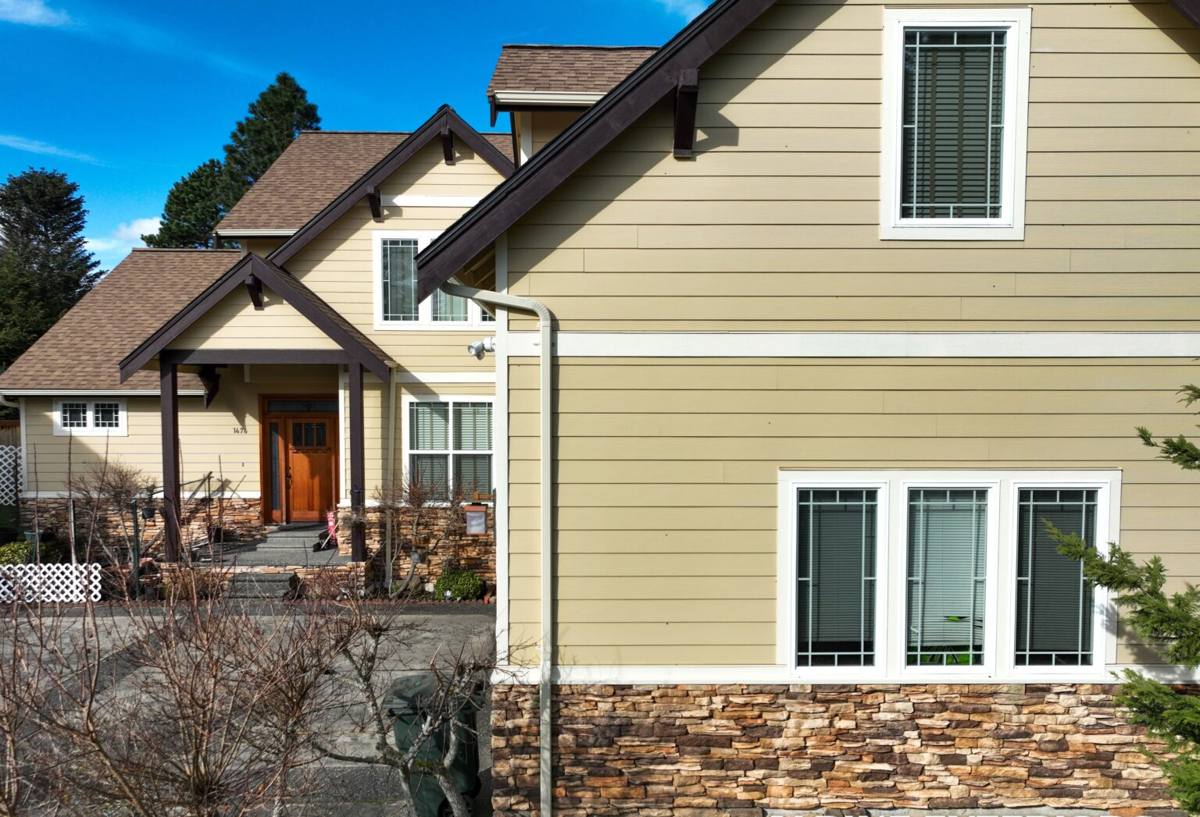
What Siding Damage Actually Looks Like on the Island
Homeowners often wait too long to call because early siding damage doesn't look dramatic. Knowing what to look for helps you catch problems while they're still a repair, not a full replacement.
- Cracking or splitting at panel edges, corners, or around window and door trim
- Bubbling, peeling, or chalking paint that signals moisture is trapped underneath
- Soft or spongy spots when pressed, especially near the bottom courses closest to grade
- Visible gaps or separation at seams, laps, or where siding meets trim
- Staining or streaking that suggests water is tracking behind the siding rather than off of it
- Rust streaks around fastener heads or metal flashing
- Warping or buckling panels that no longer sit flat against the wall
Any one of these on its own might be minor. Several together, especially on the sides of the home facing the water or prevailing wind, usually mean moisture has been getting behind the siding for a while.
Why Repair Isn't Always the Right Call
Not every damaged section should be patched. Part of doing this job honestly is telling a homeowner when a repair will hold and when it's a short-term fix on a longer-term problem.
| Situation | Typical Recommendation |
|---|---|
| Isolated impact damage, one or two panels, substrate underneath is dry and sound | Spot repair — replace the damaged panels, match the profile and color |
| Damage concentrated at trim, corners, or fastener points but siding field is intact | Repair trim and flashing details, reseal, replace affected panels |
| Soft substrate, rot, or widespread moisture intrusion behind multiple panels | Remove and inspect sheathing before deciding — repair may not be enough |
| Damage is scattered across multiple elevations, especially water- and wind-facing sides | Full or partial replacement is often more cost-effective than repeated repairs |
| Original material is a product prone to moisture failure (not fiber cement) | Replacement with a climate-appropriate material, rather than repeated patching |
A repair that goes over a wet or rotted substrate doesn't actually solve anything — it just hides the problem until it resurfaces, usually worse. That's why our process always starts with finding out what's happening behind the siding, not just what's visible on the surface.
What a Correct Siding Repair Involves
A proper repair on a Belleair Beach home is not just popping out a damaged piece and snapping in a new one. It requires attention to the details that caused the damage in the first place, or the same failure shows up again in a year or two.
1. Diagnose Before Touching Anything
We start by identifying why the damage happened — impact, water intrusion, failed caulking, deteriorated flashing, or fastener corrosion — rather than assuming it's simple wear. This determines whether we're looking at a straightforward panel swap or something that needs to go deeper.
2. Check the Substrate
Once damaged panels are removed, we check the sheathing and house wrap underneath for moisture, softness, or rot. Repairing over compromised substrate is a waste of money because the new siding will fail for the same reason the old siding did.
3. Match Material and Profile
Repairs should match the existing siding's profile, reveal, and color as closely as possible. On homes with older or discontinued siding, this sometimes means a larger repair area than the damage itself, so the transition doesn't stand out.
4. Rebuild the Water Management, Not Just the Surface
Flashing, house wrap laps, and caulking at joints and penetrations get corrected as part of the repair, not left as-is. On a barrier island home facing wind-driven rain regularly, the water management details behind the siding matter as much as the siding itself.
5. Fasten and Seal for Salt Air
We use fasteners and sealants suited to a coastal salt environment, not standard-grade materials that will corrode or degrade faster this close to the Gulf.
Our Process for Belleair Beach Homeowners
- Inspection: We walk the exterior, check all elevations (especially those facing the water and prevailing wind), and identify every area of concern, not just the spot you called about.
- Honest assessment: We tell you plainly whether you're looking at a spot repair, a larger repair, or whether replacement makes more sense long-term. No upselling, no minimizing.
- Written scope and estimate: You get a clear description of the work, materials, and cost before anything starts.
- Repair execution: Substrate check, water management correction, matched material installation, and coastal-grade fastening and sealing.
- Final walkthrough: We review the completed work with you so you know exactly what was done and why.
What We Use for Repairs and Replacements
When a repair calls for new siding material — whether it's a small patch or a full section — we use James Hardie fiber cement exclusively. It's non-combustible, holds up to Florida's UV and humidity without the moisture-related failures that plague wood and some engineered wood products, and its ColorPlus factory finish resists the fading that's a constant issue this close to the Gulf. Hardie's HZ5 product line in particular is engineered for the kind of climate exposure Belleair Beach homes deal with — wind, moisture, and temperature swings. We don't install vinyl, LP SmartSide, or other engineered wood sidings, because in our experience they don't hold up as well to sustained coastal exposure, and we'd rather stand behind one system we trust than offer options we wouldn't put on our own homes.
If your existing siding is a different material and it's failing repeatedly, that's often a sign the material itself isn't suited to this environment — worth a conversation about whether repair is really solving the problem, or just delaying a replacement decision.
Why Local Experience on the Island Matters
A crew that primarily works inland jobs doesn't always account for how much harder coastal conditions are on a building. Fastener selection, flashing details, and sealant choice all need to account for salt exposure and wind-driven rain in a way that isn't necessary a few miles away in Largo proper. Working regularly in Belleair Beach and along the Pinellas County coastline means we've seen how siding actually fails out here — not in a textbook, but on real homes — and we build the repair to hold up against those specific conditions, not generic ones.
Maintaining Your Siding Between Repairs
A few habits go a long way toward extending the life of any repair or replacement in this environment:
- Rinse salt residue off exterior siding periodically, especially after storms with onshore wind
- Keep gutters and downspouts clear so water isn't pooling against lower siding courses
- Trim vegetation back from siding to allow airflow and drying
- Inspect caulking at trim and penetrations annually and reseal as needed
- Address small cracks or gaps promptly, before wind-driven rain gets behind them
If you're seeing cracking, staining, soft spots, or gaps in your siding, don't wait for it to get worse. We offer free, no-pressure estimates for Belleair Beach homeowners — we'll inspect the damage, tell you honestly what's going on, and lay out your options with no obligation.