 Largo Window
 Treasure Island is a barrier island community, and that changes what "deck repair" actually means compared to a typical inland Pinellas County home. A lot of houses here sit elevated on pilings or a raised foundation because of flood zone requirements, which means the deck isn't just a backyard feature — it's often the main way people get in and out of the house, or the surface tying a home to a canal seawall or dock. Add in direct salt air, sustained sun exposure, and the wind loads that come with living this close to open water, and a deck repair here has to account for a lot more than a few soft boards. We look at the whole structure — framing, fasteners, and surface — not just the part that looks bad.
Why Treasure Island Decks Wear Differently
Three things separate deck repair on this island from a deck repair job a few miles inland. First, elevation — many homes are built up on pilings or block, which means the deck structure often includes taller support posts, longer stair runs, and framing that's more exposed to wind and moisture on all sides, not just underneath. Second, water proximity — a lot of decks here connect to canals or sit close enough to the Gulf or the bay side that salt-laden air and moisture are a constant condition, not an occasional one. Third, sun — Florida gets intense UV year-round, but a deck with open exposure on a barrier island gets it with less tree canopy and less afternoon shade than a typical inland yard.
None of that means a Treasure Island deck is destined to fail early. It means the repair has to address the actual cause of the damage — corrosion, moisture intrusion, UV breakdown — rather than just swapping out the boards that look the worst.
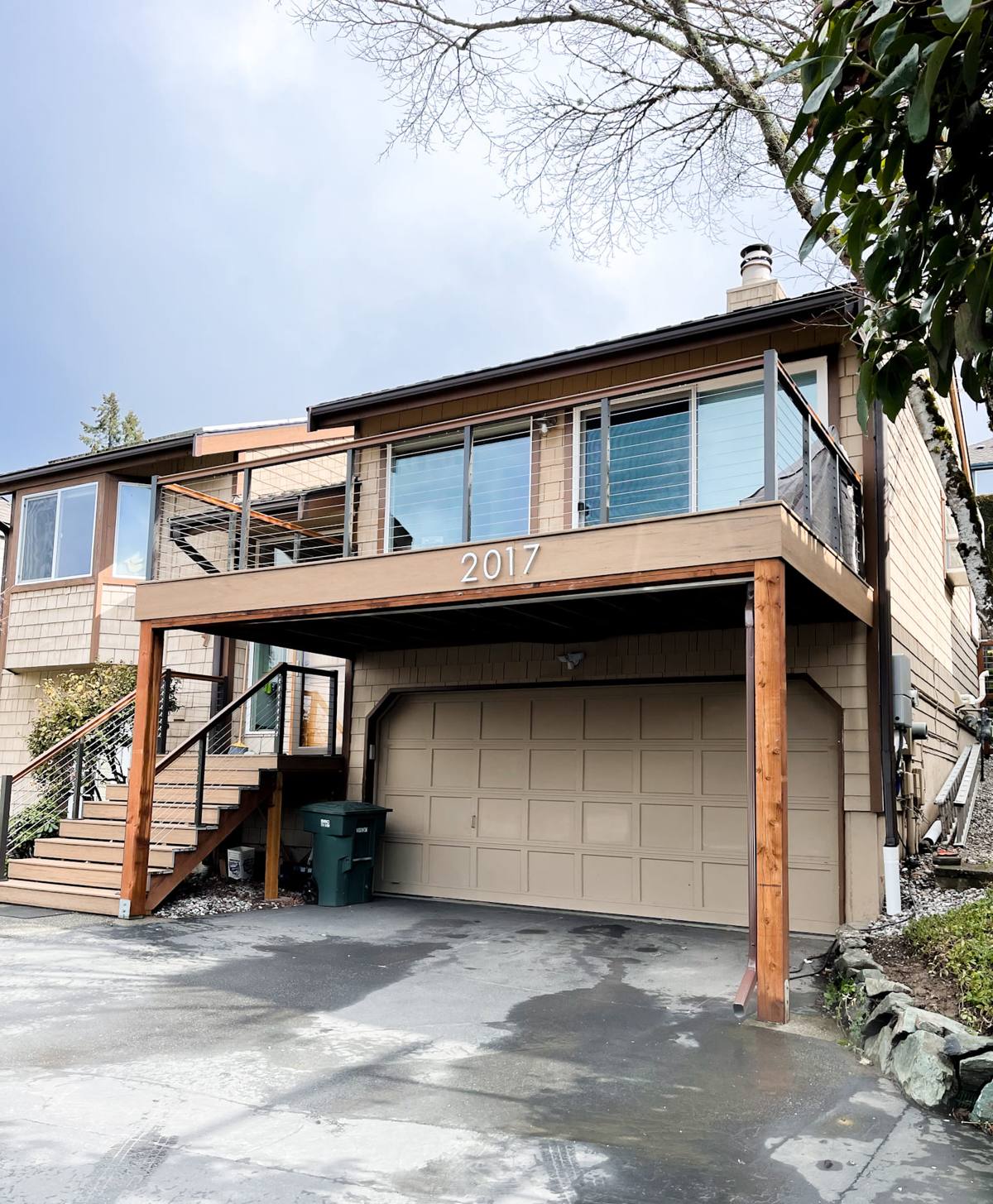
What the Climate Actually Does to a Deck Here
Hurricane-force wind events put real lateral and uplift load on a deck structure, and that load concentrates at the connections — where the deck ties into the house (the ledger board), where posts meet footings, and where railings anchor to the frame. A deck that's structurally sound in calm weather can still have a weak connection that only gets tested when a real storm comes through. Wind-driven rain is a related problem even outside of storm season — it pushes water sideways and upward into places a vertical rain never would, which is why ledger board flashing and the seam where the deck meets the house siding are common failure points.
Salt air is the slower, quieter problem. It doesn't wait for a storm — it works on exposed metal fasteners, hardware, and connectors every day, all year. On a deck close to a canal or open water, that corrosion process moves faster than most homeowners expect, especially on older decks built with standard fasteners instead of corrosion-resistant hardware. And UV exposure breaks down wood fibers and the surface layer of composite decking over time, leading to graying, splintering, and — on some composite products — chalking or fading that's uneven depending on sun exposure across the deck.
Where Deck Failures Actually Start
It's rarely the decking boards themselves that fail first structurally — it's the framing underneath and the connection points. A ledger board with failed flashing lets water into the house's rim joist, which can rot a structural connection long before the surface boards show obvious damage. A support post set in ground contact without proper protection can deteriorate at the base while the visible portion above still looks fine. Corroded fasteners can lose holding strength well before rust stains become visible on the surface. That's why a real deck repair starts with a structural look, not just a walk across the boards.
Common Deck Problems We Find in Treasure Island
- Ledger board rot and flashing failure — moisture working into the connection where the deck attaches to the house
- Corroded fasteners and hardware — screws, nails, and connectors weakened by constant salt exposure, sometimes with visible rust streaking on the decking
- Post and support deterioration — especially near ground contact or on older pilings, where moisture and insects can work unnoticed
- Loose or unstable railings — a safety issue as much as a repair issue, common where original attachment hardware wasn't corrosion-rated
- Cupped, splintering, or soft wood decking — surface-level UV and moisture damage that can still point to a bigger structural issue underneath
- Composite board fading, chalking, or delamination — surface breakdown on lower-grade composite products under sustained sun exposure
- Stair stringer and tread wear — high-traffic elements that take repeated stress and weather exposure at the same time
Repair vs. Replace — How We Decide
Structural Framing First
Before anything about the surface gets decided, we check the framing — the ledger connection, the joists, the posts and footings, and how the whole structure is fastened together. If the framing is sound, a lot of surface-level damage can be addressed with targeted board replacement and fastener upgrades. If the framing has rot, corrosion, or undersized connections for the load the deck actually carries, that gets addressed first, regardless of how the decking looks.
Decking Surface Condition
Wood decking that's cupping, splintering, or soft in isolated spots can often be repaired board by board. Composite decking that's fading evenly is usually a cosmetic issue; composite that's delaminating, swelling at the edges, or showing consistent surface breakdown across multiple boards is a sign the material itself has reached the end of its useful life, and patch repairs won't hold up.
Railings and Code Compliance
Railings get evaluated separately, since they're a life-safety component. Loose posts, missing or damaged balusters, and height or spacing that doesn't meet current code get flagged and addressed as part of the repair, not left as-is because the rest of the deck is fine.
What a Correct Deck Repair Involves
Inspection and Diagnosis
We check the ledger connection and flashing, probe the framing and posts for soft spots or corrosion, test railing stability, and look at the decking surface — not just for appearance, but for what the wear pattern tells us about moisture and sun exposure on that specific deck.
Structural Repairs
Any rot, corrosion, or undersized framing gets corrected before surface work starts. On elevated homes, this sometimes means addressing post or footing issues that have nothing to do with why the deck was originally flagged for repair, but matter for the deck's long-term safety.
Fastener and Hardware Upgrades
Where original construction used standard fasteners, we typically upgrade to corrosion-resistant hardware rated for coastal exposure. This is one of the most cost-effective parts of a repair, since fastener failure is one of the most common reasons decks need repeat repairs on this island.
Decking and Finish Work
Damaged boards are replaced to match the existing material where reasonable, or the whole surface is reconsidered if the existing decking has reached the end of its service life. Wood gets sealed or finished appropriately for sun and moisture exposure; composite is installed according to manufacturer spacing and fastening guidance, which matters more here than in a less demanding climate.
Our Process, Start to Finish
- On-site inspection — framing, ledger connection, posts, fasteners, and decking surface, checked as a system, not board by board
- Honest diagnosis — what's structural, what's cosmetic, and what can wait versus what shouldn't
- Permit check — if the repair touches structural framing, railings, or stairs, we confirm what Pinellas County or Treasure Island permitting requires before work starts
- Structural repairs first — framing, posts, and ledger flashing corrected before any surface work begins
- Fastener and hardware replacement — upgraded to corrosion-resistant material suited to the exposure
- Decking, railings, and finish — surface repair or replacement, railing work, and appropriate sealing or finishing
- Final walkthrough — we go over what was done and what to watch for going forward
Costs and Trade-Offs: What Actually Drives the Price
| Factor | What Changes the Cost or Scope |
|---|---|
| Extent of structural damage | Isolated board repairs cost far less than framing, ledger, or post correction |
| Decking material | Wood repairs are often cheaper per board; composite repairs depend on matching discontinued product lines |
| Fastener condition | Widespread corroded hardware usually makes a full fastener upgrade more economical than spot fixes |
| Elevation and access | Decks on tall pilings or over water cost more to access safely than a ground-level deck |
| Permit requirements | Structural or railing work typically requires permitting, which adds time but protects you at resale and insurance renewal |
| Railing scope | Full railing replacement for code compliance costs more than tightening or patching existing hardware |
Signs Your Deck Needs Attention Now
- Boards that feel soft, spongy, or bounce underfoot
- Rust streaks running down from screws or connectors
- Visible gaps or staining where the deck meets the house
- Railings or posts that wobble or shift under normal pressure
- Popped or backed-out screws across multiple boards
- Cracking, splintering, or deep cupping in wood decking
- Uneven fading, chalking, or edge swelling on composite boards
- Visible mold, algae, or persistent damp spots in shaded areas
Permits and Flood Zone Considerations in Treasure Island
A lot of deck work on this island touches structures that are part of a flood-zone-elevated home, which means repairs involving framing, support posts, or attachment to the house can fall under both local building permit requirements and flood zone construction rules. Railing height, guard spacing, and stair requirements are also governed by current building code, and older decks built under previous code cycles sometimes don't meet current standards even if they're structurally sound. We check what applies to your specific property before starting structural work, since skipping that step can create problems at resale or with insurance down the line — not just a compliance technicality.
Why Hiring a Crew That Already Works Treasure Island Matters
A deck repair crew that mostly works inland jobs can still do competent carpentry and still miss what actually matters here — which fastener grade holds up under real salt exposure instead of just meeting a minimum spec, how a ledger flashing detail needs to be sequenced on a home that's elevated rather than slab-built, or when a post that looks fine above grade is actually failing where it meets its footing. Those are judgment calls built from doing this work on this specific island repeatedly, not something a generic repair checklist covers.
We work on Treasure Island and the surrounding Pinellas County coastline regularly, so we're not guessing at how elevation, canal proximity, or direct Gulf exposure tends to affect a deck's framing and hardware over time. That's what decides whether a repair actually holds up through the next few hurricane seasons or turns into a repeat call within a year or two.
Get a Straight Answer on Your Deck
If your deck has soft spots, loose railings, rust stains around the fasteners, or you're just not sure whether what you're seeing is cosmetic or structural, it's worth getting an honest, in-person look before you decide anything. We offer free, no-pressure estimates for deck repair in Treasure Island and the surrounding area — use the form below to get a time on the schedule.