 Largo Window
 Why Belleair Bluffs Homes Need Siding Built for the Coast
Belleair Bluffs sits along the Intracoastal Waterway in Pinellas County, tucked between Largo and Clearwater, and it takes its name honestly — the elevated bluffs that give the town its character also put homes closer to open water views and open water weather. That proximity is a beautiful reason to live here, but it's also why siding choices matter more in this neighborhood than they do a few miles inland.
Homes here deal with a specific combination of stresses: hurricane-force wind gusts during tropical systems, wind-driven rain that gets forced sideways into wall assemblies, intense UV exposure nearly every day of the year, and a steady drift of salt air off the water that accelerates corrosion and finish breakdown on anything not built to handle it. Any one of these would be manageable on its own. Together, over years, they expose the weak points in cheaper siding systems fast — and expose the difference between a siding job done to spec and one that just looks fine on installation day.
That's the lens we bring to every Belleair Bluffs project: not "what siding looks good," but "what siding, installed which way, actually holds up here."
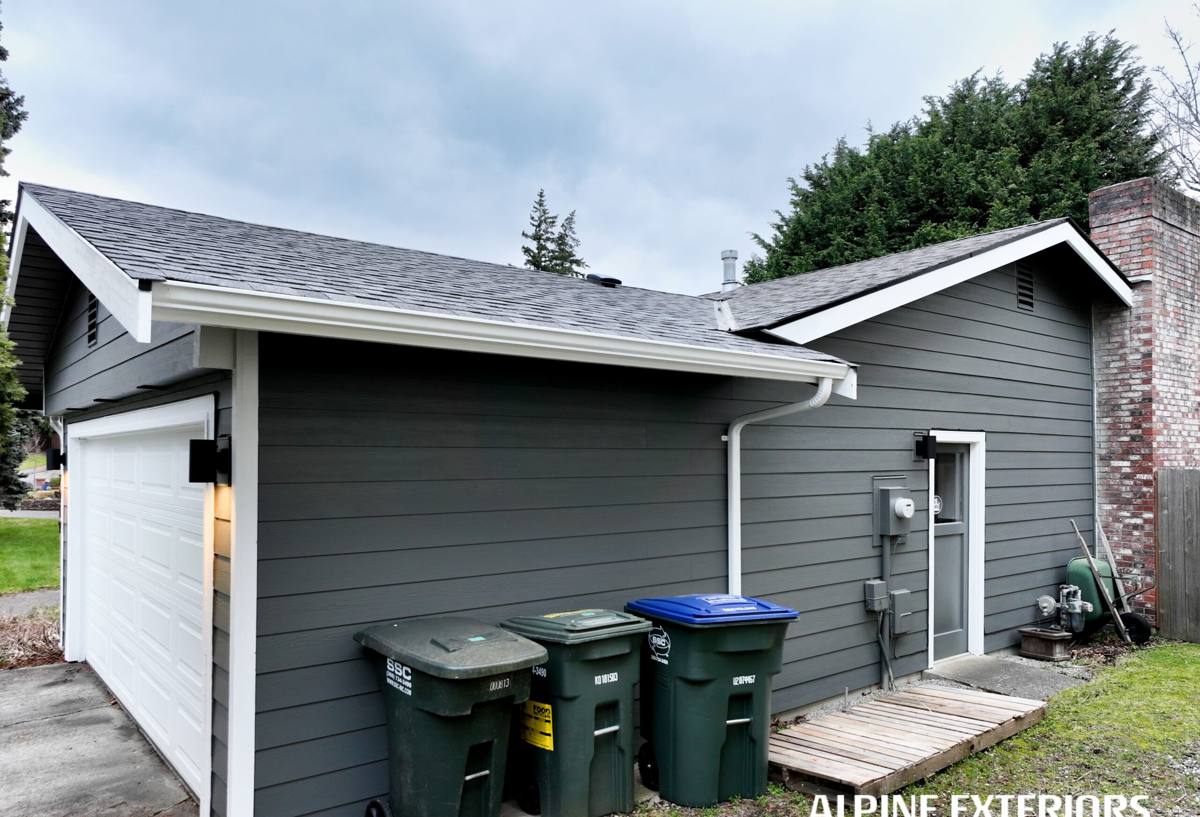
Why We Install Only James Hardie Fiber Cement
We don't offer vinyl, LP SmartSide, Cemplank, Allura, or primed wood siding. That's a deliberate standard, not a limitation of what we know how to install. We've made the call that on homes exposed to Gulf Coast conditions, fiber cement from James Hardie is the product that consistently delivers the balance of durability, appearance, and warranty protection homeowners actually need.
Fiber cement is a mix of cement, sand, and cellulose fiber, cured into dense, rigid boards and panels. It doesn't have the organic wood content that invites rot and pest damage, and it doesn't have the thin, heat-sensitive profile that lets vinyl warp, crack, or fade in intense sun. James Hardie backs its products with ColorPlus Technology — a factory-applied, baked-on finish that resists fading and chipping far better than field-applied paint — and with HardieZone engineering that accounts for regional humidity, moisture, and temperature cycles, including the HZ5 zone that covers Florida's climate.
None of that is marketing to us — it's the reason a fiber cement job installed to spec still looks and performs like a fiber cement job a decade later, in a climate that is not gentle on building materials.
What We Turned Down, and Why
Vinyl siding is inexpensive and easy to install, but it's also thin, flexes in high heat, and can crack or blow off in sustained coastal wind events — and once a panel is gone, color-matching an aging run of vinyl is rarely clean. LP SmartSide and other wood-strand products perform reasonably well in drier climates, but they rely on an engineered wood core that is more moisture-sensitive than fiber cement, which matters in a location with this much humidity and wind-driven rain. Primed cedar or spruce siding requires the homeowner to stay ahead of repainting and moisture maintenance on a schedule most people can't realistically keep up — and falling behind on that schedule is exactly how rot starts. We'd rather stand behind one product system we trust completely than offer five options and hope the homeowner picks the right one for their exposure.
What a Correct Fiber Cement Siding Job Actually Involves
Fiber cement is only as good as its installation. A rushed or under-spec'd job with the right material can fail nearly as fast as the wrong material installed well — the details underneath the boards matter as much as the boards themselves.
Moisture Management Comes First
Before any siding goes up, the wall needs a correctly lapped weather-resistive barrier and properly integrated flashing at every window, door, and penetration. In a wind-driven-rain climate, water finds any shortcut in the drainage plane — house wrap installed with reversed laps, missing flashing tape, or unsealed penetrations will eventually let moisture behind the siding no matter how good the boards are.
Fastening and Clearances
James Hardie specifies fastener type, spacing, and embedment depth for a reason — under-driven or over-driven fasteners are one of the most common causes of premature siding failure. Boards also need the manufacturer's minimum clearance from roof lines, decks, and grade, and consistent joint treatment so seams don't become water traps. Corner boards, trim, and butt joints need to be caulked and sealed with products rated for the exposure, not just whatever caulk is on the truck.
Ventilation Behind the Cladding
A siding system needs to let incidental moisture escape, not trap it against the sheathing. That means correct furring or rainscreen detailing where the wall assembly calls for it, especially on homes with higher humidity loads from nearby water.
Skip any one of these steps and the visible siding can look perfect for a year or two while a moisture problem builds behind it — which is exactly the kind of failure that's expensive to diagnose and repair later.
How Our Process Works
- On-site assessment — we inspect the existing siding, sheathing, and any signs of moisture intrusion or wind damage before quoting anything.
- Product and line selection — matching the right HardiePlank, HardieShingle, or HardiePanel profile and ColorPlus finish to the home's style and exposure.
- Tear-off and substrate check — removing old siding and inspecting sheathing for hidden rot or damage before it's covered again.
- Weather barrier and flashing install — the step that determines whether the siding stays dry for the next 30 years.
- Siding installation to manufacturer spec — correct fastening, clearances, and joint treatment throughout.
- Final inspection and walkthrough — checking seams, trim, and caulking, and walking the homeowner through warranty documentation.
Fiber Cement vs. Other Siding Options for Coastal Exposure
| Factor | James Hardie Fiber Cement | Vinyl | LP SmartSide / Engineered Wood |
|---|---|---|---|
| Wind resistance | Rigid, rated for high-wind installation | Can crack or blow off in sustained gusts | Generally sturdy but panel-dependent |
| Moisture / rot resistance | Non-organic, does not rot | Doesn't rot but seals can trap moisture behind it | Engineered wood core is moisture-sensitive |
| UV / fade resistance | Factory-baked ColorPlus finish | Prone to fading and chalking in intense sun | Requires field-applied paint and repainting cycles |
| Salt air performance | Non-combustible, corrosion-resistant material | Holds up but can become brittle over time | Coatings need more frequent upkeep near salt air |
| Warranty structure | Manufacturer-backed, transferable | Varies widely by manufacturer | Varies, often shorter on finish |
What Drives the Cost of a Fiber Cement Siding Job
- Home size and elevation complexity — multi-story homes and homes with steep rooflines take longer to stage and flash correctly.
- Existing siding removal — tear-off of old vinyl, wood, or damaged siding adds labor beyond a straightforward re-side.
- Substrate repair — hidden sheathing rot found during tear-off needs to be addressed before new siding goes on.
- Product line and profile — HardiePlank lap siding, HardieShingle, and HardiePanel carry different material and labor costs.
- Trim and detail work — corner boards, window trim, and custom detailing around openings add time.
- Color and finish — factory ColorPlus finishes versus field-primed-for-paint options affect both material cost and long-term upkeep.
We give every Belleair Bluffs homeowner a written estimate based on an actual on-site look at the home, not a generic square-footage number — coastal exposure and existing wall condition change the real cost more than most people expect.
Why Hiring a Crew That Already Works Belleair Bluffs Matters
Belleair Bluffs is a small, tightly built community, and homes here vary from older construction to newer builds, often on lots with limited access and mature landscaping to work around. A crew unfamiliar with the area treats every job as a blank slate; a crew that already works this neighborhood and greater Pinellas County knows what permitting through the county and local building department typically requires, what wind-load and moisture detailing this exposure demands, and how to stage a job efficiently on tighter coastal lots without disrupting a homeowner's property more than necessary.
That local familiarity isn't a luxury — it's part of what keeps a siding job on schedule and up to code the first time, instead of generating change orders and inspection delays midway through.
Longevity and Maintenance After Installation
One of the practical advantages of a correctly installed James Hardie system is how little ongoing maintenance it demands compared to wood or repainted siding. There's no scraping and repainting cycle to keep up with, and the ColorPlus finish is engineered to hold color under UV exposure far longer than field-applied paint. Homeowners still benefit from periodically rinsing off salt residue and checking caulked joints and trim for wear, especially after major storm seasons — small, easy upkeep compared to what wood or vinyl siding demands in this environment.
What to Look For When Choosing a Siding Contractor
- Manufacturer training or certification specific to James Hardie products, not general siding experience alone.
- A written scope that specifies fastening pattern, clearances, and weather barrier details — not just "siding replacement."
- Willingness to inspect and address sheathing condition during tear-off, not just cover over what's there.
- Local references or project history in Pinellas County coastal neighborhoods.
- Clear explanation of the manufacturer warranty and what voids it.
If you're weighing a siding project on a Belleair Bluffs home, we're glad to walk the property, look at what's there now, and give you a straightforward, no-pressure estimate on what a correctly installed James Hardie system would involve for your home.