 Largo Window
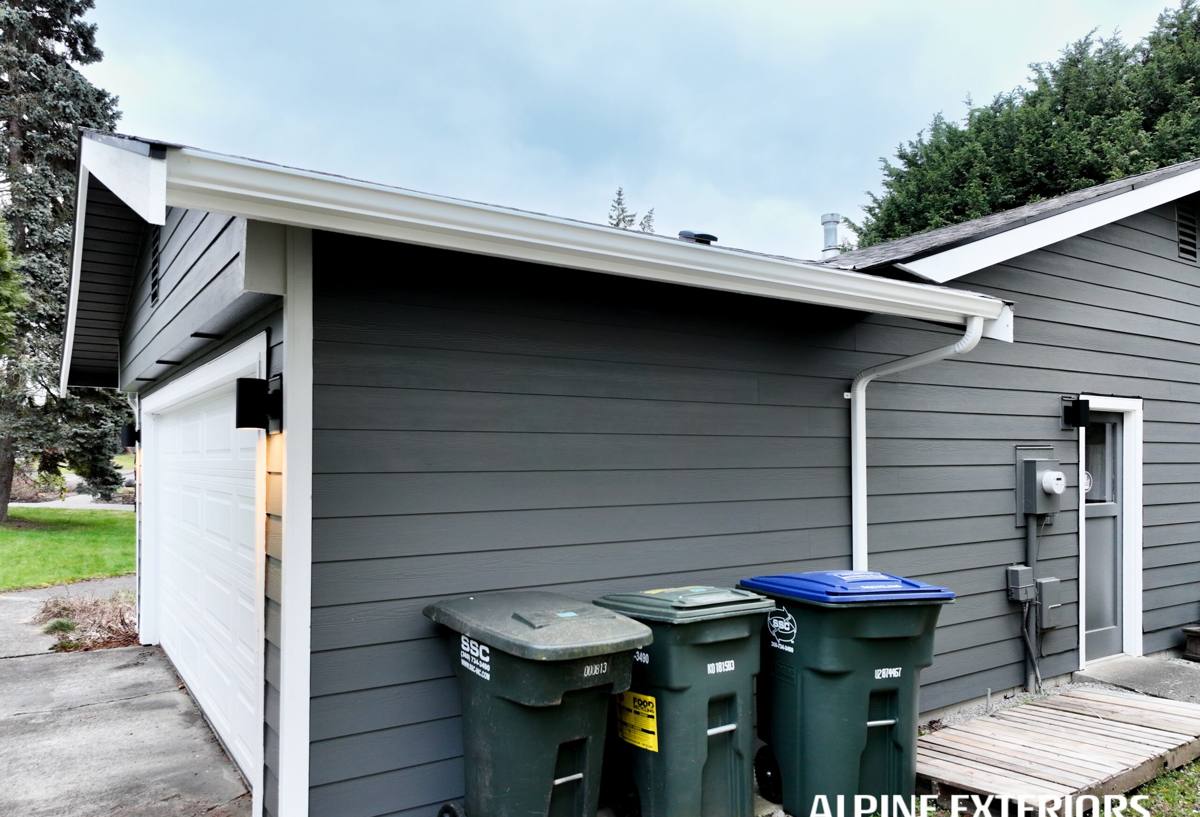
 Siding Installation in Belleair Bluffs: What This Climate Demands
Belleair Bluffs is a small, established residential community set on elevated ground above Clearwater Harbor and the Intracoastal Waterway, tucked between Largo, Belleair, and the beaches of Pinellas County. That elevation is part of what gives the area its name and its character, but it doesn't exempt homes here from what the Gulf Coast throws at an exterior wall. Hurricane-force winds during storm season, intense year-round UV, wind-driven rain that doesn't fall straight down, and salt air drifting in off the water all take a steady toll on siding, whether a home sits right on the bluff or a few blocks back toward Largo. This page is specifically about siding installation for Belleair Bluffs properties: what the local climate demands from the material and the install, how we approach the work, and why we install exclusively James Hardie fiber cement rather than the wider range of products you'll find elsewhere.
Housing stock in this part of Pinellas County spans decades of construction, from older mid-century homes to more recently updated properties, and a lot of that older siding was installed long before current wind codes and product standards existed. When it's time to replace it, getting the material and the installation details right matters more here than in a milder inland market.
What Belleair Bluffs' Climate Does to Siding
Hurricane-Force Wind
Storm season brings sustained wind loads and gusts that put real pressure on siding panels, fasteners, and the joints between them. Belleair Bluffs' slightly elevated position near open water can mean a bit more direct wind exposure on some lots than you'd see further inland in Largo, which is exactly why fastening schedules and product wind ratings need to match the actual site conditions rather than a generic minimum. Siding that isn't properly fastened or that uses an under-spec product is one of the more common sources of storm damage we see, and it's rarely the siding's fault alone — it's usually the installation.
Intense, Year-Round UV
Florida sun doesn't take a season off. Constant UV exposure breaks down lower-grade paints and finishes over time, leading to chalking, fading, and eventually cracking that lets moisture in behind the material. South- and west-facing walls typically show this wear first, but no exposure is fully protected from cumulative UV damage over a decade or more.
Wind-Driven Rain
Rain in this part of the Gulf Coast rarely falls straight down during a storm event — wind pushes it sideways into lap joints, trim, and any gap in the wall assembly. A siding system that would hold up fine somewhere with calmer weather can still fail here because water finds its way in from the side rather than from directly above. That's a detailing problem as much as a material problem, and it's where a lot of installation shortcuts show up years later as rot.
Salt Air
Belleair Bluffs' proximity to Clearwater Harbor and the Gulf means salt-laden air is a near-constant presence, even on homes that aren't waterfront. Salt accelerates corrosion in fasteners, flashing, and hardware, and it can degrade lower-quality finishes faster than a drier, more inland climate would. Any siding installation here has to account for that corrosion risk in the materials and hardware chosen, not just the visible siding panel.
Why We Install Only James Hardie Fiber Cement Siding
We used to install a broader range of siding products. We narrowed that down to one system, and the reason was practical: in a climate that combines sustained moisture, salt exposure, and hurricane-force wind, we wanted one product we could stand behind completely rather than several with different trade-offs.
- Non-combustible core: Fiber cement doesn't feed a fire the way wood-based siding products can, which matters for household safety and can matter for insurance underwriting as well.
- Factory-applied ColorPlus finish: The color is baked on under controlled factory conditions rather than applied on-site, so it holds up against UV and moisture far longer than field-applied paint.
- Climate-engineered HZ product lines: Hardie's HZ formulations are built specifically for humid, high-moisture regions like the Gulf Coast, rather than a one-size-fits-all national spec.
- Dimensional stability: Fiber cement doesn't swell, cup, or warp the way engineered wood siding can after repeated wet-season moisture cycles.
- Strong transferable warranty: Hardie backs its products with a robust warranty, provided the installation follows the manufacturer's specifications.
We don't install LP SmartSide, vinyl siding, Cemplank, Allura, primed spruce, or cedar. Each of those has a legitimate place in the market and plenty of satisfied owners elsewhere. But we made a professional call that in a climate with this much combined heat, moisture, salt, and wind exposure, standardizing on one system we trust fully beats offering several options that quietly shift maintenance risk onto the homeowner down the road.
What a Correct Siding Installation Involves
The product is only half the equation. A James Hardie installation performs the way it's designed to only when the fastening pattern, clearances, joint treatment, and moisture management behind the siding are all done correctly. Cutting corners on any one of those is a common way a good product ends up with callbacks.
Fastening, Flashing, and Clearances
Hardie siding has to be fastened at the manufacturer's specified pattern and depth to hold up under hurricane-force wind loads — over-driven or under-driven fasteners are a frequent cause of premature failure. Flashing at windows, doors, and roof-to-wall intersections needs to be lapped correctly so wind-driven rain sheds outward instead of tracking behind the wall, and siding needs proper clearance from grade, roofs, and decks to avoid trapping moisture against the bottom edge.
Tear-Off vs. Overlay
Not every siding job in Belleair Bluffs needs a full tear-off. If the substrate underneath is sound and dry, an overlay can sometimes make sense. But if moisture has been tracking behind older siding for years, or the existing material has reached the end of its service life, an overlay just buries the problem under new material. We'll tell you honestly which situation a given home is in rather than defaulting to whichever option is easier to sell.
Our Installation Process
- On-site inspection: We walk the property, assess existing siding and substrate condition, and check wind exposure specific to the lot before quoting anything.
- Product and color selection: We help you choose the right Hardie product line and ColorPlus color for your home and budget.
- Permitting: We pull the necessary Pinellas County permits and confirm the installation meets the wind zone and fastening requirements that apply to the site.
- Tear-off or prep: Old siding comes off (or the substrate is prepped for overlay), and any hidden rot or moisture damage in the sheathing gets addressed before new siding goes on.
- Installation: Siding is installed to Hardie's fastening, flashing, and clearance specifications, not a shortcut version of them.
- Final walkthrough: We review the finished work with you and make sure trim, caulking, and joints are clean before we consider the job done.
Siding Cost Factors for Belleair Bluffs Homes
| Factor | What It Affects | Why It Matters Here |
|---|---|---|
| Home size and wall complexity | Total material and labor | More corners, trim, and joints mean more places wind-driven rain can intrude |
| Tear-off vs. overlay | Labor scope and substrate access | Tear-off reveals hidden moisture damage common under older Gulf Coast siding |
| Substrate condition | Repair costs before new siding goes on | Years of trapped moisture can rot sheathing and framing behind failing siding |
| Product line and color | Material cost and finish longevity | ColorPlus factory finishes hold up better against salt air and constant UV than field-applied paint |
| Wind zone requirements | Fastening schedule and labor time | Belleair Bluffs' exposure near open water can call for tighter fastening specs than inland lots |
Exact pricing depends on the specific home, which is why we walk the property in person before giving a real number instead of quoting off a generic price sheet.
Signs Your Belleair Bluffs Home Needs New Siding
- Paint that's chalking, fading unevenly, or peeling faster than expected, especially on sun-facing walls
- Soft or spongy siding when pressed, particularly low on the wall or around window and door trim
- Visible warping, buckling, or gaps at seams and corners
- Rust streaks or corrosion around fasteners, trim, or hardware
- Cracked or missing sections after storm season
- Musty odors or staining on interior walls that back up to exterior siding
- Siding that's decades old with no documented replacement history
Windows, Roofing, and Decks: The Full Exterior Picture
Siding problems rarely start with the siding itself. A poorly flashed window, a roof-to-wall detail that's letting water track down behind the wall, or a deck ledger board trapping moisture against the house can all show up as siding damage even though the siding is just where the problem became visible. Because we handle windows, roofing, and decks in addition to siding, we look at a Belleair Bluffs home as one connected exterior system rather than diagnosing a wall in isolation and missing where the water actually got in. That matters especially around window openings, where siding and window flashing have to work together or neither one stays watertight for long.
Why a Local Belleair Bluffs Crew Matters
Siding installation quality comes down to details that never show up from the curb — how flashing is lapped, how much clearance is left at the bottom course, whether cut ends are sealed, whether fasteners are driven to the correct depth. A crew that works Pinellas County regularly has already seen how those details play out on real homes in this exact combination of wind, salt, and rain, not just how a product performs on a spec sheet. It also matters for permitting: a contractor who pulls permits in this county routinely knows what local inspectors expect and what the wind zone maps actually require for a given address, rather than applying an out-of-state default. If your Belleair Bluffs home needs new siding, a repair, or an honest second opinion on what's happening behind an aging wall, we're glad to take a look. Reach out using the form below for a free, no-pressure estimate.