 Largo Window
 Belleair Sits in a Tougher Climate Than Most Siding Is Built For
Belleair is one of the more exposed pockets of Pinellas County — close to open water, wrapped in salt-laden air, and squarely in the path of whatever the Gulf sends this way each hurricane season. Homes here take a steady beating that inland properties simply don't see: sustained UV load nearly every day of the year, wind-driven rain that finds every gap in a poorly built wall assembly, and salt air that accelerates corrosion and finish breakdown on anything not engineered to handle it. Add hurricane-force wind events to that mix and you have a climate that exposes weak siding fast, sometimes within a single storm season.
We install James Hardie fiber cement siding exclusively, and this page is specifically about what that means for a home in Belleair — not a general siding overview, but what local conditions demand, what a correct installation actually involves, and why a crew that already works this immediate area matters more here than it would somewhere less exposed. If you're weighing a re-side or replacing storm-damaged siding on a Belleair property, this is the ground-level version of what we'd walk you through in person.
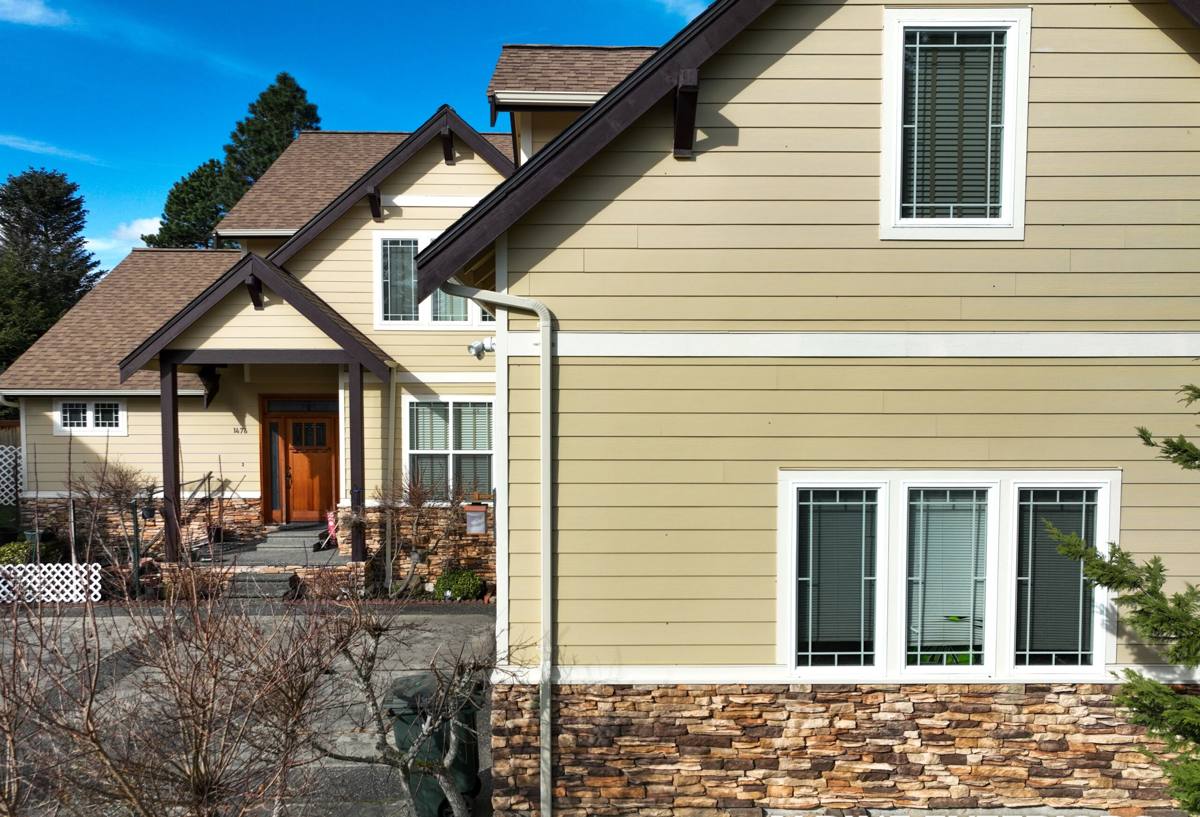
What Belleair's Climate Actually Does to Siding Over Time
Salt Air and Corrosion
Proximity to the Gulf and the Intracoastal means Belleair homes are exposed to airborne salt on a near-constant basis, even on properties that aren't directly waterfront. Salt accelerates corrosion on fasteners, trim accessories, and any siding product with metal components not rated for coastal exposure. It also degrades lower-quality paint and coating systems faster than inland weathering would, leading to chalking, fading, and premature finish failure well before a product's expected lifespan is up.
UV Exposure
Florida's sun load is intense and consistent nearly year-round, not seasonal the way it is in much of the country. That constant UV exposure breaks down pigments and coating binders over time, which is why so many homes in this part of Pinellas County show chalky, faded siding well before the material itself has failed structurally. The finish gives out long before the substrate does on lower-grade products.
Wind-Driven Rain
Hurricane and tropical storm systems don't just bring wind — they drive rain sideways under pressure, forcing water into laps, seams, and fastener penetrations that would stay dry in a normal rainstorm. A siding system that isn't detailed correctly behind the surface — flashing, weather-resistive barrier, proper lap and fastener placement — can let that water reach the wall sheathing even when the visible siding looks intact. This is the failure mode we see most often on older or improperly installed siding in this area, and it's usually invisible until there's already rot or mold behind the wall.
Why James Hardie Fiber Cement Fits This Climate
We standardized on James Hardie because, installed correctly, it's engineered to hold up against exactly the three stressors above — better than the alternatives we used to install before drawing that line. A few specifics matter here:
HZ10 Climate Engineering
James Hardie makes different formulations for different climate zones, and the HZ10 product line is engineered specifically for hot, humid, storm-exposed climates like the Gulf Coast and greater Tampa Bay area. That's a meaningfully different product than a generic fiber cement board — the formulation accounts for the moisture cycling, humidity, and heat this region puts siding through, rather than being a one-size-fits-all board shipped to every market in the country.
ColorPlus Factory Finish
Rather than relying on field-applied paint — which is exactly the kind of coating that struggles under Belleair's UV and salt load — James Hardie's ColorPlus Technology bakes the finish on in a factory-controlled process before the board ever reaches the jobsite. That finish is formulated and warrantied to resist fading and chalking far longer than typical field paint, which matters enormously in a climate that punishes coatings this hard.
Non-Combustible, Dimensionally Stable
Fiber cement doesn't expand and contract with heat and humidity the way some engineered wood and composite products do, and it won't ignite from windblown embers during a wildfire event or feed a house fire the way combustible siding materials can. Neither of those properties is unique to coastal Florida, but they're part of why we consider Hardie the stronger long-term standard regardless of where a home sits.
Wind Resistance: What a Correct Installation Requires Here
Pinellas County sits in a wind-borne debris region under the Florida Building Code, and Belleair's open coastal exposure puts it toward the higher end of the wind pressures a home in this county is likely to see. That has real consequences for how siding gets installed, not just what product goes up:
- Fastener type, spacing, and penetration depth have to match the wind design pressure for the home's exposure category — not a generic, one-size schedule pulled from a manufacturer's minimum spec sheet
- Every lap, corner, and butt joint needs to be detailed to resist wind-driven rain intrusion, not just wind uplift
- Trim, soffit, and fascia transitions are common failure points in high-wind events and need the same attention as the field siding itself
- Weather-resistive barrier has to be continuous and properly lapped — a gap here undermines the whole assembly regardless of how good the siding itself is
- Work should be permitted and inspected through the appropriate Pinellas County or local building process, not treated as a cosmetic swap that skips inspection
Siding that looks correctly installed from the ground can still be under-fastened or missing proper flashing behind the surface — the kind of shortcut that doesn't show up until the next major wind event. This is a big part of why installation quality matters as much as product choice in a place like Belleair.
Moisture Management: The Part Homeowners Rarely See
A siding system is really a layered assembly — weather-resistive barrier, flashing at every penetration and transition, correctly lapped and fastened boards, and a finish that sheds water rather than holding it. In a climate that gets wind-driven rain as often as this one does, skipping or rushing any one of those layers is where problems start. We pay particular attention to window and door flashing, kick-out flashing at roofline transitions, and butt joint sealing — these are the details that separate siding that survives a decade of Gulf Coast storms from siding that starts showing water damage after the first bad season.
James Hardie vs. Other Siding Options for a Belleair Property
| Factor | James Hardie Fiber Cement | Vinyl | Engineered Wood / LP-Type Products |
|---|---|---|---|
| Wind resistance (properly installed) | Strong, rated for high wind pressures with correct fastening | Can flex, crack, or blow off in sustained hurricane-force gusts | Depends heavily on installation; panel failure at seams is common in high wind |
| Salt air / UV resistance | ColorPlus finish resists fading and chalking; substrate unaffected by salt | Fades and becomes brittle under sustained UV; can discolor near salt exposure | Coatings degrade under UV; substrate vulnerable to moisture if finish fails |
| Moisture / rot behavior | Won't rot; performs well if flashed and sealed correctly | Doesn't rot but traps moisture behind panels if installed poorly | Wood-based core can swell or degrade if moisture reaches it |
| Fire behavior | Non-combustible | Combustible, can melt or deform under heat | Combustible |
| Typical warranty structure | Long-term, transferable, factory-backed | Varies widely by manufacturer and grade | Varies; often shorter and more installation-sensitive |
None of this means every alternative product fails on every home — installation quality and maintenance matter across the board. But when we weighed these factors against what Belleair's climate actually demands, James Hardie was the product we were willing to stand behind exclusively.
Our Process on a Belleair Job
Assessment and Product Selection
We start by walking the property to assess current siding condition, wall assembly, and any existing moisture or wind damage — this is especially important on older Belleair homes where prior repairs or additions may not have been detailed consistently with the rest of the house. From there we talk through product line, profile (lap, panel, or shingle), and ColorPlus color options that fit the home and, where relevant, any neighborhood or architectural expectations.
Permitting
Siding work in this area goes through the appropriate local building permit process, with wind design and fastening schedules documented to match the home's exposure category under the Florida Building Code. We handle this as a standard part of the job rather than an optional step — it's what makes the finished work inspectable and, later, insurable and resalable without surprises.
Installation and Moisture Detailing
Old siding and any compromised sheathing come off, the weather-resistive barrier and flashing go in correctly at every window, door, and roofline transition, and the Hardie boards go up to the fastening schedule the wind design calls for — not a generic minimum. This is where most of the long-term performance difference actually gets built in, well before the finish color is what anyone notices.
Final Walkthrough
We finish with a walkthrough covering caulking, trim details, and any punch-list items before calling the job complete, so nothing gets left half-finished behind a fresh coat of color.
Why a Crew That Already Works Belleair Matters
Coastal wind design, local permitting expectations, and the specific way salt air and storm exposure wear on a home aren't things you learn from a manual — they're things you learn from doing the work here repeatedly. A crew that already works Belleair and the surrounding Largo area knows the wind exposure categories that apply locally, has a working relationship with the permitting process, and has already seen how different siding assemblies hold up — or don't — through actual Gulf Coast storm seasons. That local pattern recognition is worth more on a coastal property than it is on an inland home with a milder exposure profile.
What a Correct Belleair Hardie Installation Should Include
- HZ10 product line, engineered for hot, humid, storm-exposed climates
- ColorPlus factory finish rather than field-applied paint, unless there's a specific reason to go primed
- Continuous, properly lapped weather-resistive barrier behind the siding
- Flashing at every window, door, and roofline transition, not just at obvious penetrations
- Fastener type and spacing matched to the home's wind design pressure, not a generic minimum
- Proper permitting through the local building department, with wind design documented
- A final walkthrough covering caulking and trim before the job is called complete
Maintaining Hardie Siding in a Belleair Climate
Once it's installed correctly, Hardie siding in this climate is genuinely low-maintenance compared to the alternatives, but it isn't zero-maintenance. A periodic gentle wash removes salt residue and airborne grime before it builds up, caulked joints are worth a visual check after major storm seasons, and any impact damage — from debris in a wind event — is worth addressing promptly rather than leaving an opening for water intrusion. None of this is a heavy lift, but staying ahead of it is what keeps a Hardie exterior looking and performing the way it's supposed to for the long haul.
If you're dealing with storm-damaged siding, an aging exterior, or you're just planning ahead for what a Belleair home actually needs to hold up to this climate, we're happy to take a look and put together a free, no-pressure estimate.