 Largo Window
 Belleair is one of the more established residential communities in Pinellas County, and its siding has usually been on the house long enough to have seen a real mix of Gulf Coast weather — hurricane-force wind events, decades of intense Florida UV, wind-driven rain during both storms and ordinary summer squalls, and the slow, constant work of salt air moving in off the water. Siding repair here is rarely as simple as swapping out a cracked or damaged panel. The real job is figuring out what that combination of conditions has already done to the wall behind the siding, because a repair that only addresses what's visible from the curb tends to fail again within a season or two. This page covers what we actually find on Belleair siding repair calls, how we decide between a targeted repair and something larger, and why a crew that already works this area gets that diagnosis right more often than one that doesn't.
Why Siding Repair Looks Different in Belleair
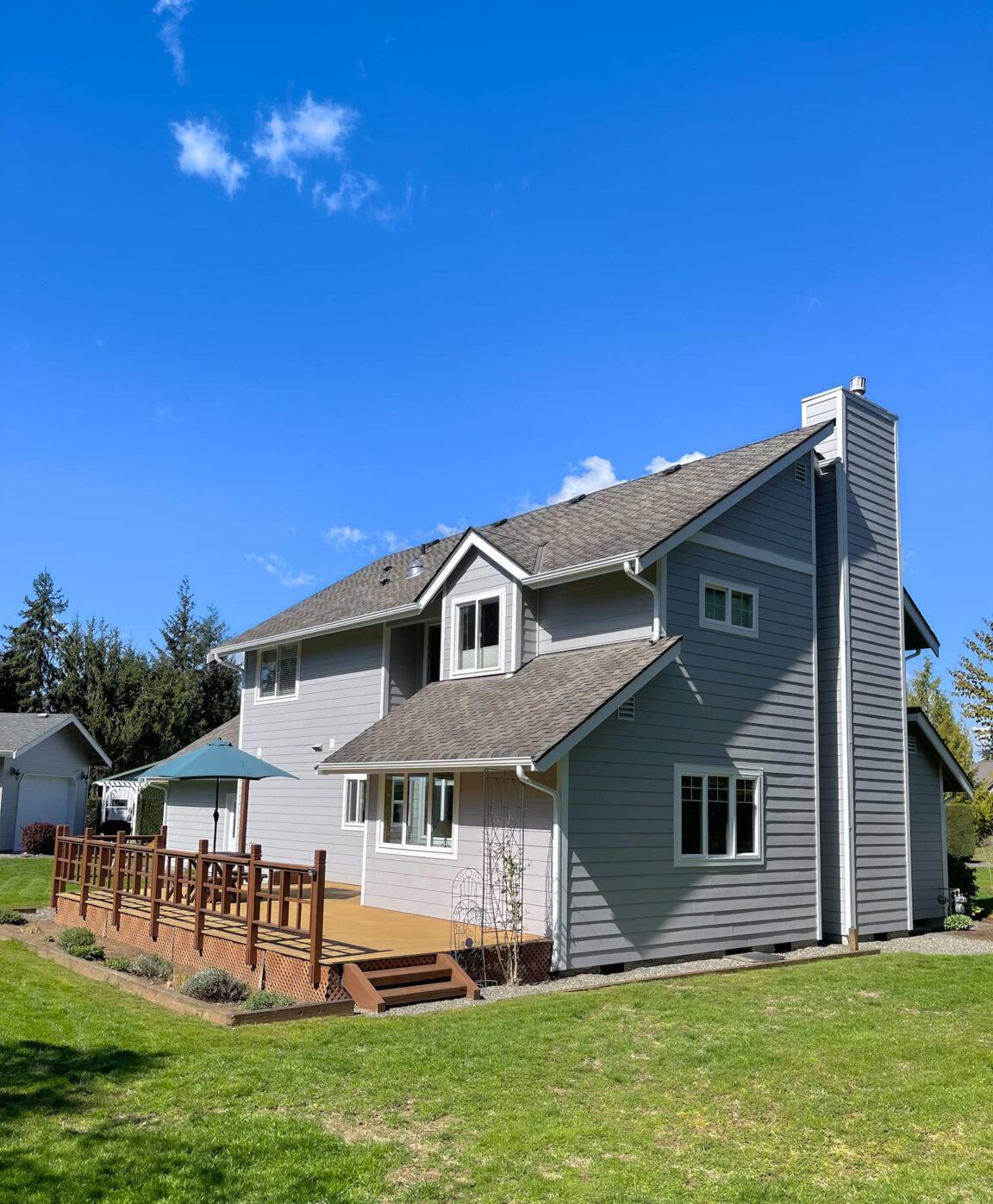
Homes in Belleair span a wide range of ages and siding types — original wood lap siding on older homes, vinyl installed during a past renovation cycle, older fiber cement that predates current formulations, and increasingly, James Hardie siding installed correctly the first time. That mix matters for repair work because the right fix depends entirely on what's already on the wall. A repair plan built for vinyl doesn't transfer to fiber cement, and a patch that works on newer Hardie board won't necessarily hold on an older wood or composite product that's already partway through its service life.
Belleair's location close to open water in Pinellas County also means siding here takes a fuller dose of coastal weather than a lot of inland Largo-area properties see. That doesn't mean every repair call is storm damage — plenty of what we find is the slow accumulation of ordinary wear accelerated by the climate. But it does mean an accurate repair estimate has to account for exposure, not just the visible symptom.
Mature landscaping in a lot of Belleair's established neighborhoods adds another wrinkle. Shaded, north-facing walls under heavy tree canopy dry out more slowly after rain than a sun-exposed elevation, which can mean more moisture-related repair issues on one side of a house than another. We factor which elevation we're looking at into the diagnosis, not just the age of the siding.
What the Climate Actually Does to Siding Here
Four conditions do most of the damage to siding in this part of Pinellas County, and they rarely act alone.
Hurricane-Force Wind
Wind doesn't just rip siding off in a storm — more often, it works panels loose gradually, cycle after cycle, until fasteners back out, seams separate, or a panel edge lifts enough to let water behind it. By the time a panel visibly flaps or falls, the fastening and the seam behind it have usually been compromised for a while.
UV and Sun Exposure
Florida gets some of the most intense, consistent UV exposure in the country, and siding takes it directly for most of daylight hours, most of the year. On painted wood and older fiber cement, this shows up as chalking, fading, and a finish that breaks down faster than the manufacturer's rated service life suggests. On vinyl, prolonged UV exposure can make panels brittle enough to crack from minor impacts that wouldn't have damaged them when new.
Wind-Driven Rain
Ordinary rain falls down. Wind-driven rain gets pushed sideways and upward, into seams, laps, and trim joints that were only ever designed to shed water moving in one direction. This is usually where repair problems actually start — not at the face of the siding, but at the transitions: butt joints, corner trim, window and door casings, and anywhere the siding meets a penetration.
Salt Air
Salt air doesn't wait for a storm. It's a constant, low-level process that accelerates corrosion in fasteners and metal trim and can affect the finish on painted surfaces over time. On a Belleair property close to the water, this is often the difference between a fastener that holds for its expected lifespan and one that fails years early.
Common Repair Issues We See in Belleair
- Cracked or buckled siding panels from repeated wind flex or impact
- Delaminating or swelling at butt joints and seams on older wood or composite siding
- Chalking, fading, or peeling paint film that's broken down faster than expected under constant UV
- Soft or water-stained siding near window and door trim, where wind-driven rain has been getting behind the material
- Corroded or backed-out fasteners, especially on siding installed with standard-grade hardware
- Failed or shrunken caulk joints at seams, corners, and penetrations, letting moisture track behind the siding
Individually, most of these look like minor cosmetic issues. Together, or left long enough, they're usually a sign that moisture has already reached the wall assembly behind the siding — which is the point where a repair estimate needs to look past the surface.
Repair or Replace? How We Make the Call
Not every damaged section needs full replacement, and not every repair is actually the more cost-effective choice long-term. The honest answer depends on a few specific factors.
| Factor | Usually Points to Repair | Usually Points to Replacement |
|---|---|---|
| Extent of damage | Isolated to a few panels or one wall section | Spread across multiple elevations or the whole house |
| Underlying wall condition | Sheathing and framing behind the siding are sound | Moisture has reached and damaged the sheathing or framing |
| Age and material of existing siding | Newer material still within its service life | Older wood, vinyl, or first-generation fiber cement near end of life |
| Material availability | A close match to the existing product is available | Discontinued profile or color makes a seamless patch impossible |
| History of repeat problems | First real issue on an otherwise sound installation | Recurring damage in the same areas points to a systemic issue |
We'll give a straight answer on which category your siding falls into, including when a full section or full replacement is genuinely the more sensible option, rather than layering another repair onto a wall system that's already past the point where patching makes sense.
What a Correct Repair Job Involves
Diagnosis Before Anything Else
We start by identifying the actual cause, not just the visible damage. That means checking behind and around the affected area for moisture, checking the condition of the sheathing where accessible, and confirming whether the fasteners, flashing, or caulk joints nearby are also compromised. Fixing a cracked panel without checking what caused it just means a return visit later.
Matching Material and Finish
A repair should blend in, not stand out as a patch. On fiber cement, that means matching profile, exposure, and finish as closely as the product line allows. On older or discontinued siding, an exact match isn't always possible, and we'll say so upfront rather than after the work is done.
Fixing the Cause, Not Just the Symptom
If wind-driven rain has been getting behind a section of siding because of a failed flashing detail or a gap at a trim joint, replacing the damaged board without correcting that detail means the repair fails again, often faster the second time because the underlying path for water was never closed off.
Fasteners and Flashing Details
Salt air goes after standard-grade fasteners and thin metal flashing regardless of how well the repair looks on day one. We use corrosion-resistant fasteners and correct flashing details on every repair, not just on replacement work, because this is one of the most common places a repair either holds for years or needs redoing sooner than it should.
Our Repair Process, Start to Finish
- On-site inspection — we look at the damaged area and check the surrounding siding and trim for related issues, not just the spot that prompted the call
- Honest diagnosis — what caused the damage, whether it's isolated or connected to a larger moisture or fastening issue
- Repair or replace recommendation — a clear answer on scope, with the reasoning explained, before any work starts
- Material matching — sourcing the closest match available for profile, exposure, and finish, or discussing options honestly where an exact match isn't possible
- Removal and correction — damaged material comes out, and any flashing, sealant, or substrate issue behind it gets corrected, not just covered
- Repair, fasten, and finish — new material installed with corrosion-resistant hardware and finished to blend with the surrounding siding
Why Replacement Sections Are Always James Hardie
When a repair calls for new siding material — a full damaged panel, a section beyond patching, or a wall where the existing siding has reached the end of its useful life — we install James Hardie fiber cement, and only James Hardie. It's non-combustible, holds up to Florida's UV and moisture cycle better than the wood and vinyl products it commonly replaces, and its ColorPlus factory finish is built to resist the fading and chalking that shows up faster on field-painted siding in this climate. Hardie's HZ product lines are engineered for the humidity and moisture exposure that Gulf Coast properties like those in Belleair deal with, and the warranty backing it is stronger and more straightforward than what comes with the lower-cost alternatives we're sometimes asked to match instead.
We don't install LP SmartSide, vinyl, Cemplank, Allura, primed spruce, or cedar, even for a repair patch. That's a deliberate standard, not a lack of flexibility — mixing a lower-durability product into a repair just relocates the next failure to a different spot on the same wall.
There's also a practical repair-specific reason we standardized on it: a fiber cement repair section with a factory finish doesn't need repainting on the same short cycle a field-painted wood patch does. That means fewer callbacks to the same wall a few years later, which matters to us as much as it matters to the homeowner paying for the work twice.
After the Repair: Maintenance That Protects the Investment
- Rinse siding periodically to clear salt residue before it works into seams and fastener heads
- Re-caulk seams, trim joints, and penetrations on the schedule the product calls for — this is cheap insurance against wind-driven rain intrusion
- Walk the exterior after storm season and look for lifted panels, cracked caulk, or staining near trim
- Keep gutters and downspouts clear so water isn't sheeting down a wall section repeatedly
- Trim back landscaping that holds moisture against siding or blocks airflow and sun from drying it out
- Address small issues — a hairline crack, a slightly loose panel — before the next storm season rather than after
Why Hiring a Crew That Already Works Belleair Matters
A contractor who mostly works inland Pinellas County can still do competent repair work, but Belleair's proximity to open water changes what shows up on a wall over time — corrosion patterns tied to salt exposure, wind-driven rain finding its way into seams that would stay dry a few miles inland, and UV breakdown that runs on a faster timeline than a generic maintenance schedule assumes. A crew that already works this area isn't guessing at how a particular siding type or wall orientation tends to hold up here; that shows up in the small decisions that decide whether a repair lasts — how much a flashing lap needs to overlap, which fastener grade actually holds up under real coastal exposure, and when a seemingly minor issue is actually a sign of something further along behind the siding.
That familiarity also tends to mean a more accurate first estimate, with less back-and-forth once work is underway. It can matter, too, if a repair is tied to storm damage and a homeowner needs clear documentation of what was found and fixed for insurance purposes — an assessment grounded in how this specific area actually behaves holds up better than a generic write-up.
If you've noticed a cracked panel, a soft spot near a window, or paint that's chalking faster than it should, it's worth having someone look at the actual cause before assuming you know the fix. We offer free, no-pressure estimates for siding repair in Belleair and the surrounding Largo area — use the form below to get a time on the schedule.