 Largo Window
 Why Decks in Dunedin Wear Out Faster Than People Expect
Dunedin sits close enough to the water that homeowners feel the difference in everything outdoors — paint fades sooner, metal corrodes sooner, and wood decking that might last two decades inland can start failing structurally in half that time here. It isn't one thing wearing your deck down. It's several stresses working on it at once, year after year: intense UV exposure that breaks down wood fibers and degrades fastener coatings, wind-driven rain that gets pushed sideways under railings and around ledger boards, salt-laden air that accelerates corrosion on anything metal, and the periodic hurricane-force wind loads that every structure on the Pinellas County coast has to be built to withstand.
None of that is a reason to avoid having a deck. It's a reason to make sure the one you have is built and fastened the way this climate actually demands, not the way a generic national spec sheet assumes. A deck built for a dry inland climate and installed as-is in Dunedin is a deck that's already on a shorter clock than it should be.
Signs a Dunedin Deck Needs Replacement, Not Just Repair
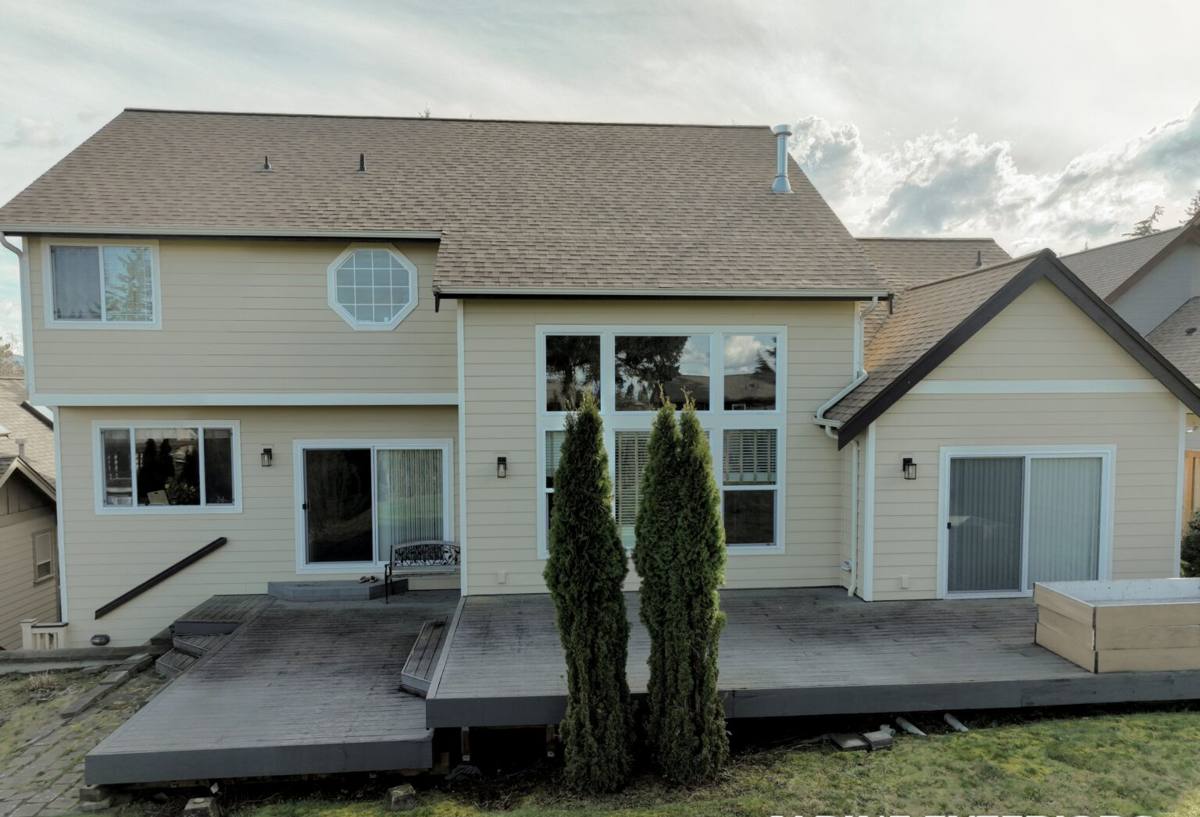
Not every tired-looking deck needs to come out. Some just need new boards, a hardware upgrade, or a railing rebuild. But there's a point where patching stops making sense — where the structure underneath has been compromised and repair would just be putting new decking on a frame you can't trust. Signs it's time to talk replacement instead of repair:
- Soft, spongy, or spring-loaded decking in more than a spot or two
- Visible rot, splitting, or delamination at the ledger board where the deck meets the house
- Rusted, corroded, or missing joist hangers and structural fasteners
- Posts that wobble, or footings that have shifted or heaved
- Railings that flex noticeably when leaned on
- A deck more than 15-20 years old that has never had the substructure inspected
- Persistent staining or dark streaking that signals ongoing moisture intrusion, not just surface dirt
If more than one or two of these apply, the honest answer is usually replacement. Chasing repairs on a compromised frame tends to cost more over a few years than doing it right once.
Choosing Decking Material for Pinellas County Conditions
Material choice matters more here than in a lot of the country, because the deck is fighting UV and moisture simultaneously, almost every day of the year. Here's how the common options actually behave in this climate, based on what each material does over time, not marketing claims.
| Material | How it holds up locally | Maintenance | Honest trade-off |
|---|---|---|---|
| Pressure-treated wood | Affordable, but UV and humidity cycles cause checking, splintering, and warping faster here than inland | Annual sealing/staining recommended | Lowest upfront cost, highest ongoing labor |
| Capped composite | Cap layer resists moisture and fading well in coastal sun; core is protected from the elements | Occasional washing, no sealing/staining | Higher upfront cost, much lower lifetime maintenance |
| Uncapped composite | Older-generation composite can absorb moisture at cut edges and fade unevenly in strong UV | Low, but edge sealing matters | Mid-range cost, more moisture-sensitive than capped |
| PVC decking | Fully synthetic, doesn't absorb moisture, handles UV and salt air well | Minimal | Highest material cost, longest service life with least upkeep |
We don't push one material on every homeowner. A wood deck that's properly fastened, flashed, and maintained can still make sense for someone who wants that look and doesn't mind the upkeep. What we won't do is install wood decking over rusted or undersized hardware, or use uncapped composite in a full-sun, high-splash location and call it a long-term fix — that's setting a homeowner up for the same problem again in a few years.
What About the Substructure Material?
Decking gets the attention, but the frame underneath — joists, beams, posts — is what actually determines how long the deck lasts. Pressure-treated lumber rated for ground contact, paired with corrosion-resistant hardware, is the standard for framing regardless of what decking surface goes on top. Standard zinc-coated fasteners degrade faster in salt air; stainless steel or heavy-duty coated hardware rated for coastal/ACQ-treated lumber contact is worth the modest upcharge here.
What a Correct Deck Replacement Actually Involves
A deck is only as good as what's hidden once it's finished. Most of the work that actually determines lifespan happens before a single deck board goes down.
Footings and Posts
Footings need to be sized and set to local frost-free, code-compliant depth and bear on solid soil — not just poured to whatever the old footing happened to be, especially if the old deck was undersized to begin with. Posts get anchored with proper post bases, not buried in concrete, which traps moisture against the wood and shortens its life.
Ledger Board Attachment
This is the single most common point of failure on older decks, and it's also the point where wind-driven rain does the most damage over time. A correct ledger attachment includes proper flashing that directs water away from the house band board, structural lag bolts or through-bolts (not just nails), and blocking behind the ledger where the original framing calls for it. A deck that's pulling away from the house almost always traces back to a ledger that was never flashed or fastened correctly in the first place.
Framing and Fasteners
Joist spacing and beam sizing need to match the actual span and load, not just mirror whatever was there before — especially if the replacement includes a larger footprint, a hot tub, or heavier railing systems. All structural connections get corrosion-resistant hardware rated for treated lumber contact, since this is where salt air does its quiet damage over years.
Decking and Railing Installation
Boards get properly gapped for drainage and material expansion, fastened per the manufacturer's coastal/high-wind specifications, and railings are anchored into structural framing, not just screwed to the fascia board. Railing height and baluster spacing follow Florida Building Code requirements.
Building to Florida Building Code and Wind Requirements
Pinellas County enforces Florida Building Code wind provisions, and deck construction isn't exempt just because it's an outdoor structure. Depending on the scope, a deck replacement typically requires a permit, an inspection, and construction detailed to withstand the wind loads assigned to this part of the coast. That means correctly sized and spaced fasteners, proper hurricane ties or structural connectors at key framing points, and railing/guard systems built to code height and load requirements — not just what looks sturdy.
Skipping the permit process might save time upfront, but it creates real problems later: unpermitted structural work can complicate a home sale, cause issues with insurance claims after storm damage, and in some cases require the deck to be torn out and redone to pass a retroactive inspection. We pull the required permits and build to the inspected standard, because that's what protects the homeowner, not just the deck.
Our Deck Replacement Process
- On-site assessment — we inspect the existing deck, ledger, footings, and framing to see what's actually salvageable versus what needs to come out
- Material and design conversation — we walk through decking options, railing style, and layout based on how the space is actually used
- Written estimate — clear scope, material, and cost breakdown before any work starts
- Permitting — we handle the permit application and coordinate required inspections
- Demolition and disposal — old decking, railing, and any compromised framing removed and hauled off
- Rebuild — footings, framing, ledger flashing, decking, and railing installed to code
- Final walkthrough — we go over the finished deck with you before calling the job done
What Deck Replacement Typically Costs
Every deck is different, so a real number only comes from an on-site look — but the factors that move the price are consistent. This is meant to help you understand what you're paying for, not to replace an actual quote.
| Cost factor | Why it matters |
|---|---|
| Deck size and footprint | More square footage means more material, framing, and labor |
| Decking material | Pressure-treated wood is lowest upfront cost; PVC and capped composite cost more but need far less upkeep |
| Substructure condition | Footings, posts, or ledger that need full rebuilding add cost versus a frame that's structurally sound |
| Height and access | Elevated decks and decks with limited access for equipment and material take more labor |
| Railing system | Cable, glass, and composite railing systems cost more than standard baluster railing |
| Permitting and inspections | Required by Pinellas County for most deck rebuilds; a straightforward, fixed cost of doing it right |
Why a Crew That Already Works Dunedin Matters
Deck work in this area isn't the same job it would be somewhere without hurricane exposure or salt air. A crew that already builds and replaces decks around Dunedin and the rest of Pinellas County knows the wind load requirements without having to look them up mid-project, knows which fastener and hardware upgrades are worth the cost here versus which ones are overkill, and knows what the local permitting and inspection process actually expects — because they've been through it repeatedly, not once.
That local familiarity shows up in small decisions that add up: flashing details around the ledger, hardware selection that accounts for salt air, and framing built to the wind loads this coastline actually sees rather than a generic national minimum. It's the difference between a deck that's technically finished and one that's actually built to last here.
Get a Straightforward Estimate
If your deck is showing its age, feeling soft in places, or you're just ready to replace it with something built for what this coast actually throws at it, we're happy to take a look and walk you through your options. No pressure, no pushy sales pitch — just an honest assessment and a clear estimate. Fill out the form below to get started.