 Largo Window
 Indian Rocks Beach Puts Siding Under Barrier-Island Pressure
Indian Rocks Beach sits on a narrow barrier island off the Pinellas County mainland, which means every home here takes on a level of exterior exposure that inland Largo properties simply don't see. There's no buffer of other buildings or tree cover breaking up wind off the Gulf, no distance from salt spray, and no season where the sun lets up. Siding installed on an Indian Rocks Beach home is doing real structural work from day one, not just providing curb appeal.
We're based in Largo and have worked this stretch of the coast long enough to know that a siding job done to a generic standard doesn't hold up the way the same job does a few miles inland. This page is specifically about siding installation for Indian Rocks Beach homes — what the local climate demands, what a correct installation actually involves, how our process works, and why it matters that the crew on your roofline already knows this island rather than learning it on your project.
What This Coastal Climate Does to Siding
Salt Air
Being surrounded by the Gulf on one side and the Intracoastal on the other means Indian Rocks Beach homes sit in near-constant salt-laden air. Salt accelerates corrosion in exposed fasteners, trim, and any metal flashing component, and that process doesn't pause between storms — it's working every day, year-round. A fastener that starts corroding loses holding strength over time, and the small gap it leaves where it penetrates the siding becomes a point where moisture can start working its way in.
Wind-Driven Rain and Hurricane-Force Gusts
An island location with open water exposure on multiple sides takes wind loads that a sheltered mainland lot doesn't. During hurricane season, that means sustained, high-velocity gusts driving rain sideways into laps, seams, and trim lines that were only ever designed to shed water falling straight down. Every joint and penetration in a home's siding gets tested at once during a real wind event — which is exactly when a marginal installation detail turns into an active leak.
Year-Round UV
Florida's UV load is intense for most of the country, and an open barrier island setting with little shade adds to it. That sun exposure breaks down caulk and sealants, chalks and fades unstabilized paint finishes, and speeds up the dry half of every wet-dry cycle a material goes through. Materials and finishes not engineered for this level of exposure show their age here faster than they would a few miles inland.
Why Correct Installation Matters More on a Barrier Island
On a lot like this, the material is only half the equation — how it's installed determines whether that material actually performs the way it's rated to. A few details carry more weight here than almost anywhere else in Pinellas County:
Flashing and Drainage
Flashing at windows, doors, and any wall penetration has to be sequenced correctly with the water-resistive barrier so water sheds outward and down, not behind the siding. A drainage gap or rainscreen detail that lets incidental moisture escape rather than sit against the sheathing matters more on a property that's rarely more than a short walk from open water and gets wind-driven rain more often than a sheltered inland lot.
Fastener and Trim Corrosion Resistance
Given how aggressively salt air works on this island, fastener type, coating, and spacing aren't details we treat as a minimum-code checkbox. We factor the property's actual salt exposure into what we specify, rather than defaulting to whatever a manufacturer allows in a generic, non-coastal climate.
Elevated and Piling Construction
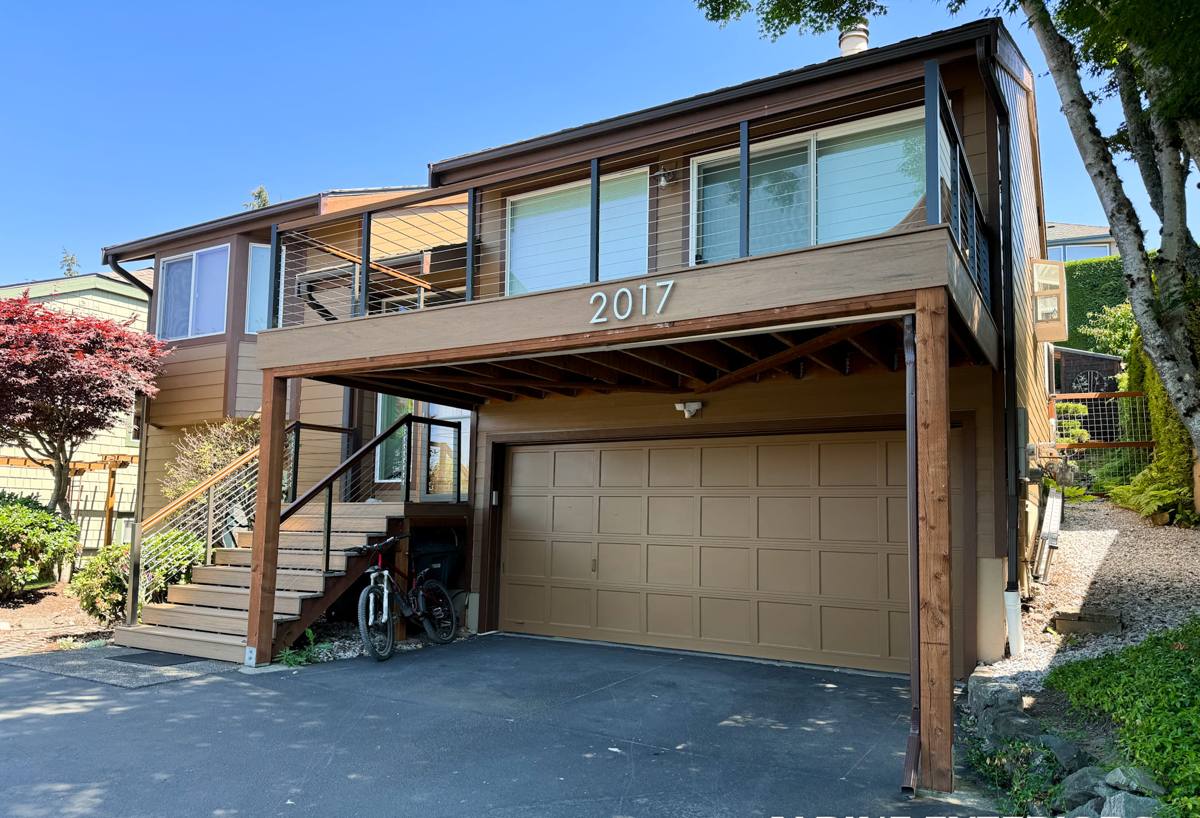
A fair number of homes on Indian Rocks Beach are elevated on pilings or stem walls due to flood elevation requirements, which changes how siding meets the structure at the base, around stairs and landings, and at transitions between elevated living space and enclosed lower areas. Those transition points need the same clearance and flashing discipline as a roofline, and they're easy to shortcut if a crew hasn't worked this kind of construction before.
Why We Install Only James Hardie Fiber Cement Here
We don't offer vinyl, LP SmartSide, or other fiber cement brands like Cemplank or Allura, and on a barrier island property that decision matters more than it would inland. Vinyl is fastened to hang loose enough to expand and contract, which is part of its design, but that same looseness makes it more vulnerable to being torn off in sustained hurricane-force gusts. Engineered wood products have a wood-fiber core at their center, and in a climate where surfaces rarely get a long stretch to fully dry out, any compromise at a cut edge or joint gives that core a place to wick moisture and swell.
James Hardie fiber cement is dimensionally stable — it doesn't swell, cup, or wick the way wood-based products can, because it's made from cement, sand, and cellulose fiber rather than a wood core. We specify Hardie's HZ product lines, which are climate-engineered for higher humidity and moisture exposure rather than freeze-thaw conditions, and its factory-applied ColorPlus finish holds color and resists chalking under sun exposure far better than field-applied paint. It's also non-combustible, which is worth noting given how often that question comes up. None of that makes the product installer-proof — the installation still has to be done to spec — but it gives an Indian Rocks Beach home more margin for error in a climate that doesn't offer much.
Comparing Siding Options for an Indian Rocks Beach Home
| Factor | Vinyl | Engineered Wood | James Hardie Fiber Cement |
|---|---|---|---|
| Wind performance in sustained hurricane-force gusts | Can be torn loose; hung to allow expansion | Solid when fastened and sealed correctly | Rigid, mechanically fastened, engineered for wind exposure |
| Salt air and fastener corrosion | Panel stable, but exposed fasteners still corrode | Panel and fasteners both vulnerable | Panel stable; correct fastener spec is what matters most |
| Behavior under near-constant UV | Can fade and become brittle over years | Factory finish varies by product line | ColorPlus finish resists fading and chalking |
| Moisture at cut edges and joints | Doesn't absorb, but traps humid air behind panels | Wood-fiber core can swell if edge seal fails | Non-organic; doesn't swell or support rot |
| Combustibility | Can melt or deform under extreme heat | Combustible (wood-based) | Non-combustible |
How Our Installation Process Works From Largo
Every project starts with an on-site inspection, not an estimate pulled from a phone call. On an Indian Rocks Beach home, that means checking soft spots near window and door trim, looking at flashing where the roofline meets walls, checking corrosion at existing fasteners and trim, and — where relevant — inspecting how siding meets elevated framing at stairs, landings, and lower enclosures. From there, installation follows James Hardie's published fastening, clearance, and joint-treatment specifications, adjusted for this island's wind exposure and salt load rather than a generic inland standard.
- Exterior inspection and moisture check before any tear-off begins
- Removal of existing siding and inspection of the sheathing underneath
- Repair or replacement of any damaged sheathing or framing found during tear-off
- Installation of a proper water-resistive barrier with correctly sequenced flashing
- James Hardie plank, panel, or shingle siding installed to manufacturer spec and local wind requirements
- Coastal-grade, corrosion-resistant fasteners and trim work matched to the chosen Hardie product line
- Final walkthrough covering caulk lines, touch-up needs, and care instructions
Why a Crew That Already Works Indian Rocks Beach Matters
Siding quality comes down to details that don't show up in a photo once the job is finished — how far flashing laps, how much clearance is left above grade or a lower-level slab, whether cut ends were sealed, whether fasteners were driven to the right depth for a coastal wind zone. A crew that works this island regularly has already seen how those choices hold up here specifically, under this level of salt exposure and wind load, rather than guessing based on experience from a sheltered inland neighborhood.
It also matters for permitting. Pinellas County's wind zone and, in coastal areas like Indian Rocks Beach, wind-borne debris requirements affect fastening schedules and product specifications. A crew based in Largo that pulls permits along this coast regularly knows what the county's inspectors actually check for, rather than applying an out-of-state or inland assumption to a barrier-island property.
Signs an Indian Rocks Beach Home May Need New Siding
- Paint that's chalking, fading unevenly, or peeling faster on Gulf-facing walls
- Soft or spongy spots when pressing on siding near windows, doors, or bottom courses
- Visible gaps, warping, or buckling in panels, especially after storm season
- Rust streaks or active corrosion around fasteners, trim, or flashing
- Musty odors or staining on interior walls that back up to exterior siding
- Siding installed more than 20-25 years ago with no documented replacement
None of these signs mean a home needs full replacement immediately, but on a barrier island property they're worth a professional look before the next storm season rather than after water has already reached the sheathing.
What to Expect From Your Estimate
An honest estimate starts with a real inspection, not a sales pitch. We'll walk your Indian Rocks Beach property, check current siding condition and any hidden moisture issues, talk through which James Hardie product line fits your home, and give you a straightforward number based on what we actually find — not a low figure that grows once tear-off starts. Cost varies with home size, elevation and framing type, existing condition, and how much trim detail is involved, and we'll walk through those factors specifically rather than leave you guessing.
If you're on Indian Rocks Beach and thinking about siding — whether you're dealing with a specific problem or planning ahead of the next storm season — reach out below for a free, no-pressure estimate from a crew that already knows this coastline.