 Largo Window
 Deck Replacement in Indian Shores: A Different Job Than Inland Florida
Indian Shores sits on a narrow barrier island between the Gulf of Mexico and the Intracoastal Waterway, and that location changes what a deck actually has to survive. A deck built the same way you'd build one twenty miles inland in Largo or Clearwater won't hold up the same way out here. Salt-laden air moves across the island constantly, humidity stays high most of the year, and every board and fastener is exposed to direct sun for most of the day. None of that is exotic knowledge to a crew that works this stretch of Pinellas County regularly — but it matters enormously to how a deck should be designed, framed, and fastened.
This page covers deck replacement specifically for Indian Shores properties: what the environment does to decks here, what a correctly built replacement involves, and how our process works from first look to final walkthrough.
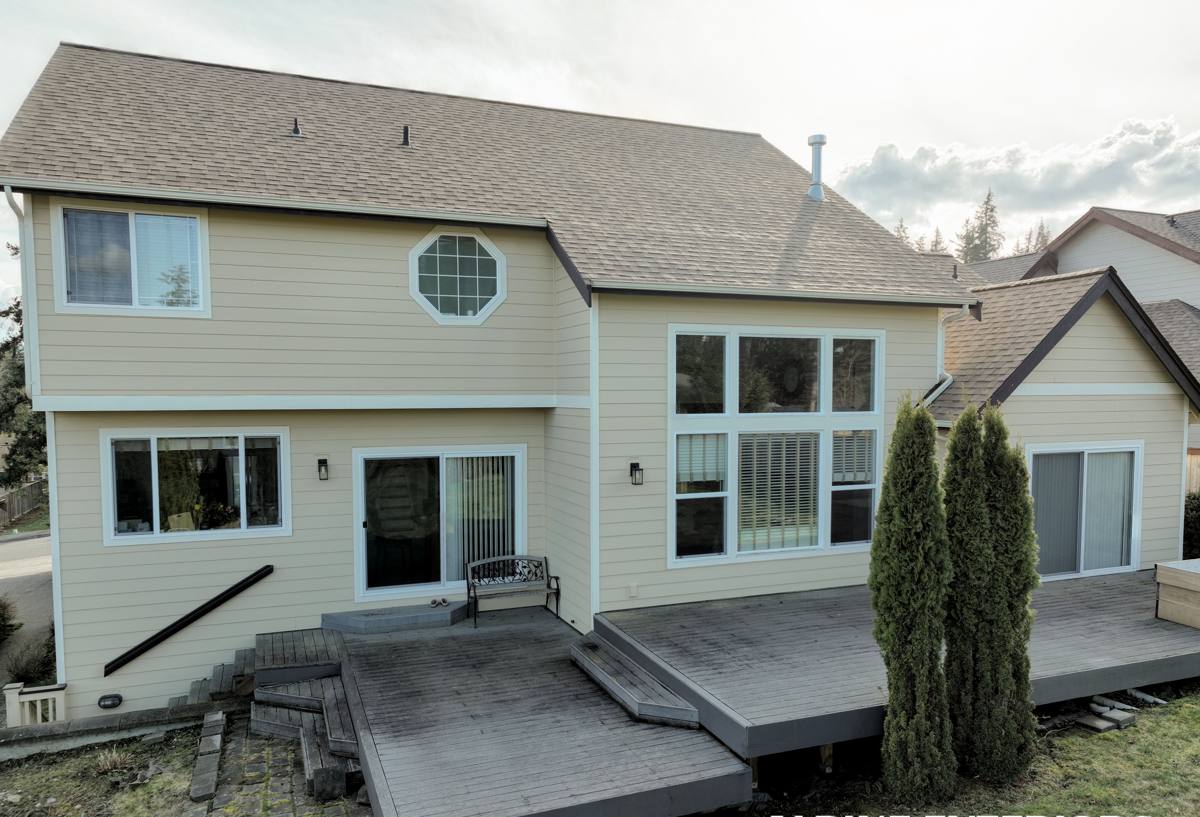
What Salt Air, Sun, and Storms Actually Do to a Deck Here
Salt Air and Corrosion
Airborne salt doesn't just affect waterfront homes directly on the Intracoastal — it travels across the entire barrier island. Over time it accelerates corrosion in any metal fastener, connector, or bracket that isn't rated for coastal exposure. This is one of the most common reasons an older deck fails from the inside out: the boards look fine on top while the joist hangers, screws, or bolts holding the structure together have quietly corroded underneath.
UV Exposure
Florida sun is intense nearly year-round, and a deck has no shade to hide behind. UV breaks down the surface fibers of wood decking, dries out natural oils, and causes graying, splintering, and checking. Composite and PVC materials resist this better than wood, but even those products vary a lot in how they're formulated to handle sustained UV — cheaper or older composite formulations can still fade or chalk over time.
Wind-Driven Rain and Moisture Cycling
Pinellas County's coastal areas see frequent wind-driven rain, and a deck goes through constant wet-dry cycling — soaked in a storm, then baked dry within hours. That cycling is hard on wood fibers and even harder on the framing underneath if water isn't shedding properly away from ledger boards, posts, and footings. Poor drainage detailing is one of the top reasons decks rot from the structure out rather than the surface down.
Hurricane-Force Wind Loads
Coastal Pinellas County falls under higher wind-speed design requirements in the Florida Building Code than inland areas. A deck attached to a house has to resist uplift and lateral loads during a tropical storm or hurricane, which means ledger attachment, post-to-beam connections, and railing anchoring all need to be built — and fastened — to hold under real wind pressure, not just support foot traffic on a calm day.
Signs an Indian Shores Deck Needs Replacement, Not Just Repair
Not every deck problem means a full tear-out. But in a coastal environment, certain signs point to structural issues that go beyond a board swap.
- Soft, spongy, or bouncy sections of decking, especially near the house or stairs
- Rust streaking around fasteners, joist hangers, or post bases
- A ledger board pulling away from the house, or gaps at the flashing
- Wobbly or loose railing posts — a safety issue as much as a cosmetic one
- Widespread splintering, cupping, or graying across most of the surface
- Visible rot or insect damage at posts, beams, or the areas closest to grade
- A deck older than 15-20 years that's never had structural connectors upgraded
If the problems are limited to a handful of boards and the framing underneath tests solid, repair can make sense. Once the framing, ledger attachment, or hardware is compromised, replacement is usually the more honest recommendation — patching over corroded connectors just delays a bigger failure.
Decking Material Options for a Coastal Barrier Island Environment
Material choice matters more here than in a lot of inland Florida neighborhoods, because the environment is harder on every option. Here's how the common choices compare for a home exposed to salt air and constant sun.
| Material | Salt Air / Moisture Resistance | UV / Fade Resistance | Maintenance | Typical Lifespan Here |
|---|---|---|---|---|
| Pressure-treated wood | Moderate — needs sealing to hold up | Fades and grays without upkeep | Annual cleaning and re-sealing | 10-15 years with consistent maintenance |
| Traditional composite | Good | Fair — some fading over time depending on formulation | Low — periodic washing | 15-25 years |
| Capped composite / PVC | Very good | Strong — capped surface resists fading and staining | Very low | 25+ years |
Wood remains a valid, more affordable option for homeowners willing to keep up with sealing on a regular schedule. For decks that will take the full brunt of Gulf-facing sun and salt exposure with minimal upkeep, capped composite or PVC decking generally holds its appearance and structural integrity longer — the tradeoff is upfront cost. We'll walk through the honest tradeoffs for your specific deck rather than push one product line by default.
What a Correct Deck Replacement Involves
Structure First
The decking boards are the part everyone sees, but the framing underneath is what actually determines how long the deck lasts and how safe it is. A correct replacement starts with proper joist spacing and sizing for the actual load, solid beam-to-post connections, and footings set to the depth local code requires — not just to match what was there before, especially if the original deck was under-built.
Ledger Attachment and Flashing
Where the deck attaches to the house is the single most common failure point on any deck, coastal or not. Proper flashing keeps water from working its way behind the ledger board and into the house's rim joist or wall structure. This detail gets rushed on a lot of older or budget deck builds, and it's one of the first things we check on any replacement.
Fasteners and Hardware Rated for Coastal Exposure
Standard galvanized hardware corrodes faster in salt air than most homeowners expect. We use stainless steel or coastal-rated, corrosion-resistant fasteners and connectors on Indian Shores decks — it costs more than standard hardware, but it's the difference between hardware that lasts as long as the deck and hardware that fails in five to eight years while the boards on top still look fine.
Railings and Guards
Railings take wind load directly and are a code-regulated safety component, not just a design feature. Post spacing, baluster gaps, and attachment strength all need to meet Florida Building Code requirements, and salt exposure makes hardware choice just as important here as anywhere else on the structure.
Our Process
- Assessment: We inspect the existing deck's framing, ledger attachment, footings, and hardware condition — not just the surface boards — to determine whether repair or full replacement is the right call.
- Plan and estimate: We walk you through material options, structural scope, and a clear estimate before any work starts. No pressure, no upsell games.
- Permitting: Deck replacement in Largo and unincorporated Pinellas County typically requires a permit, and we handle that process as part of the job.
- Demolition and structural rebuild: Old decking, and framing if needed, comes out; new framing, ledger flashing, footings, and posts go in to current code requirements.
- Decking, railing, and hardware installation: Final surface materials and railings go in with coastal-rated fasteners throughout.
- Final walkthrough and inspection: We review the finished deck with you and coordinate the required inspection sign-off.
Permits, Codes, and Inspections
Deck replacement work in Largo and the surrounding Pinellas County coastal communities is permitted work, and for good reason — a deck is a structural attachment to your home, and it has to be able to hold up under Florida's wind and moisture conditions. Permitting also means the work gets inspected, which protects you as the homeowner: it confirms the framing, footings, and attachment were actually built to code and not just to look right. We handle the permitting and inspection coordination as part of every replacement so you're not left managing that process yourself.
Why a Local Largo Crew That Works Indian Shores Matters
A contractor who only occasionally works barrier island properties can miss details that a crew working this area regularly treats as standard practice — the right hardware grade for salt exposure, ledger flashing that accounts for wind-driven rain, footing depths appropriate for the local soil and water table. Being based in Largo means we're familiar with the permitting process for Pinellas County coastal jobs and can be on-site promptly if a question comes up mid-project or after completion. It also means we're building a reputation in this specific area, job by job — which keeps us honest about scope, materials, and pricing.
Keeping Your New Deck Looking and Performing Its Best
Whatever material you choose, a little consistent maintenance goes a long way in this environment:
- Rinse off salt residue and debris periodically, especially after storms
- Check railing posts and stair connections for looseness once or twice a year
- Reseal wood decking on a regular schedule if that's the material you choose
- Keep gutters and downspouts clear so runoff isn't pooling against the deck structure
- Have hardware and framing inspected every few years, particularly on older builds
A deck built correctly for this environment from the start needs far less of this attention than one that was under-built or fastened with standard hardware.
If your Indian Shores deck is showing its age or you're planning ahead for a replacement, we're happy to take a look and give you a straightforward, no-pressure estimate. Use the form below to get in touch.