 Largo Window
 Indian Shores Roofs Take a Beating Unlike Almost Anywhere Else
Indian Shores sits on a narrow barrier island in Pinellas County, wedged between the Gulf of Mexico and the Intracoastal Waterway. That location is what makes the area beautiful, and it's also what makes roofs here fail faster than roofs just a few miles inland. Homes on this stretch of coast take on direct salt air, near-constant UV exposure, and the kind of wind-driven rain that finds every weak seam in a roofing system. When a hurricane or tropical system tracks anywhere near the Gulf, these are some of the first roofs to get tested.
A roof replacement here isn't just a bigger version of what we'd do on a home in inland Largo. Material choice, fastening, flashing detail, and ventilation all have to be selected with barrier island exposure in mind from the start. Cutting corners on any of those doesn't show up as a problem in year one — it shows up as a leak, a lifted shingle line, or corroded flashing three or four years later, usually right before or after a storm.
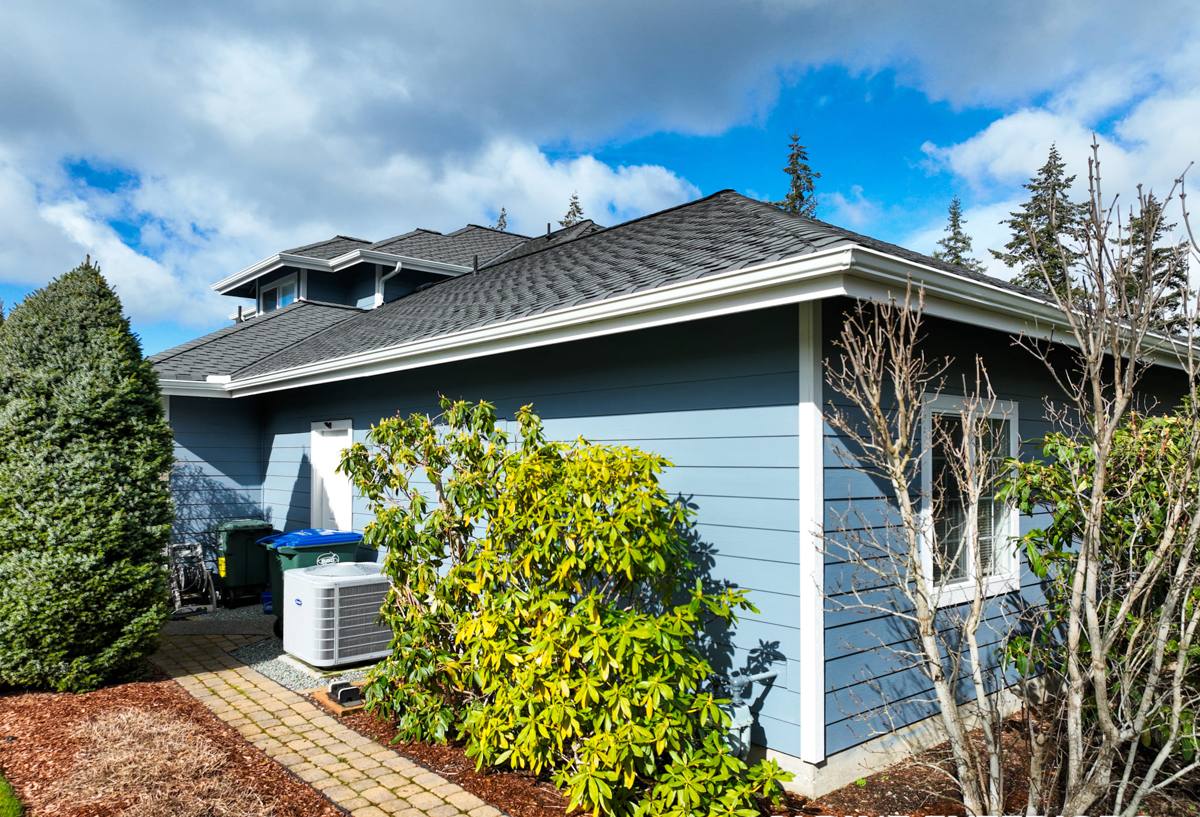
What a Roof Replacement Has to Deliver on a Barrier Island
Wind resistance you can verify, not just assume
Every roofing product sold today lists a wind rating, but the rating only means something if the roof is installed to match it — correct nailing pattern, correct number of fasteners, correct starter course and hip/ridge treatment. On an exposed Gulf-front lot, an underrated install is the difference between a roof that survives a tropical storm and one that loses shingles or panels in a routine summer squall.
Fasteners and flashing rated for salt air
Standard fasteners and flashing corrode faster in salt-laden coastal air than they do even a few miles inland. We spec corrosion-resistant fasteners and flashing metals for barrier island jobs as a baseline, not an upgrade, because replacing corroded flashing five years in costs far more than doing it right the first time.
UV-stable materials that don't chalk and crack early
Indian Shores gets intense, nearly year-round sun with very little tree cover to break it up. Lower-grade shingles and coatings can chalk, fade, or become brittle well ahead of their rated lifespan under that kind of constant UV load. Material quality matters more here than it does on a shaded inland roof.
Ventilation that keeps working after years of salt exposure
A roof's ventilation system pulls heat and moisture out of the attic, which protects the decking and helps the roofing material itself last. Vent components have to be able to take the same salt exposure as the rest of the roof, or they become the first thing to fail and the last thing anyone thinks to check.
Signs Your Roof Is Due for Replacement, Not Another Repair
Repair makes sense when a roof is otherwise sound and the damage is isolated. Replacement makes sense once the roofing system as a whole is past its useful life for this environment. Signs worth taking seriously include:
- Granule loss showing up in gutters or at the base of downspouts
- Shingles that are curling, cupping, or visibly brittle at the edges
- Rust staining or soft spots around flashing at chimneys, walls, or roof-to-wall transitions
- Daylight visible through the roof deck from inside the attic
- A roof that's taken repeated storm damage and repair patches over the past several seasons
- An insurance company flagging the roof's age or condition at renewal
- A roof approaching or past the tail end of its expected lifespan for coastal exposure
If more than one or two of these apply, a repair is usually a short-term patch on a longer-term problem.
Choosing the Right Roofing System for a Gulf-Front Home
There isn't one correct material for every home in Indian Shores — the right call depends on the home's structure, HOA or condo association rules where applicable, and how long the owner plans to keep the property. Here's how the common options compare under coastal exposure specifically:
| Roofing System | Wind Performance | Coastal Lifespan | Maintenance Needs | Relative Cost |
|---|---|---|---|---|
| Architectural asphalt shingle | Good, when installed to spec with proper fastening | Moderate — UV and salt shorten lifespan versus inland installs | Periodic inspection of flashing and vents | $ |
| Standing seam metal | Excellent — few exposed fasteners for wind to catch | Long, with the right coating and fastener spec | Low — occasional coating/finish check | $$$ |
| Exposed-fastener metal panel | Good, but fastener seals need upkeep | Moderate to long, depends on fastener maintenance | Fastener washers should be checked periodically | $$ |
| Concrete or clay tile | Very good when properly fastened and battened | Long for the tile itself; underlayment is the limiting factor | Underlayment typically needs replacement before the tile does | $$$ |
Notice that for tile roofs, the tile usually outlasts the underlayment underneath it. That's a detail worth understanding before you assume a tile roof "just needs the tile redone" — often the more important work is happening underneath, out of sight.
What a Correct Roof Replacement Actually Involves
A roof replacement is more than swapping old material for new. On a coastal home, the sequence matters:
- Full tear-off — removing existing roofing down to the deck, never layering new material over old
- Deck inspection and repair — replacing any decking that's soft, delaminated, or water-damaged before anything new goes down
- Upgraded underlayment — a self-adhered or high-performance underlayment as a secondary water barrier, which matters most in wind-driven rain events
- Flashing detail — new flashing at every wall transition, chimney, skylight, and penetration, not just wherever the old flashing already existed
- Fastening to spec — nailing or fastener patterns matched to the wind exposure of the specific home and its height and location on the island
- Ventilation review — confirming intake and exhaust venting are balanced and using components rated for salt exposure
- Final inspection and permit closeout — the job isn't done until it passes municipal or county inspection and the permit is properly closed
Our Process, Start to Finish
- On-site inspection and honest assessment — we look at the whole roofing system, not just the visible surface, and tell you plainly whether repair or replacement is the right call
- Material and system selection — we walk through the trade-offs in the table above based on your home, budget, and how long you plan to stay in it
- Permitting — we pull the required permit and make sure the scope of work is documented correctly before any tear-off begins
- Tear-off and installation — deck inspected and repaired as needed, underlayment and flashing installed to coastal standards, then the new roofing system installed and fastened to spec
- Final walkthrough and documentation — we go over the finished roof with you, confirm inspection sign-off, and leave you with the paperwork your insurer may ask for
Permits, Wind Codes, and Why the Paperwork Actually Protects You
Pinellas County's coastal areas, including Indian Shores, fall within Florida's wind-borne debris region, which means roofing work here is governed by wind-resistance requirements that are stricter than a lot of the country. A permitted, inspected roof replacement isn't bureaucratic overhead — it's the documentation that shows the roof was actually built to the code that applies to your specific location. That paperwork matters at claim time if a storm ever damages the roof, and it matters again at resale, when buyers and their insurers want to see it.
Be cautious of any contractor offering to skip the permit "to save time." On a barrier island home, that shortcut removes the one record proving the roof was installed correctly for the wind exposure it actually faces.
Why Hiring a Crew That Already Works Indian Shores Matters
Barrier island jobs come with logistics that don't exist on a typical inland re-roof: limited staging space on narrow lots, bridge and causeway access for material delivery, and, for condos or homes under an HOA, approval processes that have to be coordinated before work starts. A crew that's done this before knows to plan for those details up front instead of discovering them mid-job.
There's also a timing dimension. Roofing work on the coast is best scheduled with an eye on the hurricane season calendar — starting a tear-off without a real plan for weather risk is how homes end up with tarps instead of roofs. A contractor who works this stretch of Pinellas County regularly builds that awareness into the schedule rather than treating it as an afterthought.
Get a Straight Answer About Your Roof
If your Indian Shores roof is showing its age, or you just want an honest opinion on whether repair or replacement is the right move, we're glad to take a look. Fill out the form below for a free, no-pressure estimate — we'll walk the roof, explain what we find in plain language, and give you real options for your home and budget.