 Largo Window
 Siding Built for Life on the Gulf in Indian Shores
Indian Shores sits on one of Pinellas County's barrier islands, with the Gulf of Mexico on one side and the Intracoastal Waterway on the other. That location is why homes here take a beating that inland Largo properties simply don't see in the same combination. Salt-laden air corrodes fasteners and finishes faster. Sun exposure is nearly constant and intense for most of the year. Wind-driven rain during storms finds every gap in a wall assembly. And when a hurricane or tropical system pushes through, siding on a barrier island home is often the first line of defense against wind-borne debris and pressure that inland siding never has to withstand.
Siding installation in a location like this isn't just about picking a color and nailing panels to studs. It's a system: the water-resistive barrier behind the panels, the flashing details around every window and door, the fastening pattern, the clearances at grade and roof lines, and the material itself all have to work together. Get any one of those wrong and the house looks fine for a year or two, then problems start showing up as soft spots, staining, or panels that have started to separate from the wall.
What Indian Shores Homes Actually Need From Their Siding
Wind Resistance That Matches the Exposure
Pinellas County's coastal barrier islands fall under some of the state's higher wind-load requirements, and for good reason. Siding on a Gulf-facing or Intracoastal-facing wall has to stay fastened through sustained wind events, not just survive a passing thunderstorm. That means correct fastener spacing, the right fastener type for the substrate, and installation that follows the manufacturer's high-wind instructions rather than a generic nailing schedule.
Moisture Management, Not Just Water Resistance
Wind-driven rain during a coastal storm doesn't fall straight down — it gets pushed sideways and upward under laps and around trim. A correctly installed siding system assumes some water will get behind the panels occasionally and gives it a path to drain back out, rather than trying to make the wall perfectly sealed and hoping nothing ever gets through.
Materials That Tolerate Salt Air and UV
Constant sun bleaches and breaks down a lot of exterior products over time, and salt air accelerates corrosion on fasteners, trim, and any metal components. Siding this close to the Gulf needs a factory finish and a material makeup that's engineered to hold color and structural integrity in that combination, not just a coating applied on site.
Why We Install Only James Hardie Fiber Cement
We made a decision a while back to install one siding system — James Hardie fiber cement — and to stop installing vinyl, LP SmartSide, Cemplank, Allura, or wood products like primed spruce or cedar. That's not a marketing position, it's a practical one built around what actually holds up on Gulf Coast homes.
Fiber cement is non-combustible, which matters on a coast where wildfire isn't the concern but wind-blown embers from structure fires and grill accidents are a real one for tightly spaced coastal properties. James Hardie's HZ5 product line is specifically engineered for high-humidity, high-moisture climates like Florida's Gulf Coast, with a formulation designed to resist moisture-related damage better than standard fiber cement blends. The ColorPlus factory finish is baked on under controlled conditions rather than field-painted, which gives it better UV and fade resistance than a site-applied coat, and it carries its own finish warranty separate from the substrate warranty. Put together, that's a system built for exactly the conditions Indian Shores sees year-round — not a product we're asking to perform outside its design intent.
We're upfront that vinyl, LP SmartSide, and wood siding all have legitimate use cases and loyal installers elsewhere. Our reasoning for standardizing on one product is about long-term performance in this specific climate and being able to stand behind one installation method we know cold, not about disparaging what other contractors choose to install.
Signs an Indian Shores Home Needs New Siding
- Visible soft spots or a "give" when you press on the siding, especially near the bottom courses
- Paint that's peeling, bubbling, or chalking heavily despite being recently repainted
- Staining or dark streaks running down from seams, corners, or under windows
- Panels that have visibly warped, cupped, or separated from the wall
- Rising energy bills without another clear explanation, which can point to a failing weather barrier
- Visible corrosion on fasteners, trim, or J-channel around the siding
- A musty smell inside near exterior walls, which can indicate moisture getting behind the siding
Our Installation Process
Assessment and Planning
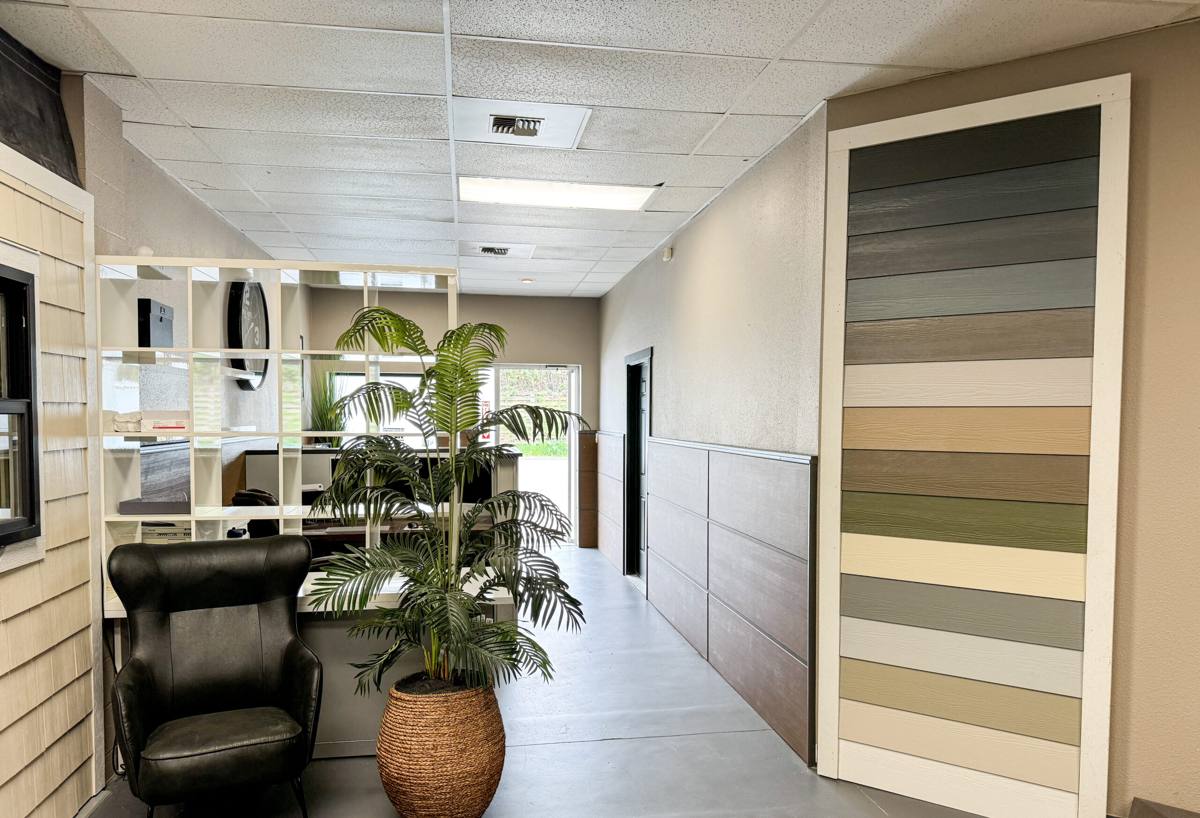
We start by walking the exterior and identifying problem areas — old fastener patterns, existing moisture damage, trim and flashing conditions around windows and doors, and anything specific to how the house sits relative to prevailing wind and sun exposure. This is also when we talk through Hardie product lines, profiles (lap, shingle-style panels, or vertical), and colors.
Tear-Off and Substrate Check
Old siding comes off and we inspect the sheathing underneath for rot, soft spots, or prior water damage before anything new goes on. Covering up a damaged substrate is one of the most common ways a siding job fails early — new siding over bad sheathing just hides the problem for a while.
Weather-Resistive Barrier and Flashing
A new water-resistive barrier goes over the sheathing, with flashing correctly integrated at every window, door, and penetration so water is directed out and away rather than trapped behind the cladding. This step is where most of the long-term protection actually happens — it matters more than the finish coat.
Installation to Manufacturer Spec
James Hardie panels are installed following the manufacturer's fastening schedule, clearances, and joint treatment for our wind exposure and climate zone. That includes correct nail placement, proper gaps at butt joints for expansion, and keeping the right clearance at grade, roof lines, and other transitions so water has somewhere to go.
Trim, Caulking, and Final Detailing
Corners, trim boards, and joints get finished and sealed with the correct materials — not generic caulk that will fail in a season of Florida sun and salt air. We do a final walk-through so you know exactly what was done and what to expect from the finish over time.
Cost Factors for Siding Installation in Indian Shores
Every home is different, but these are the main variables that move the price of a siding installation up or down. We'll walk through your specific numbers during a free estimate rather than quoting broad ranges that don't mean much until someone's actually looked at the house.
| Factor | Why It Matters |
|---|---|
| Home size and wall complexity | More square footage, more corners, dormers, and roof lines mean more material, cutting, and labor time |
| Substrate condition | Rotted or water-damaged sheathing found during tear-off has to be repaired before new siding goes on, which adds material and labor |
| Siding profile chosen | Lap siding, shingle-style panels, and vertical panel systems have different material and installation costs |
| Trim and detail work | Corner boards, window and door trim, and soffit/fascia work add labor beyond the flat wall panels |
| Access and site conditions | Tight lot lines, landscaping, pools, or multi-story walls affect how quickly a crew can safely work |
| Color and finish selection | Factory ColorPlus finishes vary in cost slightly by color and sheen, though far less than the labor and substrate factors above |
Why Hiring a Crew That Already Works Indian Shores Matters
A siding installer who mostly works inland doesn't necessarily think about salt air corrosion on fasteners, the right flashing details for wind-driven rain, or how Pinellas County's coastal wind requirements apply to a specific wall assembly. A crew that regularly works Indian Shores and the surrounding Gulf beach communities already accounts for those conditions as a default, not an afterthought.
There's also a practical permitting and inspection side to this. Coastal Pinellas County jurisdictions apply wind-load and building code requirements that are more specific than a lot of inland construction, and a contractor who's pulled permits and passed inspections in this area repeatedly knows what inspectors are going to look for before they show up. That saves time and avoids the back-and-forth of a job that gets flagged for something a crew unfamiliar with local requirements didn't think to address.
Caring for Your Siding After Installation
James Hardie siding is low-maintenance compared to wood or vinyl, but "low-maintenance" doesn't mean "no maintenance," especially this close to the Gulf. A little attention keeps the warranty valid and the finish looking right for the long haul.
- Rinse the exterior periodically to clear salt residue, especially on walls facing the water
- Inspect caulking and trim joints once or twice a year and have any cracked sealant redone before it lets water in
- Keep sprinklers and irrigation from spraying directly on the siding, which can cause mineral staining over time
- Trim back landscaping that's crowding the wall so air can circulate and moisture doesn't sit against the siding
- After any major storm, walk the exterior and check for loose panels, damaged trim, or debris impact
- Keep an eye on fasteners and metal trim for early signs of corrosion and have them addressed before they stain the finish
If your Indian Shores home's siding is showing its age or you're planning ahead of the next storm season, we're happy to take a look and walk you through what we'd recommend — no pressure, no obligation. Reach out for a free estimate using the form below.