 Largo Window
 Why Siding Fails Faster Near Indian Shores
Indian Shores sits about as close to open salt water as a home in the Largo area can get, and that proximity changes what "good siding" actually means. A product that performs fine ten miles inland in Largo can start showing problems within a few years once it's exposed to the combination this stretch of Pinellas County throws at it: sustained onshore wind, hurricane-force gusts during storm season, near-constant UV exposure, wind-driven rain that gets pushed sideways into wall assemblies, and airborne salt that settles on every exterior surface and works its way into seams, fasteners, and coatings.
None of these stressors is unique to Indian Shores on its own. What's unique is having all of them, all year, on the same house. That's the environment we design every siding job around, and it's the reason we only install James Hardie fiber cement siding rather than the vinyl, engineered wood, or lower-grade fiber cement products some contractors will sell for less.
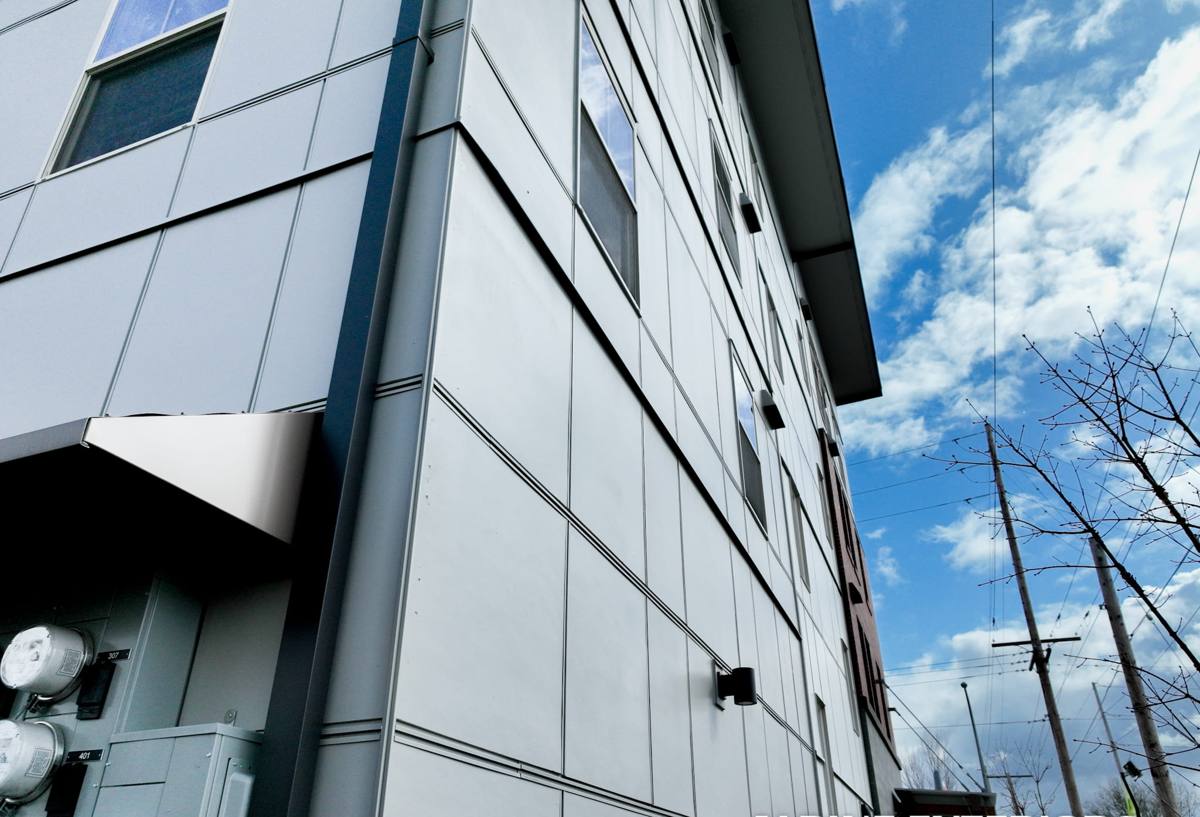
What Coastal Wind and Salt Actually Do to a Wall
Wind and Wind-Driven Rain
Wind doesn't just push on siding — it pressurizes and depressurizes the wall assembly as gusts hit and release, and it drives rain sideways and even upward under laps and around trim. Siding that isn't fastened, lapped, and flashed to spec can let water behind the cladding during a single bad storm, and once moisture is trapped behind siding it doesn't dry out quickly in Florida's humidity. That's when sheathing and framing start to suffer, often invisibly, behind siding that still looks fine from the street.
UV Exposure
Florida sun is intense and nearly year-round. Paint films and lower-grade coatings chalk, fade, and break down under that kind of exposure, which is why field-painted or poorly finished siding on the coast often needs repainting on a much shorter cycle than the same product would inland or up north.
Salt Air
Airborne salt is corrosive to fasteners and hardware, and it accelerates the breakdown of anything not engineered to resist it. It also settles into microscopic gaps in a coating or substrate and holds moisture there, which is a slow, steady stressor most homeowners never notice until the siding starts to look tired years before it should.
Why We Install Only James Hardie
James Hardie fiber cement is engineered specifically for climates like this one. It's non-combustible, dimensionally stable in humidity swings, and manufactured with regional formulations — Hardie's HZ5 product is built for the exact wind, moisture, and temperature profile Gulf Coast Florida sees. The factory-applied ColorPlus finish is baked on under controlled conditions and backed by its own finish warranty, which matters enormously here because it removes the weak link that field-applied paint represents on other siding products.
We don't install LP SmartSide, vinyl, Cemplank, Allura, or primed wood siding, and we're upfront about why: each of those products asks a homeowner to accept a real trade-off — moisture sensitivity, wind resistance limits, finish maintenance burden, or a thinner warranty structure — that we don't think makes sense for a house exposed to what Indian Shores sees. Hardie isn't cheaper than every alternative, but it's the product we're willing to put our name behind here.
Choosing the Right Hardie Line and Profile
Hardie makes several distinct siding products, and picking the right one for a specific home is part of doing this correctly — it's not one-size-fits-all.
| Product | Best For | Look |
|---|---|---|
| HardiePlank lap siding | Most single-family homes; the standard choice | Traditional horizontal lap, smooth or cedar texture |
| HardiePanel vertical siding | Accent walls, gables, coastal/modern styles | Clean vertical lines, often paired with battens |
| HardieShingle siding | Cottage or coastal-cottage styling, accent gables | Staggered or straight-edge shingle profile |
| HardieTrim boards | Corners, window/door surrounds, fascia | Crisp, paintable, moisture-resistant trim |
For most Indian Shores homes we recommend the HZ5 formulation across the board, ColorPlus factory finish over field paint whenever possible, and careful attention to trim details around openings — those are the spots where wind-driven rain finds its way in if the original build (or a prior siding job) cut corners.
What Correct Installation Actually Involves
Fiber cement siding is only as good as its installation. Hardie's own installation instructions are detailed for a reason — in a high-wind, high-moisture coastal zone, skipping steps is exactly what causes early failures. Here's what we hold every job to:
- Fastener pattern and type matched to the wind zone and substrate, not a generic nail schedule
- Proper clearances — siding held up off decks, patios, and roof lines per manufacturer spec so it isn't sitting in standing water or splashback
- A weather-resistive barrier and correctly lapped flashing at every window, door, and penetration, installed before a single piece of siding goes up
- Correct joint treatment at butt joints and inside/outside corners, sealed to Hardie spec rather than just caulked over
- Rainscreen or drainage plane detailing where the wall assembly calls for it, so any incidental moisture has a path to drain and dry
- Factory-finished ColorPlus edges properly primed and sealed at every field cut
Any one of these steps skipped can undercut the whole system. We've re-sided homes in this area where the siding material itself was fine but the installation — missing flashing, wrong fasteners, no clearance off a lower roof — was what actually failed.
How Our Process Works
1. On-Site Assessment
We look at the existing wall assembly, not just the old siding. That means checking for water intrusion history, sheathing condition, and how the home's trim, roofline, and openings interact with wind and rain from the exposures this property actually faces.
2. Product and Profile Selection
We walk through Hardie lines, textures, and ColorPlus color options based on the home's style and HOA or neighborhood expectations where applicable, and we're direct about which choices hold up best this close to the water.
3. Tear-Off and Substrate Repair
Old siding comes off, and any damaged sheathing or framing gets addressed before new material goes on — installing new siding over compromised substrate just hides the problem instead of fixing it.
4. Weather Barrier and Flashing
This is the step that determines whether the job holds up in a storm. Barrier, flashing, and drainage details go in per manufacturer spec, not shortcuts.
5. Installation
Siding, trim, and accessories go up to Hardie's HZ5 fastening and clearance requirements, with attention to every joint, corner, and penetration.
6. Final Walkthrough
We review the finished work with the homeowner, including care and maintenance expectations specific to a salt-air environment.
Maintenance in a Salt-Air Environment
Hardie siding with a ColorPlus finish is low-maintenance, but "low" isn't "none," especially this close to the Gulf. We recommend homeowners plan on:
- An annual rinse-down to clear accumulated salt film and airborne debris
- A yearly visual check of caulking at joints, trim, and penetrations — sealant is the first thing to wear in coastal exposure
- Prompt attention to any impact damage from storm debris, since exposed cut edges need to stay sealed
- Keeping vegetation and irrigation spray from holding moisture against the siding long-term
None of this is heavy upkeep, but skipping it in a coastal zone shortens the life of even a correctly installed system.
Cost Factors for This Type of Job
We don't publish blanket per-square-foot pricing because the real cost drivers vary by house. The honest factors that move a bid up or down are:
| Factor | Why It Matters |
|---|---|
| Substrate condition | Hidden moisture damage found at tear-off adds repair scope |
| Home size and complexity | Gables, dormers, and multiple rooflines add cutting, trim, and labor |
| Product line and profile | Plank vs. panel vs. shingle, and ColorPlus vs. field-painted, price differently |
| Trim and detail work | Full HardieTrim packages cost more but perform better long-term than reused or mismatched trim |
| Access and site conditions | Waterfront and elevated lots can affect staging and equipment needs |
Why a Crew That Already Works This Area Matters
A contractor who mainly works inland jobs isn't necessarily wrong about siding in general, but they may not be thinking in terms of wind zone fastening requirements, salt exposure, or the flashing details that matter most a few blocks from the water. Working regularly in and around Largo and the immediate coastal communities means we're used to Pinellas County permitting expectations, the wind-load realities of this specific stretch of coastline, and the installation discipline that a barrier-adjacent property actually requires — not the minimum that would pass inspection inland.
If you're weighing a siding replacement or repair on an Indian Shores-area home, we're happy to walk the property, look at what's there now, and give you a straight assessment of what it needs. Reach out for a free, no-pressure estimate — there's a form below to get started.