 Largo Window
 Redington Shores sits on a barrier island in Pinellas County, a short drive from our Largo shop, and it's one of the more demanding stretches of coastline we work on. Full Gulf exposure means the wind, sun, and salt that hit this island hit it harder and more directly than they hit a comparable home even a mile or two inland. When a Redington Shores homeowner starts pricing a re-side, the product and the installation both need to be built for that exposure specifically, not for an average Pinellas County house. We install James Hardie fiber cement exclusively, and this page covers why that matters here, what a correct installation actually involves, and how our process works on this island.
Why Redington Shores Puts Siding Through a Harder Test
A lot of the housing stock on this stretch of coast is a mix of older beach cottages, canal-front homes, and newer or renovated construction built to take advantage of Gulf and Intracoastal views. That mix matters for siding the same way it matters for windows: older homes often have wall assemblies and trim details that predate current wind code, while larger, more open newer builds have more wall surface exposed to direct sun and wind with less shelter from neighboring structures or mature trees. Either way, the underlying stress on the siding is the same — hurricane-force wind several months a year, intense UV nearly year-round, wind-driven rain that doesn't fall straight down, and salt air that works on the building envelope constantly, storm or no storm. Siding here isn't decorative. It's the first line of defense on a wall that takes a heavier load than most.
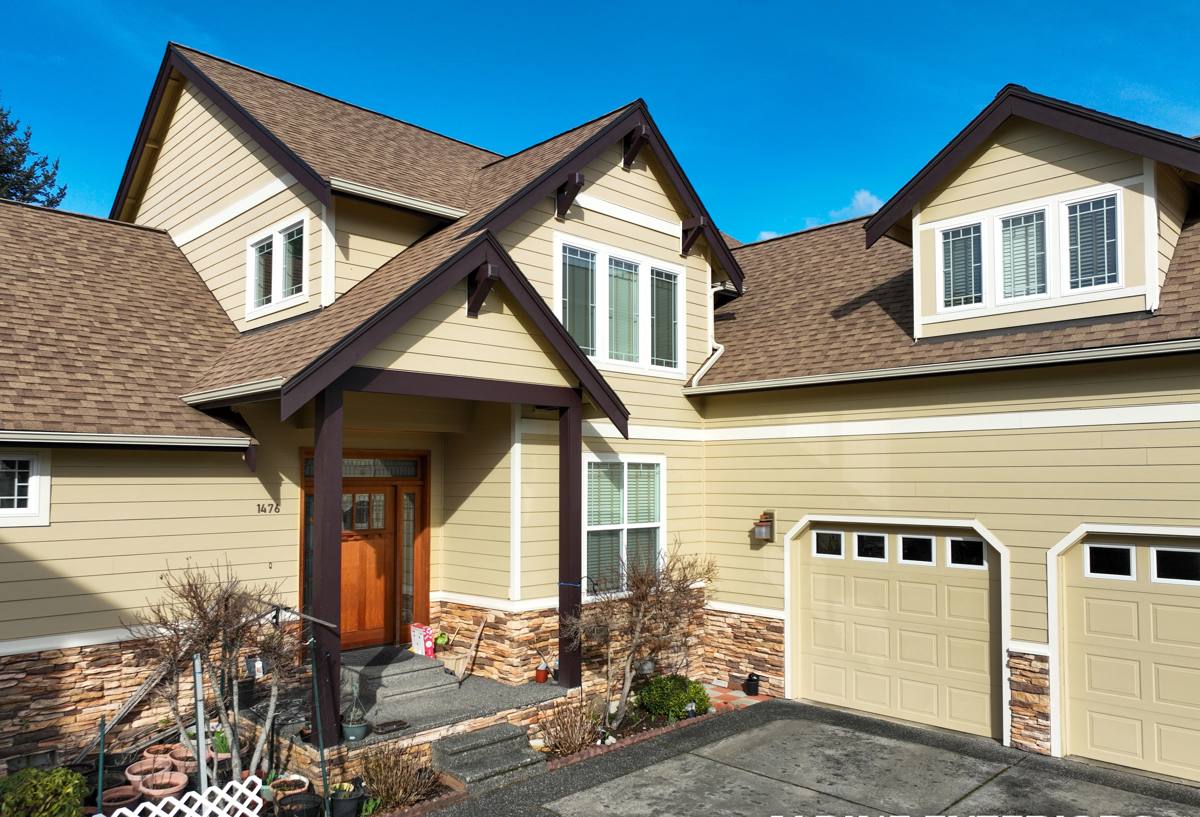
What Hurricane Winds, UV, Rain, and Salt Air Do to Siding Here
Hurricane-Force Wind Load
Direct Gulf exposure means Redington Shores homes see fuller wind loads than properties set back from the coast. Siding that isn't rigid, or that isn't fastened to spec for the local wind zone, is at real risk of being pulled loose or cracked at the edges during a sustained wind event. The failure point is rarely the field of the wall — it's the edges, corners, and joints where wind can get underneath a panel or lap and start working it loose.
Year-Round UV
Florida's sun angle and day length put more cumulative UV on a wall here than in most of the country, and Redington Shores' open, low-rise island setting doesn't offer much shade relief. On lower-grade paints and coatings, that UV load breaks down pigment and binders over time, which is why sun-facing elevations on older homes often look chalky and faded years before the shaded side of the same house shows any wear.
Wind-Driven Rain
Rain that falls straight down is easy for almost any siding to shed. Rain pushed sideways by wind — which is the normal pattern during storms and even routine squalls on this island — finds its way into butt joints, fastener penetrations, and trim intersections that would stay dry in calmer weather. Over a few hurricane seasons, marginal flashing or aging caulk lines start showing water intrusion at exactly those points.
Salt Air
Airborne salt off the Gulf settles on every exterior surface on this island, not just the homes closest to the water. It accelerates corrosion on exposed fasteners, hardware, and trim, and it's a slow, constant process rather than a storm-event problem — it keeps working on a house whether or not a hurricane ever makes landfall that year.
Why James Hardie Fiber Cement Is What We Put on These Homes
We don't offer vinyl, LP SmartSide, or other fiber cement brands like Cemplank or Allura. That's a deliberate standard, not a limitation in what we're capable of installing. Fiber cement as a category is the right direction for this climate — it's inorganic, so it doesn't have a wood-based core that can absorb water and swell or feed rot, and it's non-combustible. We standardized on James Hardie specifically within that category for two concrete reasons.
Climate-Engineered HZ Line
James Hardie engineers its siding differently for different regions, and its Gulf Coast and Southeast HZ product line is built for sustained heat, humidity, and moisture exposure rather than the freeze-thaw cycling that a northern climate's product line addresses. That distinction matters — a fiber cement board engineered for a cold, dry climate isn't the same product, performance-wise, as one engineered for a hot, humid, salt-air coastline, even if they look identical on a spec sheet. We confirm the correct product line for your specific home during the estimate.
ColorPlus Factory Finish
Rather than a field-applied paint job, Hardie's ColorPlus finish is baked on in multiple coats under controlled factory conditions before the boards ever reach the island. It's backed by its own finish warranty, separate from the substrate warranty, and it's formulated specifically to resist the fading and chalking that a site-painted finish shows under sustained Florida UV and salt exposure.
Matching the Product Line to the Home
Redington Shores' mix of architectural styles means one Hardie product line doesn't fit every home on the island. We walk through the options based on what the house actually calls for, not a default recommendation:
- HardiePlank lap siding — the traditional horizontal look, common on both older cottages and newer construction, available in a range of textures and exposures
- HardiePanel vertical siding — used for board-and-batten looks on additions, gables, and accent walls, popular on renovated coastal homes
- HardieShingle siding — a shingle-style profile for homes going for a classic beach-cottage look without the maintenance burden of real wood shingles
- HardieTrim boards — corner boards, fascia, and window/door trim finished to match, so the whole exterior envelope is consistent, not just the field of the wall
What a Correct Installation Looks Like on This Coastline
Clearance, Fastening, and Attachment for Wind Zone
Manufacturer specifications set minimum clearances from grade, roofline, and decks, and they set fastener type, spacing, and depth requirements that vary by wind zone. On a direct Gulf-exposure island like this one, we fasten to the requirements for that actual exposure category rather than a generic statewide minimum. Getting this step wrong doesn't usually show up on day one — it shows up as panels working loose after the first real wind event.
Flashing and Joint Detail for Wind-Driven Rain
This is the step that decides whether wind-driven rain stays outside the wall assembly or gets behind it. Every lap joint, window and door penetration, and roof-to-wall transition needs flashing sequenced and lapped correctly, with cut edges sealed per Hardie's spec so the factory finish's protection isn't compromised at the one spot where the board was cut in the field. We build that plan around the specific home rather than applying the same generic detail to every job.
Our Process, Start to Finish
- On-site inspection — we look at the existing siding's condition, check for soft spots or hidden moisture near trim and openings, and assess the home's specific wind and sun exposure
- Honest recommendation — which Hardie product line and profile fits the home, with the reasoning explained, not a one-size answer
- Tear-off and sheathing check — old siding comes off and the sheathing underneath gets inspected, with any rot or damage addressed before new siding goes on
- Water-resistive barrier and flashing — a proper drainage plane and correctly integrated flashing at every penetration and transition
- Installation to spec — Hardie siding fastened and cleared per manufacturer requirements for this wind zone
- Trim, caulking, and final walkthrough — trim and corner detail finished to match, joints sealed, and a walkthrough covering care and what to expect over the first year
Cost Factors for a Redington Shores Re-Side
| Factor | What Changes the Price |
|---|---|
| Home size and number of stories | More wall area and taller elevations mean more material and labor |
| Existing siding condition | Rot, prior water intrusion, or out-of-spec framing on older cottages adds repair work before new siding goes on |
| Product line and profile | Lap, panel, and shingle profiles carry different material and labor costs; more trim detail adds time |
| Wind zone fastening requirements | Direct Gulf exposure typically calls for a tighter fastening schedule than a more sheltered inland lot |
| Access and site conditions | Tight canal lots, seawalls, and limited staging space can add time compared to a standard suburban lot |
Why a Crew That Already Works Redington Shores Matters
Manufacturer installation instructions are written for average conditions, and this island rarely qualifies as average. A crew that doesn't work direct Gulf exposure regularly can follow the spec sheet and still miss the judgment calls that actually keep water and wind out — how much extra lap a flashing detail needs on a fully exposed elevation, which fastening pattern actually holds up under sustained hurricane-force gusts versus the code minimum, when a joint needs extra attention because of constant UV and salt cycling rather than the standard treatment. We work this part of Pinellas County regularly, so those calls are made from experience with this specific coastline, not guesswork.
Quick Checklist Before You Hire
- Ask which Hardie product line and profile is recommended for your home, and why
- Confirm the fastening schedule is specified for your actual wind exposure, not a generic minimum
- Ask how flashing will be detailed at windows, doors, and roof-to-wall transitions
- Confirm the sheathing will be inspected and any rot addressed before new siding goes on
- Ask what the substrate warranty and the ColorPlus finish warranty each cover, and whether they transfer to a future owner
- Get a written estimate that accounts for site conditions specific to your lot, not a flat per-square-foot number
If you're planning a re-side in Redington Shores or thinking ahead of the next storm season, it's worth having someone look at the actual condition of your walls and exposure before you start pricing products. We offer free, no-pressure estimates for James Hardie siding projects in Redington Shores and the surrounding Largo area — use the form below to get a time on the schedule.