 Largo Window
 Why Seminole's Climate Is Hard on Siding
Seminole sits close enough to the Gulf that salt-laden air is a constant factor on exterior materials, even on homes that aren't waterfront. Add in Pinellas County's intense, near year-round UV exposure, sudden downpours that come in sideways during summer storms, and the real possibility of hurricane-force wind loads, and you have a climate that's genuinely tough on a home's exterior. Siding here doesn't just need to look good — it needs to resist moisture intrusion, hold its color under relentless sun, and stay fastened to the wall when a storm pushes wind and rain at it horizontally.
This is the reason we install James Hardie fiber cement siding exclusively. It's not the only siding product on the market, but it's the one we've found holds up to this specific combination of conditions when installed correctly — and "installed correctly" is doing a lot of work in that sentence, which is most of what this page is about.
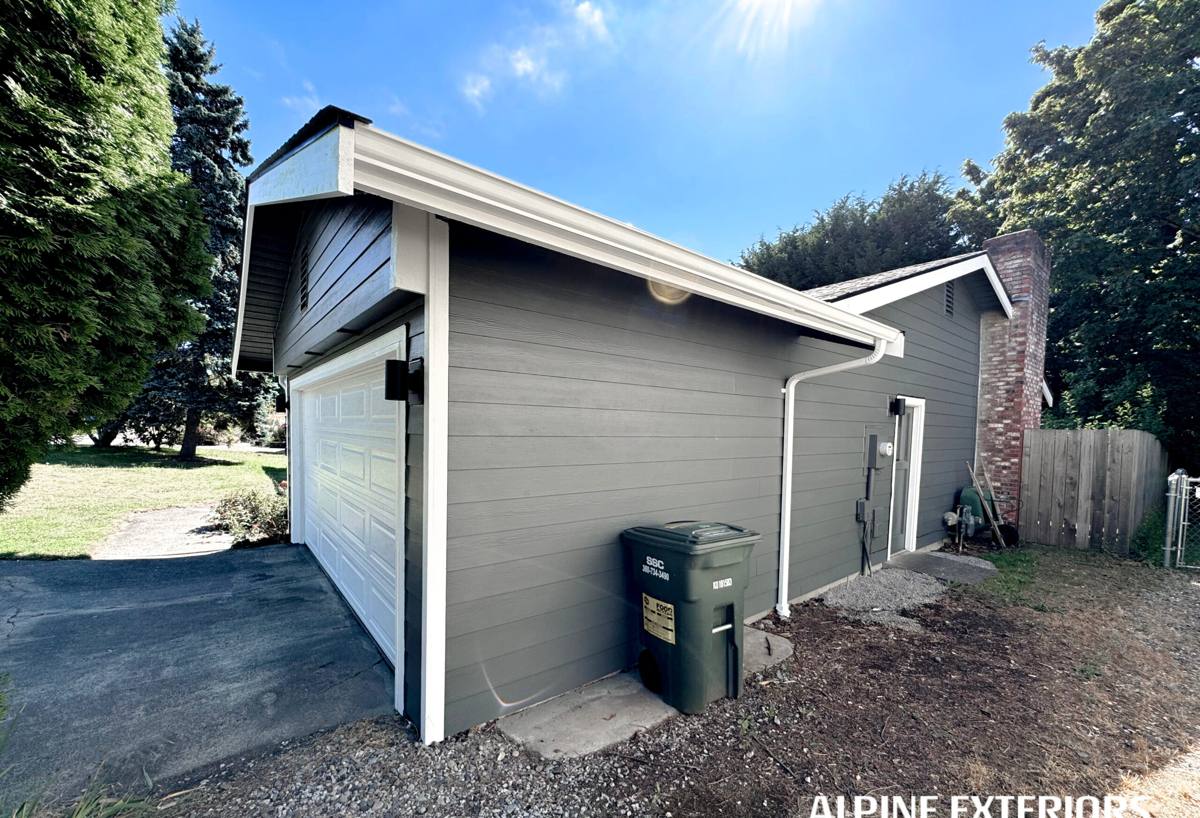
What Local Conditions Do to Different Siding Materials
Every siding material responds differently to sun, salt, and wind-driven moisture. Understanding those differences is useful whether you're comparing quotes or just trying to understand why your current siding is struggling.
| Condition | Effect on vinyl | Effect on wood/engineered wood | Effect on James Hardie fiber cement |
|---|---|---|---|
| Intense UV | Fades, becomes brittle over years | Finish breaks down, needs recoating | ColorPlus factory finish is UV-formulated and warranted against fading |
| Salt air | Can pit or discolor over time | Accelerates moisture uptake and finish failure | Non-organic fiber cement doesn't corrode; finish is baked-on, not field-applied paint |
| Wind-driven rain | Can force water behind panels at gaps/seams | Absorbs water at end cuts and seams if not sealed/maintained | Engineered HZ formulations resist moisture; correct installation manages water at every joint |
| Hurricane-force wind | Panels can crack or blow off if fastening is marginal | Dependent on fastening; can split at fastener points | Rated for high wind zones when installed to Hardie's fastening spec |
The pattern that shows up in that table over and over is that the material matters, but installation quality matters just as much. A great product installed loosely will still fail in the ways its weaker points allow. That's true of any siding, including Hardie.
Where This Shows Up on an Older Seminole Home
If you're seeing cupping or bowing panels, chalky or faded paint, soft spots near the bottom courses, or caulk that's cracked and pulled away at trim and window returns, you're looking at moisture and UV damage that's been accumulating for a while. On many homes in this area, that damage concentrates on the sides facing prevailing wind and sun exposure — it's rarely uniform around the whole house.
James Hardie Product Lines That Fit This Area
James Hardie makes climate-specific formulations, and for Gulf Coast Florida, the HZ5 engineered formulation is the relevant one — it's built for high-humidity, high-moisture climates as opposed to the HZ10 formulation used in colder, freeze-thaw regions. We install:
- HardiePlank lap siding — the most common choice, available in multiple textures (smooth, cedarmill, beaded) for a traditional horizontal look.
- HardiePanel vertical siding — often used for accent sections, gables, or a more modern look.
- HardieTrim boards — for corners, fascia, and window/door surrounds, so the whole exterior envelope is a matched, non-combustible system rather than fiber cement siding paired with wood trim that will fail on its own timeline.
- ColorPlus factory-applied finish — baked on under controlled conditions with a UV-cured process, which is a meaningfully different (and more durable) finish than field-applied paint on any material.
All of these come pre-primed or with the ColorPlus finish already applied, which matters in a climate where field-painted surfaces are fighting UV and humidity from day one.
What a Correct Installation Actually Involves
This is the part that separates a siding job that lasts 30+ years from one that has problems within five. James Hardie publishes detailed installation requirements, and in a wind-and-moisture climate like ours, skipping any of them is where failures start.
- Proper clearance between the bottom of the siding and roofing, decks, and grade — Hardie specifies minimum clearances to keep splash-back moisture off the material.
- A correctly installed water-resistive barrier (house wrap) behind the siding, with flashing integrated at every window, door, and penetration — not caulk used as a substitute for flashing.
- Fastener type, spacing, and placement per Hardie's spec for the wind zone — this is directly tied to wind uplift resistance, which matters here.
- Correct nailing pattern that avoids blind-nailing errors that lead to buckling or panel movement over time.
- Properly sized and sealed joints, with factory-cut or field-cut edges treated per Hardie's guidance so raw edges aren't left exposed to moisture.
- Butt joints staggered and flashed, not just caulked and left.
Any of these steps done wrong won't necessarily show up as a problem on day one — they show up two, five, or ten years later as moisture damage, panel movement, or wind failure during a storm. That's part of why a strong warranty matters: James Hardie's product warranty is transferable and substantial, but it's tied to installation meeting their published requirements, which is exactly why the installer matters as much as the material.
Why We Standardized on Hardie Instead of Other Fiber Cement or Engineered Wood Options
We get asked why we don't also install LP SmartSide, other fiber cement brands, or vinyl. Each has legitimate use cases elsewhere. But for this climate specifically, we settled on one product line so we can install it correctly every time, back it with one consistent warranty structure, and know exactly how it behaves in salt air, UV, and wind — rather than juggling different install specs, different moisture behaviors, and different warranty terms across multiple product lines.
Our Process for a Seminole Siding Project
Every job follows the same sequence, whether it's a full re-side or a section replacement after storm or moisture damage.
1. On-Site Assessment
We look at the existing siding, sheathing, and water-resistive barrier condition, check for soft spots or hidden moisture damage, and identify exposure differences around the house (sun-facing walls typically show more fade and UV wear; wind-facing walls typically show more wear at joints and fasteners).
2. Tear-Off and Substrate Check
Old siding comes off down to the sheathing so we can actually see what's underneath — this is where hidden rot or prior water intrusion gets caught, rather than sided over.
3. Weather Barrier and Flashing
New house wrap and flashing go in at every window, door, and penetration before a single piece of siding goes up. This is the layer that actually stops wind-driven rain from reaching the sheathing.
4. Installation to Hardie Spec
Panels, planks, and trim go up per Hardie's fastening and clearance requirements for our wind zone, with joints staggered and properly flashed.
5. Final Inspection and Cleanup
We walk the full exterior, check seams, caulking at trim returns, and fastener lines, and clear the site of debris.
Cost Factors for Siding Work in This Area
Every home is different, but the same variables drive the estimate on most Seminole projects.
| Factor | Why it matters here |
|---|---|
| Extent of substrate damage | Rotted sheathing or framing found during tear-off adds repair scope before new siding can go on |
| Home size and wall complexity | Gables, dormers, and multiple trim details take more labor per square foot than a simple rectangular wall |
| Product mix | Plank vs. panel vs. trim-heavy designs price differently |
| Color and texture selection | ColorPlus finish options are priced differently than primed-for-paint boards |
| Access and site conditions | Tight lot lines, landscaping, or multi-story sections affect labor time |
We give straightforward, written estimates after seeing the home in person — not a ballpark over the phone, because the tear-off is often what determines real scope.
Why It Matters That We Already Work in Seminole
A crew that regularly works this specific area already understands Pinellas County's permitting requirements and wind-load codes, knows what exposure conditions to expect on which sides of a house, and isn't learning the local inspection process on your project. That familiarity shows up in fewer surprises during permitting and a smoother project overall — it's a genuine advantage over a crew unfamiliar with local code and climate specifics.
If your siding is showing fade, moisture damage, or you're planning ahead of hurricane season, we're glad to come take a look. The estimate is free, there's no pressure, and you'll get a straight answer about what your home actually needs — use the form below to get started.