 Largo Window
 Roofing a Small Community Surrounded by Big Weather
Kenneth City sits in the middle of Pinellas County, close enough to open water on both sides that every roof here answers to the same set of stresses: hurricane-force wind gusts during storm season, punishing UV exposure nearly every day of the year, wind-driven rain that finds any gap a roof offers, and a steady drift of salt air that never really stops working on exposed metal and fasteners. None of that is unique to one street or subdivision — it's the baseline for this part of Largo and the surrounding neighborhoods. What matters is whether a roof was actually built to handle it, or just built to pass a quick visual check after the last owner sold the house.
An asphalt shingle roof done right in this climate isn't a different product than what's sold anywhere else in Florida — it's the same shingle installed with more attention to the details that fail first here: the nailing, the underlayment, the flashing, and the ventilation. This page is about that one job, for this one area, done the way local conditions actually demand.
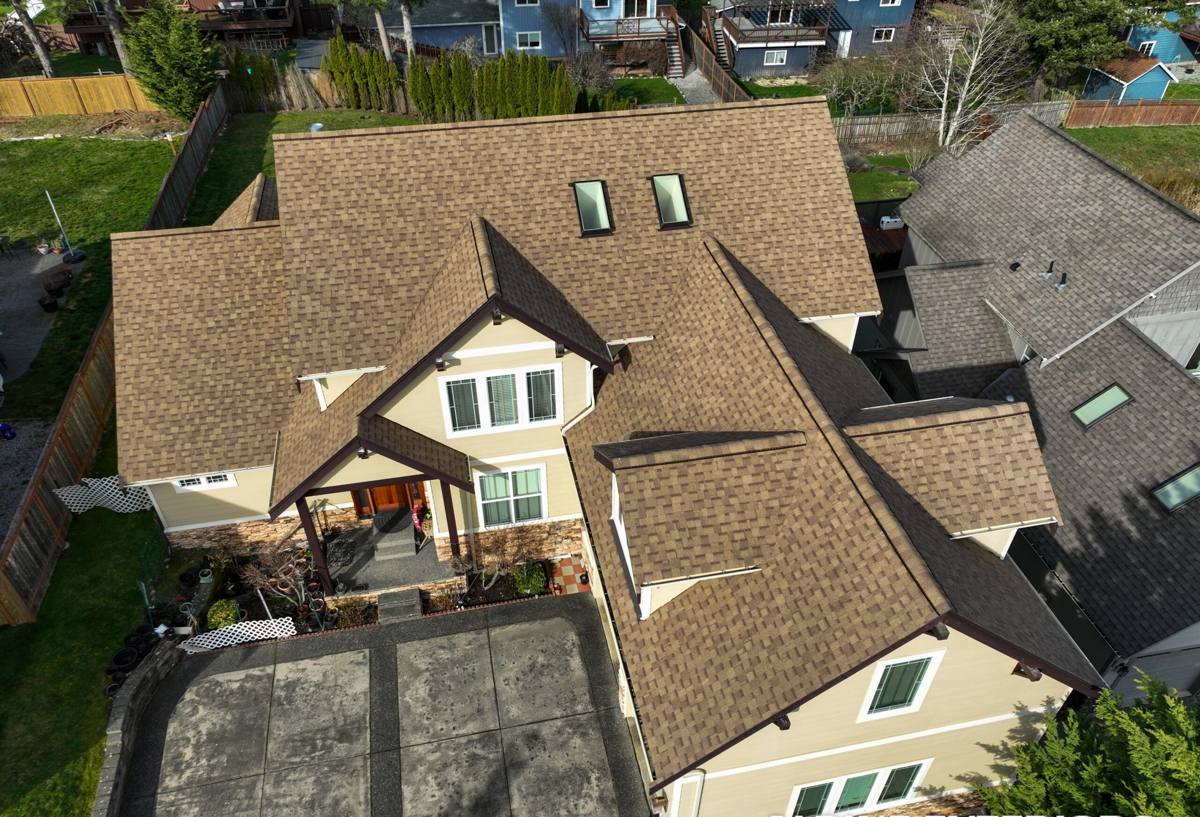
What Kenneth City's Climate Actually Does to a Roof
Wind
Shingles are rated for wind speed, but the rating only holds if the installation matches it. Under-driven nails, nails placed above the manufacturer's nail line, or a fastening pattern that skips the high-wind spec are the most common reasons a roof loses shingles in a storm that it was technically rated to survive. In a county that sees tropical systems on a near-annual basis, that gap between "rated" and "actually installed to the rating" is where most storm damage claims start.
UV and Heat
Florida sun breaks down asphalt shingles from the surface down — the granules that protect the asphalt mat wear thin over the years, and once they're gone, the shingle underneath ages faster and gets brittle. A roof with poor attic ventilation heats up even more from below, which accelerates that process on top of the sun exposure it's already getting.
Wind-Driven Rain and Salt Air
Rain that comes in sideways during a storm doesn't behave like a normal downpour — it can work its way up under shingle edges and through fastener penetrations that would never leak in calm weather. Salt air, meanwhile, is quietly corrosive to exposed metal: nail heads, flashing, and vent stacks all age faster near the coast than they would further inland. Both are part of daily life for homes in Kenneth City, and both are reasons the underlayment and flashing details matter as much as the shingle itself.
What a Correct Asphalt Shingle Roof Includes
A shingle roof is a system, not a single layer. Skipping or shortcutting any one part of it is usually where the eventual leak or wind loss traces back to.
- Deck inspection and repair — the plywood or OSB underneath has to be sound before anything goes on top of it; soft or delaminated deck gets replaced, not covered up.
- Underlayment — a synthetic or self-adhering underlayment layer that acts as the real water barrier if wind ever lifts a shingle edge.
- Starter strips and drip edge — set correctly at the eaves and rakes so wind can't get under the first course, which is the most common failure point in a storm.
- Correct nailing — the right nail count, placement on the nail line, and fastener length for the deck thickness, not just "enough to hold it down."
- Flashing — around chimneys, walls, skylights, and roof-to-wall transitions, where the majority of long-term leaks actually originate.
- Ventilation — intake and exhaust balanced so the attic isn't cooking the shingles from underneath or trapping moisture.
Signs a Kenneth City Roof Needs a Closer Look
Most roofs don't fail all at once — they show smaller signs first. Worth checking for, especially after a windy season:
- Shingles that look cupped, curled at the edges, or visibly lighter than the rest of the roof (granule loss)
- Bare or thinning granule spots, or granules collecting in gutters
- Missing shingles, or shingle tabs that lift in wind and don't lie flat afterward
- Soft spots or sagging when walked on, or visible dips from the ground
- Rust streaking or corrosion around flashing, vent boots, or exposed fasteners
- Water stains on interior ceilings, especially near chimneys, skylights, or exterior walls
- A roof older than 15-20 years that has never had a full inspection
How We Approach a Job in This Area
Inspection and Honest Assessment
We start by getting on the roof, not just looking at it from the driveway. That includes checking the deck condition where accessible, the state of the flashing, and how the current ventilation is set up. We'll tell you plainly if a roof needs full replacement, a repair, or if it's got a few more years left in it — we're not in the business of selling a reroof to a roof that doesn't need one yet.
Tear-Off and Deck Check
We remove the existing roofing down to the deck rather than layering over old shingles. That's the only way to actually see the deck condition and address any soft or damaged sections before they're covered up again for another 20 years.
Installation to the Local Standard
Underlayment, starter course, flashing, and shingles go on following the wind-rated nailing pattern appropriate for this area's code requirements — not the minimum spec, the one that matches what Pinellas County actually throws at a roof.
Cleanup and Final Walkthrough
Job site cleanup includes a magnetic sweep for stray nails, and we walk the finished roof with you before calling it done, not after the invoice is sent.
Asphalt Shingle Options for a Wind- and Sun-Exposed Roof
Not all asphalt shingles are built the same, and the differences matter more here than they would in a milder climate. A quick comparison of what's typically available:
| Shingle Type | Typical Wind Rating | Best Fit For | Trade-Offs |
|---|---|---|---|
| 3-Tab | Lower end of the range | Budget-focused reroofs | Lower cost, but generally less wind and impact resistance; less dimensional look |
| Architectural / Laminate | Mid-to-high, varies by product | Most homes in this area | Heavier, more layered construction; better wind performance for the cost; the common standard choice now |
| Impact-Rated Architectural | Highest, plus impact rating | Homes prioritizing storm resilience and possible insurance credits | Higher upfront cost; can qualify for wind mitigation insurance discounts in some cases |
We'll walk through which tier makes sense for your specific roof, budget, and how long you plan to stay in the home — there's rarely one "right" answer, just trade-offs worth understanding before you decide.
What Actually Drives the Cost
Two roofs of the same size can price out differently for reasons that have nothing to do with markup. The main variables we look at:
- Roof size and number of squares — the base material and labor driver
- Pitch and accessibility — steeper or harder-to-access roofs take longer and require more safety setup
- Deck condition — hidden rot or delamination found at tear-off adds material and labor
- Number of penetrations and valleys — chimneys, skylights, and valleys all add flashing work
- Shingle tier chosen — 3-tab versus architectural versus impact-rated
- Layers of existing roofing — a full tear-off of multiple old layers is more work than a single-layer removal
We give a written estimate that breaks these out so you can see what you're actually paying for, rather than a single lump number.
Permits and Wind Mitigation in Pinellas County
Roof replacements in this area require a permit, and the work gets inspected against Florida's wind-resistant building code — that's not paperwork for its own sake, it's what keeps a new roof from becoming next hurricane season's problem. We handle the permit process as part of the job. It's also worth knowing that a properly documented reroof can qualify for a wind mitigation inspection afterward, which some insurers use to adjust premiums — worth asking your insurance agent about once the new roof is in and inspected.
Why a Crew That Already Works Kenneth City Matters
A roofing crew that regularly works in and around Largo already knows the inspection expectations, the permitting process, and the kind of installation detail that actually holds up to this area's storms rather than just the manufacturer's minimum spec sheet. That familiarity shows up in small decisions — how flashing gets tied into a particular wall detail, what nailing pattern gets used without having to look it up, how ventilation gets balanced on a typical Florida attic — that add up to a roof that performs when the weather turns, not just one that looks fine on a calm day.
If you're weighing a repair against a full replacement, or just want an honest read on where your roof stands, we're glad to come take a look. The estimate is free, there's no pressure attached to it, and you can use the form below to get started.