 Largo Window
 Building Decks for Madeira Beach's Coastal Conditions
A deck in Madeira Beach lives a harder life than a deck almost anywhere inland. It sits a short distance from the Gulf, which means salt-laden air settles on every fastener and board surface nearly every day of the year. It takes direct, intense sun for most of the daylight hours. It gets soaked by wind-driven rain that finds its way under railings and between boards. And every hurricane season, it has to survive wind loads that a typical residential deck design in a non-coastal county never has to account for. Largo Window Company builds decks for homeowners throughout Pinellas County, and the projects we do in and around Madeira Beach get built to a different standard than a deck we might frame up further inland — because the environment demands it.
This page covers what a Madeira Beach deck actually needs to hold up long-term, what goes into building one correctly, how our process works from first call to final walkthrough, and why local experience on this specific stretch of coastline matters more than most homeowners realize until something goes wrong.
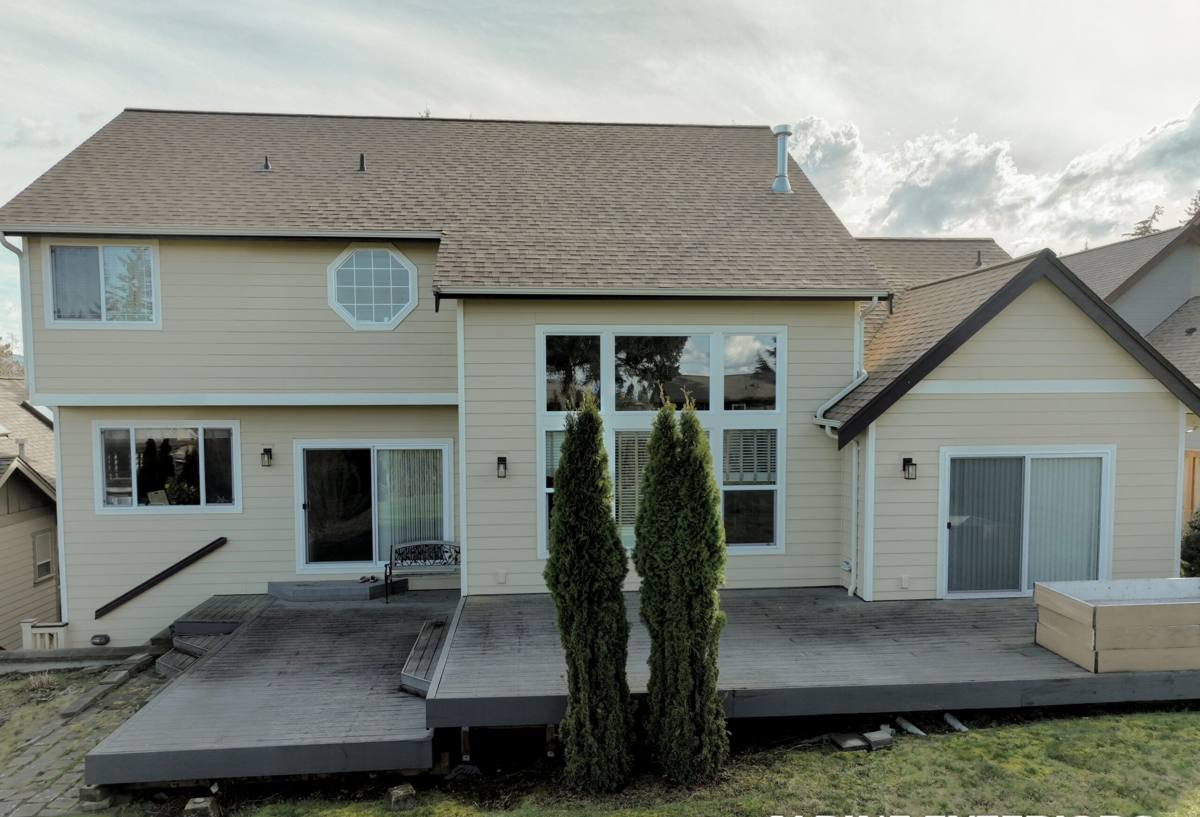
What Coastal Exposure Actually Does to a Deck
Every material decision on a Madeira Beach deck traces back to four stressors working on the structure at the same time, year-round.
Salt Air and Corrosion
Airborne salt doesn't need direct ocean spray to do damage — it travels on the breeze and settles on metal surfaces even blocks away from the water. Standard exterior fasteners, brackets, and hardware corrode noticeably faster here than the same products would inland. Once a fastener starts rusting, it weakens the connection it's holding, and a deck is only as strong as its weakest fastener.
Intense, Year-Round UV
Florida sun is strong enough, and consistent enough across the calendar, that UV exposure is a real design factor, not an afterthought. Untreated or poorly finished wood grays and checks (splits along the grain) faster here. Some composite and PVC products fade or chalk if they aren't formulated for high-UV climates. The finish and material choice both need to account for sun exposure that doesn't really let up for months at a time.
Wind-Driven Rain and Moisture Cycling
Afternoon storms in this part of Florida don't fall straight down — wind pushes rain sideways, under rail caps, behind fascia boards, and into any gap that isn't properly flashed or sealed. Combine that with high humidity, and a Madeira Beach deck goes through more wet-dry cycling in a year than a deck in a drier climate goes through in several. Wood that isn't rated for ground contact or moisture exposure, and framing that isn't properly flashed at the ledger board, will show rot and swelling well before a comparable deck elsewhere.
Hurricane-Force Wind Loads
Pinellas County sits in a wind zone where structures, including decks, need to be engineered and fastened to resist significant uplift and lateral loads. A deck that's just "nailed together" to look right can fail exactly where it matters most — at the ledger connection to the house, at the post bases, or at the railing posts — when a storm actually tests it. Anything we build here is fastened, braced, and anchored with those wind loads in mind, not just the minimum needed to hold a table and chairs.
Choosing the Right Decking Material for This Coastline
There's no single "best" decking material for every homeowner — budget, maintenance tolerance, and appearance preference all factor in. But in a salt-air, high-UV environment like Madeira Beach, some trade-offs matter more than they would elsewhere.
| Material | How It Handles This Climate | Maintenance Reality |
|---|---|---|
| Pressure-treated lumber | Affordable and strong, but requires ground-contact rated stock and consistent sealing to resist moisture cycling and UV graying | Needs re-sealing or staining every 1–2 years to hold up near the coast |
| Tropical hardwoods (e.g., ipe) | Naturally dense and rot-resistant, performs well in humidity, but is unforgiving of poor fastening or improper acclimation before install | Periodic oiling to maintain color; will silver-gray naturally if left untreated |
| Capped composite | A protective cap layer resists moisture absorption and salt exposure much better than uncapped composite; UV-stable formulations resist fading | Occasional washing; no staining or sealing required |
| PVC decking | Fully synthetic, doesn't absorb moisture, holds up well to salt air, but can expand and contract more with heat — needs correct fastening detail | Low maintenance; periodic cleaning only |
Whatever material a homeowner chooses, we're honest about the trade-offs up front. Uncapped composite, for example, has a real moisture-absorption weakness in a climate this humid — we'll explain why we steer clients toward capped or PVC alternatives in most coastal applications, rather than installing something we don't think will hold up and calling it a professional standard we stand behind.
What a Correctly Built Deck Actually Involves
The visible decking boards are the smallest part of what makes a deck last. Most of the failures we get called out to inspect trace back to what's underneath or behind the surface.
Framing, Fasteners, and Hardware
In a salt-air environment, fastener selection isn't a place to cut corners. We use stainless steel or coated, corrosion-resistant fasteners and structural hardware rated for coastal exposure — standard galvanized hardware can start showing rust streaks and losing strength well before a deck's structural lumber does. Every structural connection — joist hangers, post bases, railing posts — gets hardware matched to the load it's carrying and the environment it's sitting in.
Ledger Attachment and Flashing
The ledger board — where the deck attaches to the house — is the single most common point of catastrophic deck failure nationwide, and it's exactly where wind-driven rain likes to intrude if it isn't flashed correctly. We flash and seal this connection properly so water is directed away from the house structure, not trapped against it.
Footings, Posts, and Wind Bracing
Footing depth and post spacing get sized for both the vertical load (people, furniture) and the lateral and uplift forces a coastal wind event puts on the structure. Where soil conditions or elevation call for it, we adjust footing design accordingly rather than using a one-size-fits-all approach.
Permitting and Local Code
Deck construction in Largo and the surrounding Pinellas County communities, including Madeira Beach, is subject to local building permit and inspection requirements, and coastal properties can carry additional considerations tied to flood zone designation and elevation. We handle the permitting process as part of the job so homeowners aren't left navigating it alone, and so the finished deck is inspected and documented correctly — which matters for insurance and resale down the line.
How Our Deck Building Process Works
The process is the same whether it's a modest ground-level platform or a larger multi-level deck, just scaled to the project.
- Free on-site estimate. We walk the property, talk through how the space will actually be used, and take measurements and elevation notes specific to the lot.
- Material and design consultation. We go over decking material options, railing style, and layout, with honest guidance on what holds up best given the site's sun and wind exposure.
- Permitting. We prepare and submit the permit package required by the local jurisdiction and schedule the required inspections.
- Framing and structural build. Footings, framing, ledger attachment, and bracing go in first, built to the wind and load requirements for the area.
- Decking, railing, and finish work. Surface material, railings, stairs, and any trim or fascia are installed and finished.
- Final walkthrough and inspection sign-off. We confirm everything passes inspection and walk the homeowner through basic care for the material they chose.
What Affects the Cost of a Deck Project Here
Every property is different, which is why we quote on-site rather than over the phone, but a few factors consistently move the price up or down for coastal projects specifically.
| Factor | Why It Matters |
|---|---|
| Decking material | Pressure-treated lumber typically costs less upfront than capped composite or PVC, but the gap narrows over the life of the deck once maintenance is factored in |
| Elevation and footing requirements | Coastal lots can require deeper or additional footings depending on soil and flood zone factors, which affects labor and material |
| Size and number of levels | Multi-level decks and larger footprints increase framing, railing, and stair work proportionally |
| Railing style | Cable, glass, and aluminum railing systems cost more than standard wood or composite balusters but can hold up better to salt exposure |
| Hardware and fastener grade | Coastal-rated stainless and corrosion-resistant hardware costs more than standard hardware but directly extends structural life near the Gulf |
Keeping a Madeira Beach Deck in Good Shape Long-Term
Even a well-built deck needs some routine attention in this climate. A short annual maintenance habit prevents most of the problems we see on decks that were otherwise built correctly.
- Rinse salt residue off decking, railings, and hardware periodically, especially after long dry spells followed by rain
- Inspect fasteners and structural hardware once a year for rust streaking or corrosion, particularly at the ledger board and post bases
- Re-seal or re-stain wood decking on the schedule the material calls for — don't wait until graying or checking is already visible
- Check railing post connections for looseness after major storms
- Keep gaps between boards clear of debris so water can drain rather than pool
- Trim back nearby vegetation that traps moisture against the deck surface
Why Local Experience in Madeira Beach Matters
A deck built to a generic inland standard can look identical to a coastally-engineered one on installation day — the difference shows up two, five, or ten years later, in the fasteners that rusted first or the ledger connection that let water into the house framing. A crew that already works this stretch of Pinellas County knows what the salt air, sun, and storm exposure actually do over time, because we've seen it on other decks nearby. That translates into material recommendations that hold up rather than just look good at handoff, fastening details that account for the wind zone instead of the bare minimum, and a permitting process that doesn't stall out because of unfamiliarity with what Largo-area building officials require for coastal construction.
It also means a faster, more accurate estimate — we're not guessing at how exposure or elevation will affect a project in this area, because it's the environment we build in regularly.
Get a Free, No-Pressure Estimate
If you're planning a new deck, replacing an aging one, or just want an honest read on whether your current deck is holding up the way it should, we're happy to take a look. Fill out the form below for a free estimate — no pressure, no obligation, just a straight answer on what your Madeira Beach property needs.