 Largo Window
 Madeira Beach Sits Right at the Edge of What Siding Has to Survive
Madeira Beach is a barrier island community just west of Largo, with the Gulf of Mexico on one side and the Intracoastal Waterway on the other. That geography is what makes it a great place to live and what makes it one of the harder places in Pinellas County to keep exterior siding looking and performing the way it should. Homes here take on salt aerosol carried in off the water almost every day, wind-driven rain that pushes moisture sideways into wall assemblies during storms, and some of the most intense, sustained UV exposure in the continental U.S. Add in seasonal tropical systems and near-constant humidity, and you have a combination that inland siding products and inland installation habits were never really built for.
We work this island regularly, and the siding decisions that make sense a few miles inland don't always hold up here. This page is about what fiber cement siding needs to do differently on a Madeira Beach home, what a correct installation actually involves this close to the water, and why we install James Hardie fiber cement exclusively rather than the wider mix of products used elsewhere.
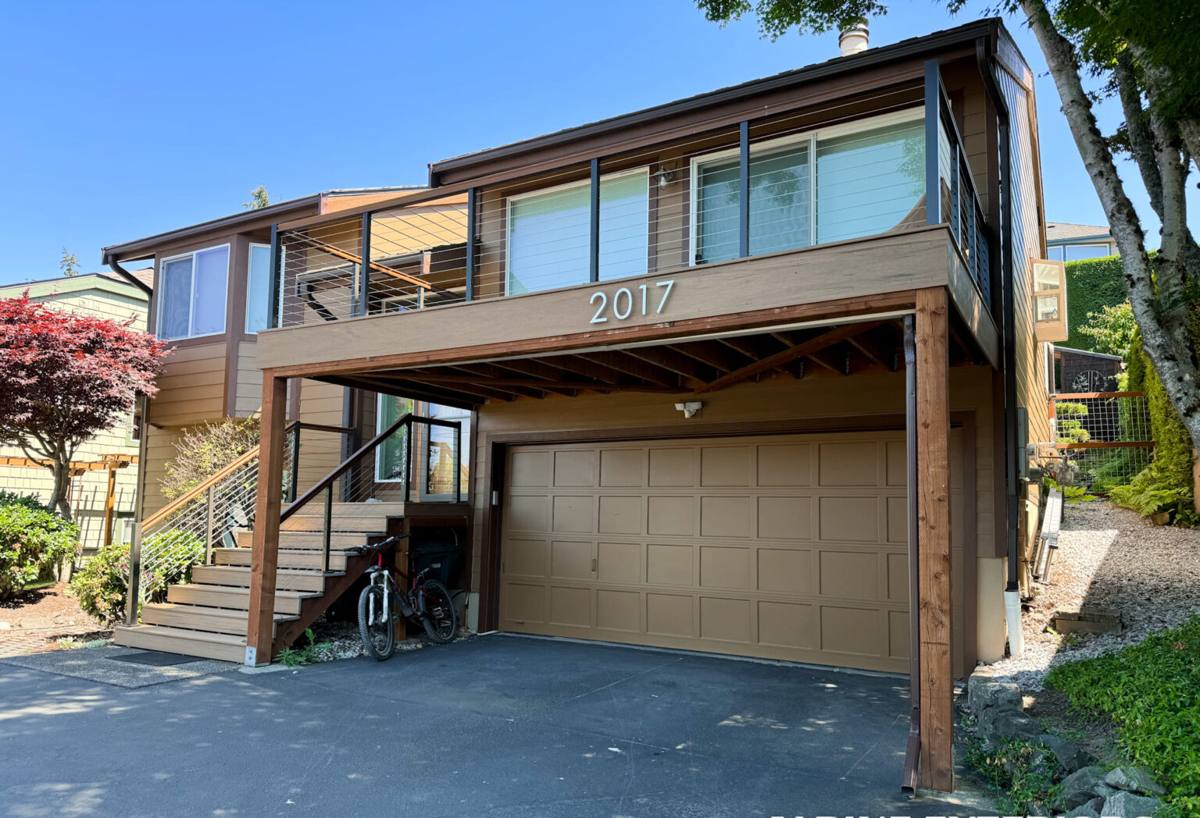
What Salt Air and Coastal Wind Actually Do to a Wall Assembly
Salt Air and Fasteners
Salt in the air doesn't just sit on the surface of siding — it settles into every crevice, every fastener head, and every seam where two materials meet. Over years, that salt residue accelerates corrosion on any hardware that isn't rated for it. Standard fasteners can start showing rust streaks and weakening well before the siding itself would ever fail, which is why fastener selection matters as much as the siding material on a job this close to the Gulf.
Wind-Driven Rain and Water Management
Wind off the water doesn't just blow rain against a wall — it drives it sideways and upward, past overhangs and into gaps that would stay dry in a typical inland rainstorm. If the water-resistive barrier, flashing details, and drainage plane behind the siding aren't done correctly, that moisture finds its way behind the cladding and into the sheathing, where it can sit for weeks between drying cycles.
UV and Finish Breakdown
Florida's UV load is intense year-round, not just in summer, and a Gulf-front location gets the full, unobstructed dose with no tree canopy or inland buildings to soften it. Paint finishes that aren't engineered for that exposure chalk, fade unevenly, and need repainting far sooner than a manufacturer's brochure might suggest — which is a real cost homeowners should factor in before choosing a siding product based on upfront price alone.
Why We Install Only James Hardie Fiber Cement
We don't offer vinyl siding, LP SmartSide, Cemplank, Allura, or primed wood siding like spruce or cedar. That's not a marketing position — it's a standard we set because of what we've seen happen to other products in exactly this kind of coastal exposure over time. Vinyl softens, warps, and becomes brittle under sustained heat and UV, and it offers little to no impact resistance against wind-borne debris. Wood-based and wood siding products require diligent, ongoing moisture management and repainting to avoid rot, swelling, and delamination — a heavier maintenance burden in a climate this humid and salty.
James Hardie fiber cement is non-combustible, dimensionally stable in heat and humidity, and available in a product line — HZ10 — specifically engineered for hot, humid climates like ours, with enhanced resistance to moisture-related damage. Combined with the ColorPlus factory finish, which is baked on under controlled conditions rather than field-applied, it holds color and resists UV fade far longer than a job-site paint job. It also carries a strong, transferable limited warranty, which matters on a coastal home where the siding is expected to work harder than it would inland.
Comparing Common Siding Materials for a Gulf-Front Climate
| Factor | Vinyl | Wood-Based (e.g. LP SmartSide) | James Hardie Fiber Cement |
|---|---|---|---|
| Wind and impact resistance | Low — cracks, cracks under debris impact | Moderate | High |
| Moisture tolerance | Doesn't absorb water, but seams can trap it | Requires diligent sealing to prevent swelling | Engineered for moisture in HZ10 formulation |
| Salt air / fastener corrosion risk | Fasteners still exposed at panel edges | Fasteners still exposed at panel edges | Managed with corrosion-resistant fastener spec |
| Finish longevity in intense UV | Fades, can warp from heat | Field paint needs repainting on a shorter cycle | ColorPlus factory finish holds color longer |
| Fire rating | Combustible | Combustible | Non-combustible |
What a Correct Installation Looks Like This Close to the Water
Fiber cement siding is only as good as the assembly behind it. On a Madeira Beach home, we pay particular attention to a handful of details that matter more here than they would a few miles inland:
- A continuous water-resistive barrier and drainage plane so any moisture that gets past the siding has somewhere to go
- Corrosion-resistant fasteners — stainless or hot-dip galvanized — driven to the manufacturer's exact spacing and depth, not just "close enough"
- Flashing at every window, door, and penetration, lapped correctly so water sheds outward rather than pooling
- Proper clearance between the bottom of the siding and the roofline, deck, or grade, so splash-back and standing water don't sit against the material
- Factory-primed or sealed cut edges on every piece, since an exposed cut edge is the fastest way for moisture to get into fiber cement
- Caulking used only where the manufacturer specifies it, not as a substitute for proper flashing and lap details
Skipping any one of these doesn't usually cause an obvious problem in year one. It shows up two, five, or ten years later as a soft spot, a stain, or a fastener that's bled rust down the face of the siding — which is exactly the kind of failure that's expensive to trace back to its source once the finish work is covering it.
How Our Process Works on a Madeira Beach Job
We start with an assessment of the existing wall — what's currently on the house, what condition the sheathing is in underneath it, and where the home's specific exposure (Gulf-facing wall versus a more sheltered side) should change the plan. From there, the process generally runs like this:
- Remove existing siding and inspect sheathing for water damage or soft spots before anything new goes on
- Repair or replace any compromised sheathing — covering over a problem never fixes it
- Install a continuous water-resistive barrier and drainage plane
- Install James Hardie fiber cement per the manufacturer's HZ10 fastening and clearance specifications
- Integrate trim, corners, and soffit details so water is directed away from seams rather than into them
- Final inspection of fastener lines, flashing laps, and clearances before cleanup
We also pull the required permits and coordinate inspections through the appropriate local building department rather than treating that as optional paperwork — it's a check on the work, not just a formality.
Wind Codes and Permitting Near the Coast
Coastal Pinellas County properties fall under Florida Building Code wind provisions that account for higher design wind speeds and wind-borne debris exposure the closer a home sits to open water. That affects fastening schedules, the type of siding accessories used at corners and edges, and how penetrations are sealed. It's worth confirming with any contractor that they're pulling permits and installing to the fastening schedule required for your specific location — not just applying an inland install method to a coastal home and hoping it holds.
Maintenance in a Salt Air Environment
Fiber cement is low-maintenance compared to the alternatives, but "low-maintenance" isn't "no-maintenance," especially this close to the Gulf. A simple seasonal routine goes a long way:
- Rinse salt residue off the siding periodically, especially on Gulf-facing walls, with a garden hose rather than a pressure washer aimed directly at seams
- Walk the exterior after major storms and check for loose trim, damaged flashing, or debris impact marks
- Keep gutters and downspouts clear so water isn't overflowing and running down the siding face
- Watch caulked joints for cracking or separation and have them addressed before the next wet season
- Note any rust streaking at fastener heads early — it's easier to address a handful of fasteners than to deal with a larger repair later
Why It Matters That We Already Work This Island
Barrier island jobs come with logistics that inland jobs don't: bridge access, tighter lots, and in some cases condo or HOA exterior requirements that need to be worked around rather than discovered mid-project. A crew that already works Madeira Beach regularly has already solved those logistics, already knows what the local wind exposure demands from a fastening and flashing standpoint, and isn't learning the coastal-specific details on your house for the first time. That familiarity shows up in fewer surprises during the job and in an install that's built for the exposure your home actually has, not a generic assumption about what Florida siding needs.
If you're weighing a siding replacement on a Madeira Beach home, we're glad to walk the exterior with you, look at what's there now, and talk through what correct installation would involve for your specific exposure. Reach out for a free, no-pressure estimate using the form below.