 Largo Window
 Why Pinellas Park Roofs Wear Differently Than Roofs Up North
Pinellas Park sits in one of the more demanding roofing environments in the country. A shingle roof here isn't just shedding rain — it's absorbing months of intense, nearly year-round UV exposure, taking on wind-driven rain that pushes water sideways and upward under normal lap lines, and living within a few miles of salt air that accelerates corrosion on every metal component up there. None of that is unique to this one neighborhood, but it's the reality every roof in this part of Pinellas County has to be built for, and it's why a shingle roof installed the "generic" way tends to show problems years before it should.
We work on roofs throughout Largo and the surrounding Pinellas Park area regularly, which means we're not guessing at how these conditions play out over time — we're the ones back out on the roof three, five, ten years later dealing with the results of how the first job was done.
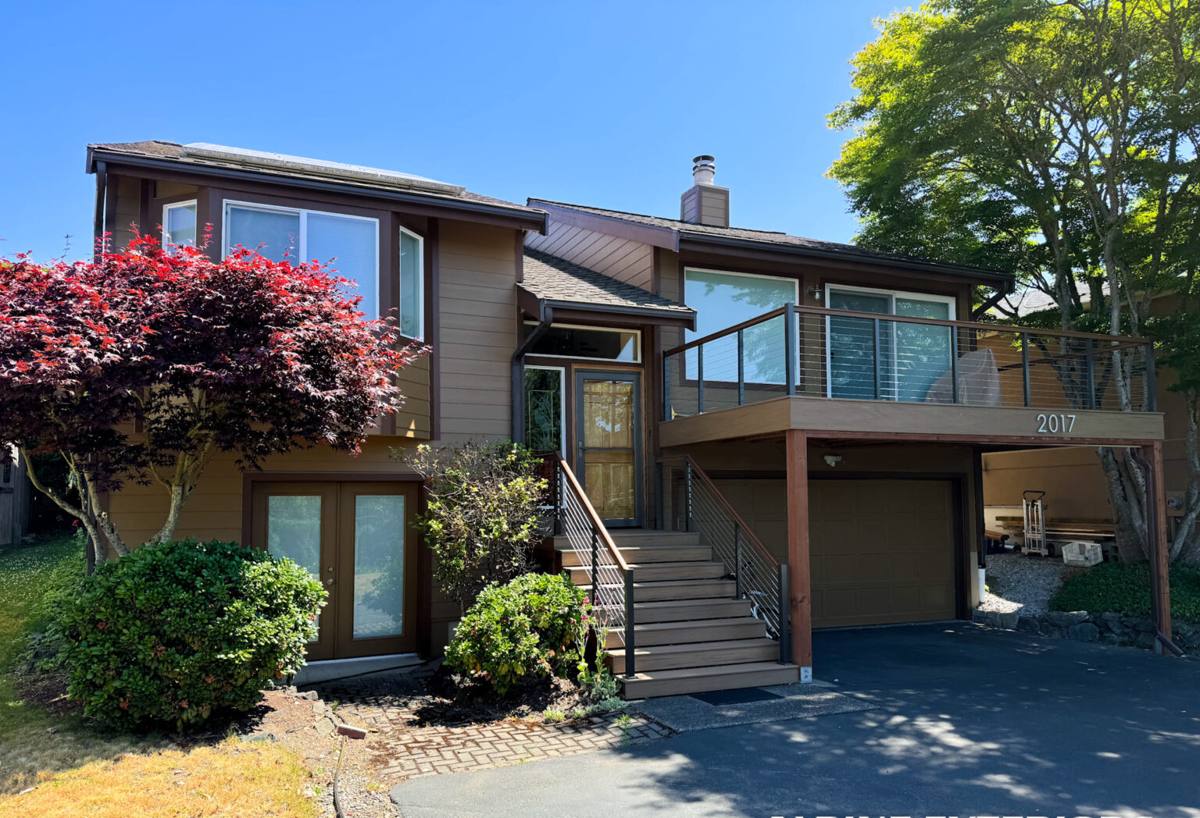
What a Correct Shingle Roof Needs to Handle This Climate
An asphalt shingle roof that's going to hold up here isn't defined by the shingle alone. It's a system, and every layer has to do its job or the whole thing underperforms.
Wind performance
Florida Building Code sets minimum wind uplift requirements for this region, and manufacturers publish separate wind ratings for their shingle lines. The rating on the shingle bundle only means something if the nailing pattern, nail placement, and fastener count actually match what that rating assumes. A shingle rated for high wind speeds that's under-nailed or hand-nailed loosely performs like a much cheaper product the first time a tropical system pushes through.
Water intrusion under wind-driven rain
Normal rain falls straight down and sheds off a lapped shingle roof easily. Wind-driven rain during a tropical storm or hurricane comes in sideways and can work its way under shingle edges, around flashing, and into valleys. That's why underlayment selection, proper flashing at every penetration and wall intersection, and correctly lapped valleys matter more here than in calmer climates — the shingles are the visible layer, but the underlayment and flashing are what actually keep the deck dry when wind-driven rain shows up.
UV and heat cycling
Asphalt shingles lose granules and oils over time from constant UV exposure, and that process runs faster here than in most of the country because there's so little relief from it across the year. Attic ventilation plays a real role in this — a poorly ventilated attic traps heat under the deck, which accelerates shingle aging from underneath in addition to the sun beating down from above.
Salt air and corrosion
Being close enough to the Gulf and the bay to catch salt-laden air means exposed fasteners, drip edge, flashing, and pipe boots corrode faster than they would inland. Material choice and detailing at these components matters more here than it would fifty miles from the coast.
The Anatomy of a Properly Installed Shingle Roof
Homeowners are usually shown the shingle color and told the price — the parts that actually determine how the roof performs rarely get explained. Here's what's under a shingle roof done correctly, and what each layer is actually for.
| Component | What It Does | Why It Matters Here |
|---|---|---|
| Roof deck | Structural base the whole system attaches to | Must be sound and properly fastened before anything goes on it — soft or rotted decking undermines every layer above it |
| Underlayment | Secondary water barrier beneath the shingles | Backstops wind-driven rain and any water that gets past the shingles |
| Drip edge | Metal edge at eaves and rakes | Directs water off the roof edge instead of behind gutters or under the deck edge |
| Starter strip | First course along eaves and rakes | Seals the roof's most vulnerable edge against wind uplift |
| Field shingles | Visible weather layer | Rated for wind, granule-coated for UV resistance |
| Flashing | Metal at walls, chimneys, valleys, penetrations | Highest-risk leak points on any roof; corrosion-resistant material matters near salt air |
| Ventilation | Intake and exhaust airflow through the attic | Reduces heat buildup that ages shingles and underlayment from below |
Common Problems We See on Pinellas Park Roofs
- Shingle tabs lifted or missing after wind events, usually traced back to under-nailing or a nailing pattern that didn't match the shingle's wind rating
- Granule loss and a "washed out" look on south- and west-facing slopes that get the most direct sun
- Streaking or discoloration on roofs that stay damp longer due to shade or poor airflow
- Corroded or failing pipe boots and flashing, especially on roofs 10+ years old
- Soft spots or nail pops around old penetrations and valleys where flashing was reused instead of replaced during a prior reroof
- Attics that run noticeably hotter than they should, pointing to inadequate intake or exhaust ventilation
Most of these aren't dramatic failures — they're slow, and that's exactly why they get missed until a storm forces the issue.
Repair, or Full Replacement? How We Actually Decide
Not every issue on a Pinellas Park roof means a full tear-off, and we're not going to tell you it does. The decision comes down to a few concrete factors we check during an inspection.
| Factor | Leans Toward Repair | Leans Toward Replacement |
|---|---|---|
| Age of roof | Under roughly half its expected service life | Approaching or past its expected service life |
| Extent of damage | Localized — one slope, one valley, one penetration | Spread across multiple areas or slopes |
| Deck condition | Sound, no soft spots found | Soft decking or widespread nail pops found during inspection |
| Underlayment condition | Still intact where accessible | Brittle, torn, or failing where checked |
| Insurance/wind mitigation goals | Not a factor | Homeowner wants an updated wind mitigation inspection for insurance credits |
Choosing a Shingle for This Area
We don't push a single brand as the only acceptable answer — the right shingle depends on budget, roof pitch, and what the homeowner values in appearance versus wind performance. What we do insist on is matching the installation method to whatever product is chosen, since that's where most underperformance actually comes from, not the shingle itself.
| Shingle Type | Typical Wind Performance | Trade-Offs |
|---|---|---|
| 3-tab | Lower wind ratings, less fastener redundancy | Lower upfront cost, thinner profile, shorter warranty terms |
| Architectural / laminate | Higher wind ratings available, layered construction | Higher upfront cost, heavier, generally longer manufacturer warranties |
| Impact-rated | Reinforced to resist debris impact in addition to wind | Highest upfront cost, sometimes eligible for insurance premium credits |
Warranty terms and what voids them vary by manufacturer, and we'll walk through the specific paperwork with you before anything goes on the roof — not after.
Our Process, Start to Finish
- Inspection. We get on the roof, check the deck, flashing, ventilation, and shingle condition, and photograph anything relevant to the recommendation.
- Honest recommendation. Repair or replace, explained in plain terms, with the reasoning behind it.
- Written estimate. Scope, materials, and timeline spelled out before any work is scheduled.
- Permitting. Reroofing in Pinellas County requires a permit; we handle that step rather than leaving it to the homeowner.
- Tear-off and deck check. Old material comes off completely so the deck can be inspected directly, not guessed at.
- Installation. Underlayment, flashing, starter strip, and field shingles installed to match the manufacturer's wind-rated nailing specification.
- Cleanup and final walkthrough. Site cleared of debris and nails, roof reviewed with the homeowner before we consider the job done.
Permits, Codes, and What "Local" Actually Means for This Job
Pinellas County enforces the Florida Building Code's wind-borne debris and uplift requirements on reroofing work, and Pinellas Park permitting follows the same county process. A crew that pulls permits here regularly moves through inspections faster and knows what the inspector is going to look for — nailing pattern, flashing detail, ventilation — because they've been through it before, not because they're guessing.
"Local" also means knowing which parts of Pinellas Park sit closer to open water and catch more salt air, which roofs run hotter due to tree cover or orientation, and which older homes are more likely to have outdated flashing or ventilation from a prior reroof. That context shapes the recommendation before we ever get on the ladder.
What to Ask Before Hiring Anyone for This Kind of Work
- Are you licensed to work in Florida, and can you provide proof of insurance?
- Will you pull the permit yourself, or is that left to me?
- What nailing pattern will you use, and does it match the shingle's published wind rating?
- Will you inspect and repair the deck if it's found to be soft, or just shingle over it?
- What does the manufacturer's warranty actually cover, and what would void it?
- Do you regularly work in this specific area, or is this a one-off job for you?
Get a Straight Answer on Your Roof
If your Pinellas Park roof is showing granule loss, lifted shingles, staining, or you're just not sure how much life is left in it, we'll come take a look, tell you honestly what we find, and lay out repair versus replacement in plain terms — no pressure either way. Request a free estimate using the form below.