 Largo Window
 Safety Harbor's Setting Is Beautiful — and Hard on a Deck
Safety Harbor sits along Old Tampa Bay, and that waterfront location is exactly why homeowners here want decks in the first place — a place to sit outside, catch the breeze off the water, and use the yard for more than just grass. It's also exactly why a deck in this part of Pinellas County has to be built differently than a deck in a landlocked town further inland. Bay proximity means more airborne salt. Florida summers mean months of intense UV exposure and afternoon downpours. And hurricane season means every fastener, footing, and connection has to be sized for real wind load, not just a code minimum copied from a catalog.
A deck that looks fine on installation day can start showing problems within two or three seasons if it wasn't built with this specific climate in mind — cupped boards, rust streaks around fasteners, loose railings, or a substructure that's quietly rotting under a surface that still looks okay. Building it right the first time costs a bit more up front and saves years of headaches later.
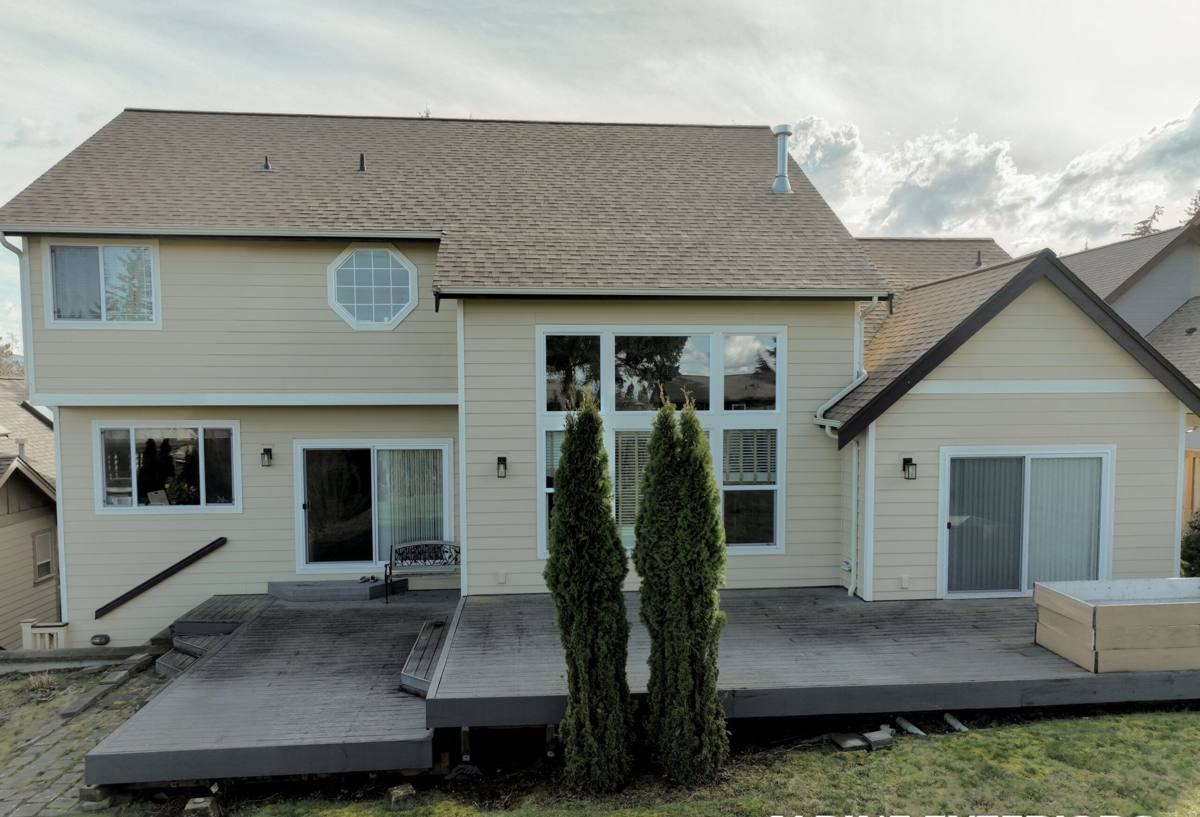
What Local Conditions Demand From a Deck
Heat and UV
Central Florida sun is intense nearly year-round. Untreated or poorly finished wood grays, cracks, and splinters faster here than in most of the country. Dark composite decking can also get hot enough underfoot to be uncomfortable in mid-summer, which is worth thinking through at the design stage, not after the deck is finished.
Wind-Driven Rain and Humidity
Rain in this area rarely falls straight down — it comes in sideways with the wind, which means water gets driven up under railings, into ledger connections, and into any gap in the decking that isn't properly spaced or flashed. Combined with Florida's humidity, any assembly that traps moisture instead of shedding it becomes a rot or corrosion problem on a much faster timeline than in a drier climate.
Salt Air
Being near Old Tampa Bay means airborne salt is a real factor, even a few miles inland. Standard hardware corrodes faster in this environment. Fasteners, brackets, and connectors need a corrosion rating that matches proximity to the water, not a generic spec.
Hurricane-Force Wind
Pinellas County construction has to account for real storm wind, not just everyday breeze. That affects how a deck is anchored to the house, how the posts are footed, and how the railing system is attached — all details that don't show up in a quick visual inspection but matter enormously when a storm actually hits.
Decking Material Options for This Climate
There's no single "best" decking material for every home — the right choice depends on budget, maintenance tolerance, and how the deck will be used. Here's how the common options actually perform under Safety Harbor conditions:
| Material | Sun/Heat Performance | Moisture & Salt Air | Maintenance |
|---|---|---|---|
| Pressure-treated wood | Grays and can crack without regular sealing | Prone to warping if end grain isn't sealed | Needs cleaning/sealing every 1-2 years |
| Tropical hardwoods (e.g., ipe) | Naturally dense, holds up well to UV | Very good moisture resistance | Occasional oiling to maintain color |
| Capped composite | Good UV resistance; darker colors run hotter | Excellent — won't rot or absorb salt | Low; occasional washing |
| PVC decking | Very good UV stability | Excellent — fully moisture-proof | Lowest; no sealing ever needed |
We'll walk through these trade-offs honestly during the estimate rather than just pushing whatever has the best margin. A wood deck can absolutely be the right call for a homeowner who likes the look and doesn't mind the upkeep — we just make sure everyone understands the maintenance commitment going in.
What's Underneath Matters More Than What's on Top
The decking boards are the part everyone sees, but the framing, footings, and fasteners underneath are what actually determine whether the deck survives a decade of Florida weather. A correct build in this climate includes:
- Footings sized and set below grade to local frost-free and load requirements — undersized or shallow footings are one of the most common failure points we find on older decks
- Stainless steel or heavily coated hot-dip galvanized fasteners and hardware rated for coastal/salt-air exposure, not standard interior-grade hardware
- A properly flashed ledger board connection where the deck meets the house, so wind-driven rain can't work its way behind the siding
- Joist spacing and beam sizing matched to the actual decking material chosen, since composite and PVC often have different span requirements than wood
- Railing posts anchored with through-bolts and structural connectors rather than surface-mounted brackets, to meet wind load requirements
- Proper board spacing and airflow underneath the deck to let moisture escape instead of collecting
None of this is visible once the deck is finished, which is exactly why it's worth asking a contractor specific questions about fastener grade, footing depth, and ledger flashing before signing a contract — not after the boards are already down.
Designing for Safety Harbor Lots
Many homes in this area sit on lots with mature tree canopy, water views, or a mix of both, and the deck design should work with that rather than against it. Shade patterns affect where you'll actually want to sit versus where the deck just gets full sun all afternoon. Proximity to the bay can mean additional considerations around elevation, drainage, and how close construction can occur to protected areas — something we review as part of design, before any permitting is filed. Multi-level decks are common on this area's often gently sloped lots, and stairs, railings, and transitions all need to be planned so the finished structure feels like one cohesive space rather than a patchwork of add-ons.
Our Process, Start to Finish
- Initial consultation and site walk — we look at your yard, discuss how you'll use the space, and talk through material options honestly, including cost trade-offs
- Design and measurements — layout, footprint, railing style, and stair placement are finalized based on your lot and how the sun and views actually hit it
- Written estimate — a clear scope of work and pricing before anything is signed, no vague allowances
- Permitting — we handle the permit application and required documentation with Pinellas County/local jurisdiction so you don't have to navigate it yourself
- Construction — footings, framing, decking, and railings installed to the standards above, with inspections scheduled at the required stages
- Final walkthrough — we go over the finished deck with you, point out any care instructions specific to the material you chose, and make sure everything meets what was promised in the estimate
Permitting and Code Considerations
Deck construction in Pinellas County requires a building permit in most cases, along with inspections at set points during the build — typically after footings are dug and again after framing, before decking goes on. Requirements can vary depending on deck height, attachment to the house, and whether it's near a shoreline setback. We manage this process as part of every project rather than leaving it to the homeowner, and we won't cut corners on permitting just to move faster — a deck built without proper permits and inspections can create real problems at resale time, even if the workmanship itself is fine.
Maintenance Checklist for Long-Term Durability
Whatever material you choose, a little seasonal attention goes a long way in this climate:
- Rinse salt residue and pollen off the deck surface every few weeks, especially after windy days off the bay
- Inspect fasteners and connectors annually for early signs of rust staining
- Clear leaves and debris from between boards and around footings so moisture doesn't sit trapped
- Reseal wood decking on the schedule recommended for the specific species used — don't wait until it visibly grays
- Check railings and stair connections for looseness after major storms
- Trim back nearby vegetation that shades the deck constantly, which slows drying after rain
Why Local Build Experience Matters
A crew that regularly works in Safety Harbor and the surrounding Largo area already knows which fastener grades hold up, how local permitting offices expect drawings submitted, and what kind of footing depth actually performs in this soil and climate — instead of relearning those lessons on your project. That familiarity shows up in fewer surprises during permitting, fewer callbacks after the first storm season, and a deck that's built for how homes in this area actually get used: outdoors, most of the year, in sun, humidity, and the occasional hard blow off the bay.
If you're considering a custom deck in Safety Harbor, we're happy to walk your property, talk through material and design options honestly, and put together a clear written estimate — no pressure, no obligation. The form below is the easiest way to get started.