 Largo Window
 Custom Decks in Seminole: Built for What Pinellas County Weather Actually Does
Seminole sits in the part of Pinellas County where Gulf-influenced weather is a daily fact of outdoor living, not an occasional inconvenience. Homes here range from canal-front lots with direct water exposure to inland streets shaded by mature trees, but the stress on anything built outdoors is largely the same across the area: intense year-round UV, wind-driven rain during the wet season, salt-laden air moving in off the Gulf, and the real possibility of hurricane-force wind loads for several months a year. A deck is one of the most exposed structures on a property — no roof overhead, full sun for most of the day, and every fastener and connection point left to fend for itself against the weather.
We build custom decks throughout Pinellas County, and Seminole comes up regularly because it's a neighborhood built for outdoor living — pools, patios, and decks tie directly into how people actually use their homes here. This page walks through what the local climate demands from a deck, what separates a correctly built deck from one that will need attention in a few years, and how our process works for homeowners in Seminole specifically.
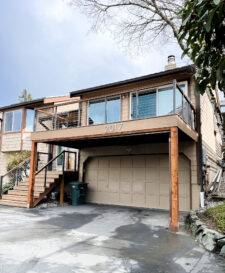
What Seminole's Climate Does to a Deck
UV and Sun Exposure
Florida's sun angle and long day length put more cumulative UV load on an exposed deck surface than most other parts of the country see in a year. On lower-grade wood finishes and some composite products, that UV exposure fades color and can make surfaces feel rougher underfoot over time. It's not a defect in the material so much as the reality of how much sun a Pinellas County deck absorbs, especially on south- and west-facing exposures with no shade structure overhead.
Salt Air and Metal Corrosion
Being close to the Gulf means airborne salt settles on outdoor structures throughout Seminole, canal-front or not. Salt accelerates corrosion in exposed fasteners, joist hangers, and any hardware that isn't rated for coastal exposure. On a deck, that hardware is structural — it's what's actually holding the frame together — so corrosion there isn't just cosmetic. It's the single biggest reason we don't treat hardware as an afterthought on any deck we build here.
Wind-Driven Rain and Standing Moisture
Rain that gets pushed sideways by wind finds its way into places vertical rain never would — ledger board connections, joist hanger pockets, and any spot where two pieces of decking meet without a gap to drain. Combined with Florida's humidity, moisture that gets trapped in those spots doesn't dry out quickly, which is exactly the condition that leads to rot in wood framing and corrosion in fasteners.
Hurricane and High-Wind Loads
Pinellas County sits in a wind zone where decks, like every other structure, need to be engineered for real uplift and lateral loads, not just built strong enough for calm weather. Ledger attachment to the house, post-to-footing connections, and railing anchorage all matter more here than they would in a low-wind-load part of the country.
Decking Material Options for a Seminole Home
There's no single right material for every deck — budget, how the space will be used, and how much upkeep a homeowner wants to take on all factor into the decision. Here's how the common options actually perform under Pinellas County conditions.
| Material | Sun & Salt Air Behavior | Typical Maintenance | Realistic Lifespan Here |
|---|---|---|---|
| Pressure-treated pine | Affordable but prone to graying, splintering, and warping under sustained UV and humidity | Regular sealing or staining, roughly every 1-2 years | 10-15 years with consistent upkeep |
| Composite decking | Resists fading and moisture absorption far better than wood; quality varies by product line | Low; periodic washing | 25-30+ years, often with manufacturer warranty |
| Tropical hardwood (e.g. ipe) | Naturally dense and rot-resistant, but still needs oiling to hold color under Florida sun | Moderate to high; regular oiling to prevent graying | 20-30 years with upkeep |
| PVC decking | Fully synthetic; handles moisture and salt air with minimal degradation | Low | 25-30+ years |
We'll walk through these trade-offs against your budget, how much maintenance you actually want to do, and the look you're after, rather than steering you toward whichever product is easiest to sell. A shaded backyard and an open, full-sun lot in the same Seminole neighborhood don't always call for the same answer.
What a Correctly Built Deck Involves
Ledger Attachment and Flashing
The ledger board — where the deck attaches to the house — is the single most common point of structural failure on poorly built decks. It needs to be bolted (not just nailed) to solid framing, and it needs proper flashing to keep water from getting behind it and into the house's wall assembly. This is the detail most likely to be rushed on a cheap deck build, and it's the one most likely to cause expensive damage if it's done wrong.
Footings Sized for Pinellas Soil and Wind Load
Footings need to be sized and set to the depth local soil conditions and wind loads actually require, not just poured to whatever's fastest. Undersized or shallow footings are a common source of deck movement and instability over time, especially once you factor in the uplift forces a Florida wind event can put on a structure.
Fasteners and Hardware Rated for Coastal Exposure
Given how much airborne salt this area sees, we use stainless steel or coated fasteners and connectors rated for coastal exposure rather than standard hardware that corrodes faster here than it would inland. It costs more up front and it's the difference between hardware that's still solid in fifteen years and hardware that's rusting through in five.
Drainage and Spacing
Proper gapping between boards lets water drain instead of pooling, and framing should be built with slight pitch away from the house so water moves off the structure instead of sitting against it. Small details, but they're the difference between a deck that dries out after a storm and one that stays damp for days.
Permitting in Largo and Pinellas County
Most deck construction in this area requires a building permit, and for good reason — a deck is a structure people stand, sit, and gather on, and it needs to meet the same wind and structural standards as the rest of the house. Permitted work also means the design and connections get checked against current code rather than just built on assumption. We handle the permitting process as part of the job, including preparing the plans and documentation the county requires, so homeowners aren't left figuring that out on their own.
Our Process
- Site visit and design conversation. We look at your lot, discuss how you'll use the space, and talk through material and layout options.
- Plans and permitting. We prepare the design documentation and pull the required permit before any work starts.
- Framing and structural work. Footings, posts, ledger attachment, and joist framing go in first, built to the loads this area actually requires.
- Decking, railing, and finish work. Surface material, railing, and any stairs or built-in features go in once the structure is solid.
- Final walkthrough. We go over the finished deck with you, including what maintenance it actually needs going forward.
Keeping a Seminole Deck in Good Shape
What a deck needs to stay solid depends on the material, but a few habits matter regardless of what it's built from:
- Sweep debris out of board gaps so water can keep draining as intended
- Rinse off salt residue periodically, especially on decks closer to the water
- Check railing and stair connections for looseness once or twice a year
- Reseal or refinish wood decking on the schedule the product actually needs, not just when it starts looking worn
- After a major storm, walk the deck and check fasteners, footings, and railing anchorage before assuming everything's fine
Why a Local Seminole Crew Matters
A crew that builds decks across Pinellas County through hurricane seasons, not just calm weather, understands how salt air, UV, and wind loads actually behave on real structures over years, not just how a product looks on a spec sheet. That shows up in practical decisions: which hardware is worth the extra cost on a canal-front lot versus an inland property, how much pitch a given deck layout needs for the rain this area sees, and which connection details are worth the extra time on install day so you're not dealing with a repair after the next named storm. Windows are our foundation, but building durable outdoor structures for this climate is the same discipline applied to a different part of the house.
Get a Free, No-Pressure Estimate
If you're planning a new deck in Seminole or need an honest look at whether an existing one is still structurally sound, we're glad to come take a look. Reach out using the form below to schedule a free estimate — no pressure, no upsell script.