 Largo Window
 Siding Installation for Belleair Homes
Belleair sits in one of the more exposed pockets of Pinellas County, wedged between the Intracoastal Waterway and the Gulf, which means homes here take on more weather than a house just a few miles inland. Siding installation in this part of the county isn't a one-size job — a property backing up to open water faces a different exposure profile than one set back a few streets, and a correct installation accounts for that rather than treating every wall the same way. This page walks through what Belleair's climate actually does to exterior materials, what a proper siding installation involves here, and how our process is built around those conditions rather than a generic install checklist.
We install James Hardie fiber cement siding exclusively. We don't install LP SmartSide, vinyl, Cemplank, Allura, primed spruce, or cedar, and that's a deliberate standard rather than a limited product menu. In a climate that combines hurricane-force wind, near-constant UV, wind-driven rain, and salt air, the margin for error in both material and installation quality is smaller than most homeowners realize until something starts failing.
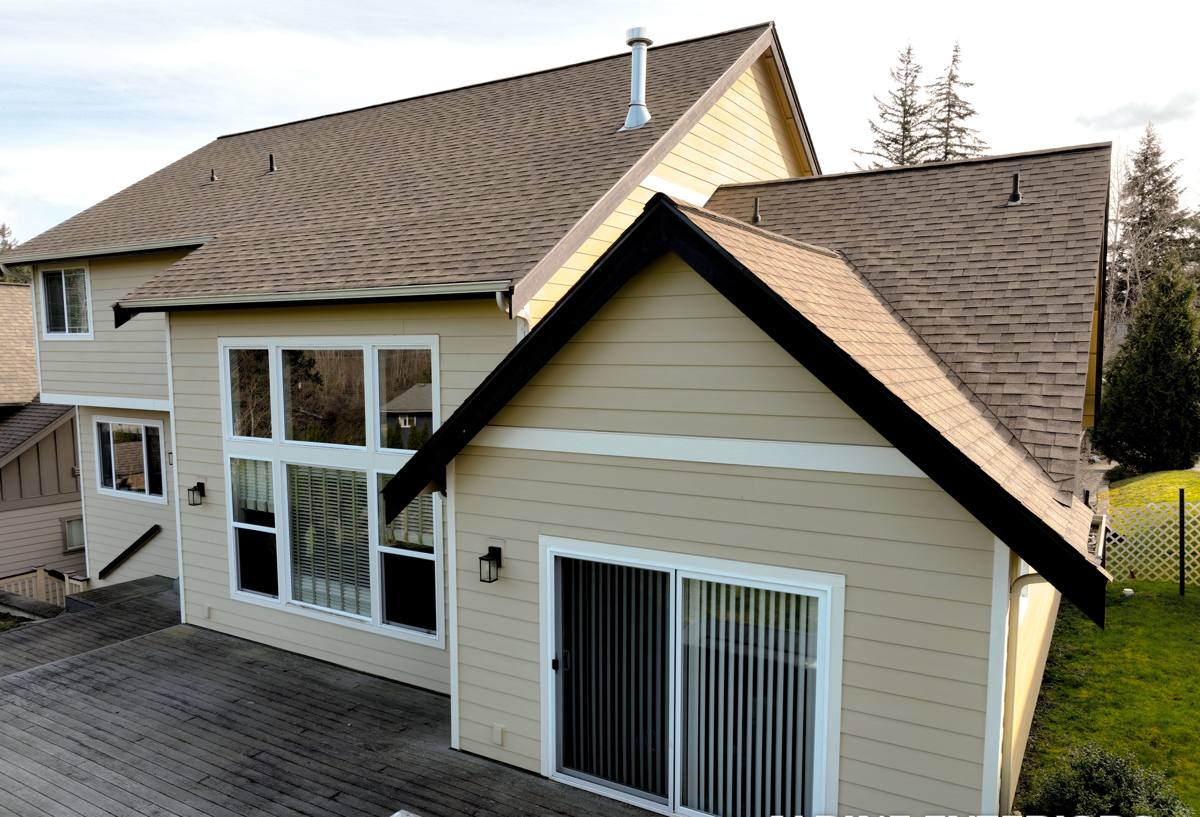
What Belleair's Climate Does to Siding
Hurricane-Force Wind
Belleair's position close to open water means it sees the full force of wind events that lose some intensity by the time they reach communities further inland. Sustained high wind doesn't just risk blowing panels loose — it drives rain sideways into laps, seams, and trim lines that were only ever designed to shed water falling straight down, and it puts real load on every fastener holding the siding to the wall. A siding system rated for wind resistance on paper still depends entirely on correct fastening and spacing to perform that way in a real storm.
Intense, Year-Round UV
Florida sun is intense for most of the year, not just in summer, and Belleair's open exposure near the water doesn't offer much natural shading relief on many lots. UV breaks down caulk and sealants, fades and chalks finishes that weren't engineered for it, and speeds up the wear cycle on any material that isn't built to hold color and integrity under sustained sun. Over years, that shows up as faded panels, cracked caulk joints, and trim that's aged faster than the rest of the house.
Wind-Driven Rain
Rain that falls straight down is manageable for almost any siding system. Rain pushed sideways by wind off the water is a different problem, because it finds its way into joints and penetrations that weren't built to handle water moving at an angle. This is where flashing detail, house wrap continuity, and correct panel overlap matter more than the siding material itself — a quality product installed with a gap in the water-resistive barrier will still let water through.
Salt Air
Salt-laden air moving in off the Gulf and the Intracoastal accelerates corrosion in fasteners, flashing, and any exposed metal trim, and that process runs continuously, not just during storms. A corroding fastener loses holding strength over time and can open a small gap at the point where it penetrates the siding — a direct entry point for moisture that gets worse the longer it goes unaddressed. Fastener selection matters as much in Belleair as the siding product itself.
What a Correct Siding Installation Involves Here
Given those four pressures stacking on top of each other, a siding installation in Belleair has to get more details right than the same job would in a milder inland climate. A few of the ones that matter most:
- A continuous, properly lapped water-resistive barrier behind the siding, with no gaps or reversed laps at seams
- Flashing at every window, door, and wall penetration, sequenced correctly with the house wrap so water sheds outward and downward
- Corrosion-resistant fasteners, sized and spaced to the manufacturer's wind-zone specification for this part of the coast
- Sealed and primed cut edges everywhere the manufacturer requires it, especially at field cuts made on site
- Correct clearance between the bottom of the siding and grade, decks, or roof lines where water and debris tend to collect
- Panel and trim fastening that meets the wind-load requirements for a coastal Pinellas County property, not just a baseline minimum
Most of these details are invisible once the job is finished, which is exactly why they're worth asking about directly before hiring anyone, and why they're the first thing we walk a homeowner through during an estimate.
Why We Install Only James Hardie Fiber Cement
We standardized on one siding system after seeing what actually holds up under repeated hurricane seasons versus what performs well on a spec sheet but struggles a few years into real coastal exposure.
- Non-combustible core: Fiber cement doesn't feed a fire the way wood-based siding products can, which matters for homeowner safety and can factor into insurance underwriting.
- Factory-applied ColorPlus finish: Baked on in a controlled factory process rather than field-applied, so it holds color and adhesion longer under intense Florida UV and salt air than a site-painted finish.
- Climate-engineered HZ product lines: Hardie's HZ formulations are built for high-moisture, high-wind regions — a direct match for Belleair and the rest of coastal Pinellas County.
- Dimensional stability: Fiber cement doesn't swell, cup, or warp the way wood-based or engineered wood siding can after repeated wetting and drying cycles.
- A strong transferable warranty: Backed by one of the more robust warranty structures in the industry, provided the installation follows Hardie's published specifications.
Other products have a place in the broader market, and plenty of homeowners elsewhere are satisfied with them. Our position is a professional one specific to this coastline: given how much hurricane wind, UV, and salt exposure a Belleair home takes on, we'd rather stand fully behind one system installed correctly than offer a cheaper alternative that shifts maintenance risk onto the homeowner down the road.
How Common Alternatives Compare in This Climate
| Product | Common trade-off in a coastal Pinellas County climate |
|---|---|
| Vinyl siding | Can warp or distort under intense sun and heat; panel seams give wind-driven rain a path behind the cladding |
| LP SmartSide / engineered wood | Wood-strand core absorbs moisture readily at cut edges and fastener points, a real concern under Gulf Coast humidity |
| Primed spruce or cedar | Needs ongoing paint and moisture maintenance to resist rot; salt air and UV shorten the maintenance cycle further |
| Other fiber cement brands | May not offer the same coastal-engineered HZ formulation or factory-finish warranty depth as James Hardie |
How Our Process Works
Inspection and Estimate
We start by walking the property, looking at current siding condition, signs of trapped moisture or sheathing damage, and how sun and wind exposure vary across the different walls — a factor that can shift noticeably depending on how close a Belleair lot sits to open water. That assessment shapes the estimate rather than a flat per-square-foot number.
Tear-Off and Substrate Check
Once the old siding comes off, we check the sheathing underneath for rot or soft spots before installing anything new. Covering damaged sheathing with fresh siding just hides a problem that keeps getting worse behind the wall, so we address it at this stage rather than after the job is closed up.
Weather Barrier and Flashing
Given how much coastal siding failure traces back to water getting behind the cladding rather than through the panel itself, the house wrap, window flashing, and every penetration get careful attention here. This step is easy to rush and hard to inspect once siding is installed, so we treat it as non-negotiable, especially on walls with direct wind exposure.
Installation to Manufacturer Spec
James Hardie's warranty depends on installation following their published specifications — correct fastener type, spacing, and clearance above grade and rooflines, plus proper field-cutting and sealing practices. We install to that spec as the baseline expectation, not as an upgrade.
Final Walkthrough
We walk the finished job with the homeowner, cover care and maintenance expectations specific to a coastal Belleair property, and confirm the work matches what was estimated before calling it complete.
Signs a Belleair Home's Siding Needs Attention
- Cracked, buckled, or missing panels after a windstorm
- Soft or spongy siding, particularly low on the wall or around window and door trim
- Peeling paint or visible warping, most common on older wood-based siding
- Rust staining running down from fasteners or trim hardware
- Cracked or gapped caulk joints that let light or air through
- Musty odors or staining on interior walls that back up to exterior siding
- Siding older than 20-25 years with no documented replacement or major repair history
None of these automatically mean a full replacement is necessary, but each is worth a professional look before another hurricane season adds to the damage.
What Affects the Cost of a Siding Installation
Every estimate is specific to the house, but a few factors consistently move the number in Belleair: total square footage and number of stories, how much trim and detail work surrounds windows and rooflines, the condition of the sheathing once old siding comes off, proximity and orientation to open water, and which James Hardie product line and color fits the home. We walk through those factors directly during the estimate instead of handing over a number with no explanation behind it.
Why a Crew That Works Belleair Regularly Matters
Working this stretch of Pinellas County on an ongoing basis, not as an occasional stop, shapes real decisions on a Belleair job — which walls take the worst of the wind off the water, where extra flashing attention earns its keep, and which install-day details are worth the extra time so a homeowner isn't dealing with a callback after the next storm season. It also means that if a warranty or maintenance question comes up years later, it's a call to a crew still working in the same area, not one that's moved on somewhere else. That local track record matters as much as the product on the wall.
If your Belleair home needs new siding, or you'd like an honest assessment of what shape your current siding is in, we're glad to take a look and give you a straightforward, no-pressure estimate. Reach out using the form below to get started.