 Largo Window
 Siding Replacement in Pinellas Park: A Different Job Than It Looks
Pinellas Park sits in the middle of the Pinellas County peninsula, close enough to both coasts that homes here deal with the same weather stresses that hit Largo, St. Petersburg, and Clearwater — even though the neighborhood itself isn't waterfront. Wind-driven rain, punishing UV exposure nearly year-round, and salt-laden air don't stop at the shoreline; they move inland on sea breezes and storm systems and go to work on every exterior wall in the county, whether that wall is a mile from the water or ten.
A lot of the housing stock in and around Pinellas Park grew up during Florida's big mid-century and later building booms, which means plenty of homes are wearing siding that's already been through decades of this climate — sometimes the original material, sometimes a replacement that was never quite matched to what this environment actually demands. Siding replacement here isn't just a cosmetic upgrade. It's a chance to correct decisions that were made without this climate fully in mind, and to build a wall system that's actually engineered for where it sits.
What Hurricane-Prone Conditions Actually Demand From Siding
Wind-Driven Rain, Not Just Rain
Straight-down rain is easy for almost any siding to shed. The problem in this part of Florida is rain that's being pushed sideways by sustained wind — the kind that finds its way under lap joints, around penetrations, and behind panels that weren't fastened or flashed with that pressure in mind. Siding that looks fine in a light shower can still be letting water behind the wall during a real Gulf Coast storm, and that's where damage actually starts.
Wind Load on the Siding Itself
Pinellas County sits in a high-wind design zone, and siding attachment isn't optional guesswork here — fastener type, fastener spacing, and how each course is secured all need to match both the product manufacturer's specifications and local wind requirements. Siding that's under-fastened or fastened with the wrong hardware can lift, crack, or blow off in a strong storm even if it never sees a direct hurricane hit; plenty of damage in this area comes from tropical storms and even strong seasonal fronts, not just named hurricanes.
UV and Heat, Every Single Day
Florida sun is intense for most of the year, not just in summer, and constant UV exposure breaks down field-applied paint, fades color, and can cause some materials to warp or become brittle over time. A siding replacement here has to account for a product finish that's built to hold up under sun exposure that's simply more aggressive, more often, than most of the country deals with.
Salt Air's Slow, Quiet Damage
Salt air doesn't need to be blowing in off the water to matter — it travels well inland across a peninsula this size, settling on siding, trim, and especially fasteners and metal flashing. Standard hardware corrodes faster in this environment, and once a fastener starts to fail, whatever it's holding is no longer secure even if the siding face still looks intact. Correct material choice for fasteners and flashing isn't an upgrade in Pinellas Park — it's part of doing the job to spec.
What a Correct Siding Replacement Actually Involves
Tear-Off vs. Overlay
Installing new siding directly over old siding is sometimes possible, but it skips the one step that matters most in this climate: inspecting what's actually happening behind the wall. A full tear-off removes the old material down to the sheathing, so a crew can check for hidden moisture damage, confirm the wall assembly is sound, and install a proper water-resistive barrier before anything new goes up. In a climate that pushes wind-driven rain against walls as often as this one does, that inspection step is worth the extra labor.
The Water-Resistive Barrier and Flashing
Behind every good siding job is a drainage plane most homeowners never see — a correctly lapped water-resistive barrier and properly sequenced flashing at every window, door, and wall penetration. This is where wind-driven rain either gets managed and directed back out, or gets trapped behind the siding to cause rot and mold over time. It's also one of the easiest places for a rushed installer to cut corners, because it's invisible once the siding goes on.
Fastening Schedule
Correct siding replacement means following the fastener spacing and type called for by both the manufacturer and the wind requirements for this part of Florida — not a generic, one-size-fits-all approach. This is a detail worth asking about directly when comparing contractors.
Why We Install Only James Hardie Fiber Cement
We don't install vinyl, LP SmartSide, cedar, primed spruce, or other fiber cement brands — we install James Hardie fiber cement exclusively. That's a deliberate standard, not a sales preference, and it comes down to how these materials actually perform under Pinellas County conditions over the long haul.
| Material | How It Handles This Climate |
|---|---|
| Vinyl siding | Can soften, warp, or become brittle under sustained heat and intense UV; seams can allow wind-driven rain intrusion in strong storms |
| Cedar / primed wood | Attractive but needs ongoing painting and sealing; wood is naturally more vulnerable to moisture and pest issues in humid coastal air |
| LP SmartSide / engineered wood | Lower material cost, but a wood-fiber core that's more sensitive to moisture at cut edges, joints, and fastener penetrations |
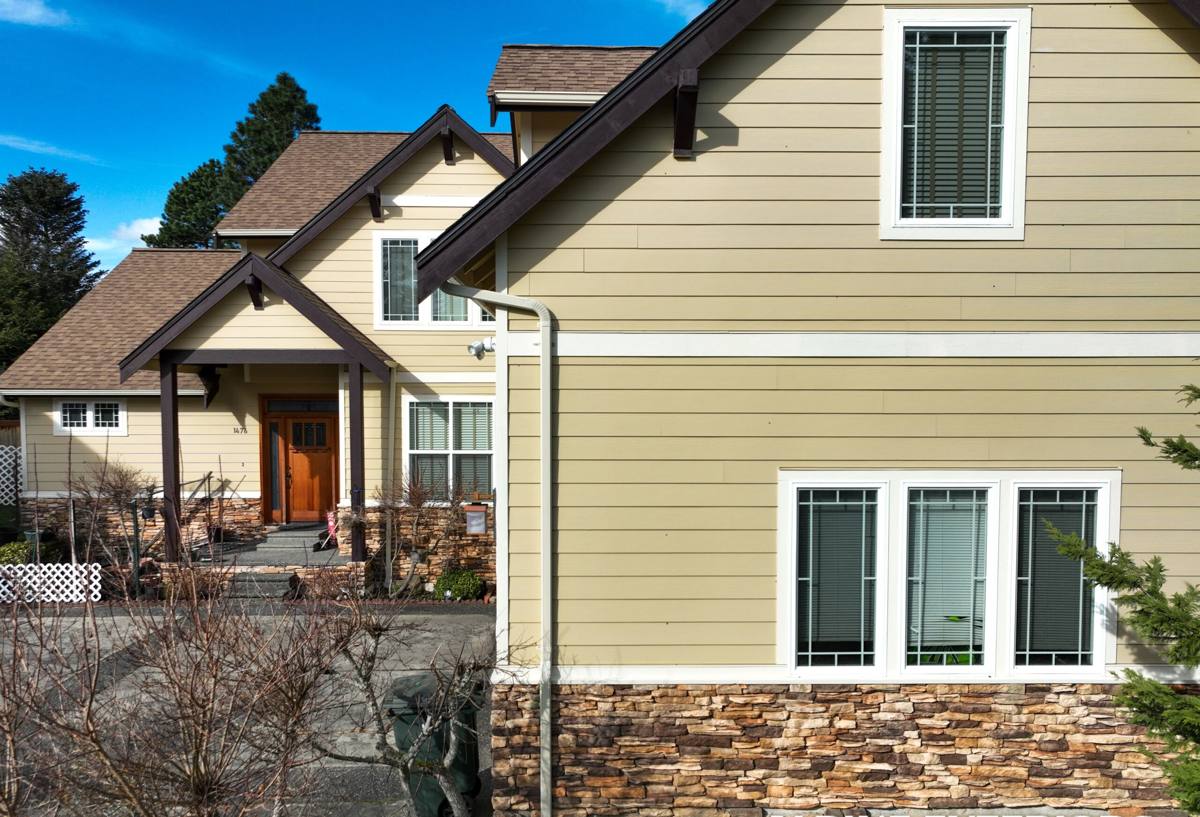
| James Hardie fiber cement | Non-combustible, dimensionally stable in heat and humidity, factory-applied ColorPlus finish resists UV fading, engineered HZ product lines built for hot, humid, storm-prone regions |
Hardie's HZ5 formulation in particular is engineered for climates like ours — hot, humid, and exposed to wind-driven rain for a good part of the year. Combined with a factory-baked ColorPlus finish that doesn't rely on field-applied paint to hold its color, and a transferable warranty structure that reflects long-term confidence in the product, it's the system we're willing to put our name behind on a Pinellas Park home.
Our Process for a Pinellas Park Siding Replacement
- On-site evaluation — we look at the existing siding, wall condition where visible, and any signs of past water intrusion before quoting anything
- Tear-off and inspection — old siding and trim come off down to the sheathing so we can see what's actually there
- Repair as needed — any rotted sheathing or damaged framing gets addressed before new material goes on
- Water-resistive barrier and flashing — installed and sequenced correctly at every window, door, and penetration
- James Hardie installation — fastened to manufacturer and local wind-zone specifications, not a generic schedule
- Final walkthrough — trim, caulking, and finish details reviewed with the homeowner before we call the job done
Signs a Pinellas Park Home May Need Siding Replacement Now
- Visible warping, buckling, or gaps between siding panels or lap joints
- Soft spots, discoloration, or a stale smell near exterior walls, especially around windows and doors
- Faded, chalky, or peeling paint that keeps returning shortly after repainting
- Cracked or missing caulking at seams, corners, and trim
- Rust streaks running from fasteners or metal flashing
- Siding that flexed, cracked, or came loose during a recent storm, even a minor one
Permitting and Wind-Zone Requirements in Pinellas County
Siding replacement in Pinellas Park generally requires a building permit, and the work needs to meet the wind-load and attachment standards that apply to this part of Florida. A licensed, insured contractor should be pulling that permit and building to those standards as a matter of course, not as an add-on service — it's part of what protects the homeowner if a future storm puts the installation to the test, and part of what a resale inspection or insurance carrier will eventually want to see documented.
Why Hiring a Crew That Already Works This Area Matters
Pinellas Park sits close enough to Largo and the rest of Pinellas County that a contractor working here regularly already understands the wind exposure, the permitting expectations, and the way this climate actually treats different siding materials over time — not from a manual, but from having done the work here repeatedly. That local familiarity shows up in small but important ways: knowing which fastening and flashing details actually hold up through a real hurricane season, and not treating a Florida Gulf Coast home like it's being sided in a mild inland climate.
If your Pinellas Park home is due for new siding, we're happy to take a look and walk you through what we find — no pressure, no obligation. Reach out for a free estimate using the form below.