 Largo Window
 Why Decks Near St. Petersburg Wear Out Faster Than the Manufacturer Says
Every deck board and fastener sold in Florida comes with a lifespan estimate printed on the label. Those numbers are almost never based on conditions like the ones a deck faces in St. Petersburg. This stretch of Pinellas County sits close enough to Tampa Bay and the Gulf that homes deal with a combination most manufacturers never test for at the same time: salt-laden air, near-constant UV exposure, wind-driven rain, and the occasional direct hit from tropical-storm or hurricane-force wind. Individually, any one of those is manageable. Together, they compound.
Salt air corrodes exposed metal fasteners and connectors long before the wood or composite around them fails. UV breaks down the surface fibers of wood decking and the resin binders in some composites, leading to graying, splintering, or chalking. Wind-driven rain gets pushed sideways and upward under railings and around ledger boards, finding gaps that a straight-down rainstorm never would. And high wind events put real lateral and uplift stress on ledger attachments, post connections, and railing systems — the parts of a deck that are hardest to inspect from the surface and easiest for a low-bid crew to shortcut.
A deck that was built to a generic national spec, rather than for this specific climate, tends to show its age in year six or seven instead of year fifteen or twenty. That's the gap a proper replacement is meant to close.
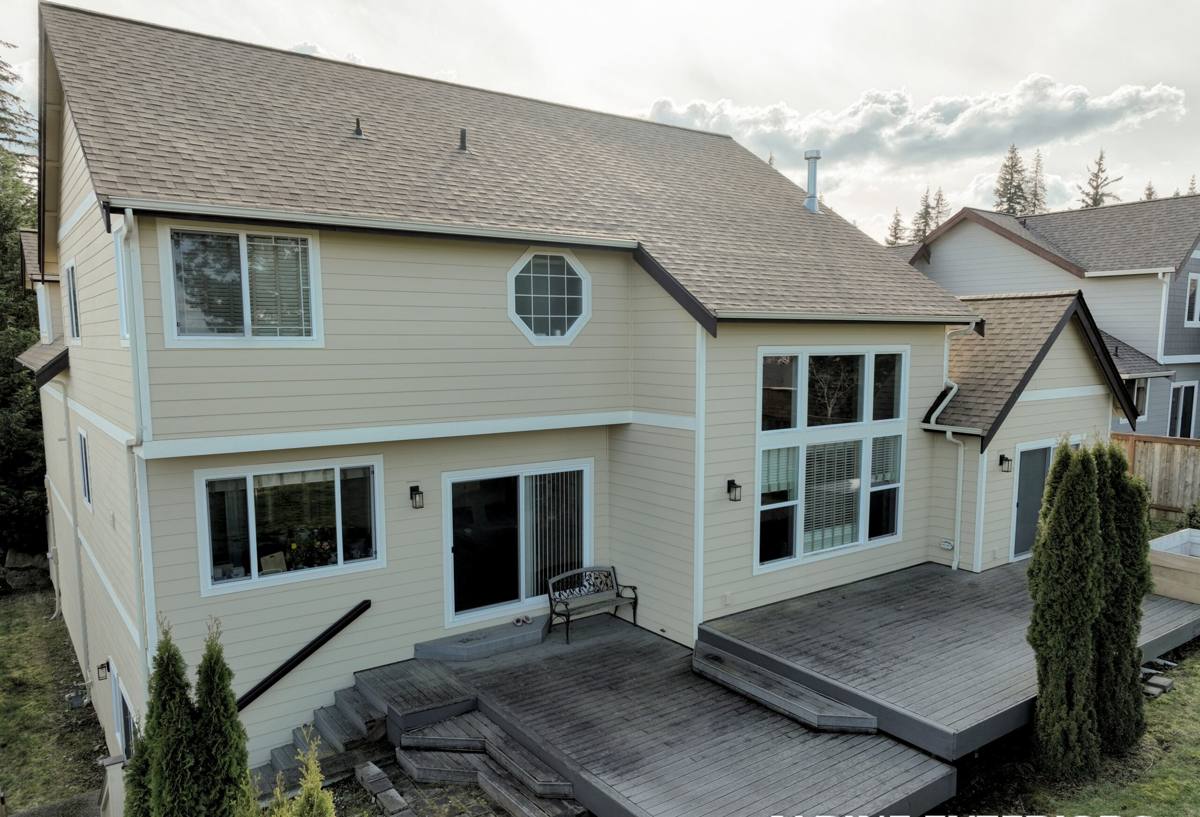
Signs a Deck Needs Replacement, Not Another Repair
Homeowners often ask us to patch a soft board or two, thinking that solves the problem. Sometimes it does. Often, a soft board is just the visible symptom of something happening underneath — a ledger connection losing integrity, joists that have absorbed years of moisture, or fasteners that have corroded past the point of holding load safely. Repair makes sense when the problem is isolated and the structure underneath is sound. Replacement makes sense when the damage points to a systemic issue.
- Boards that feel spongy, springy, or noticeably softer than they did a year or two ago
- Visible rust streaking below fastener heads or around metal connectors
- Gaps opening up between the deck and the house at the ledger board
- Railings or posts that wobble or flex more than they used to
- Wood that's splitting, cupping, or delaminating rather than just fading
- A deck older than 12–15 years that has never had its structural connections inspected
- Any sign of pest activity or soft wood at ground-contact posts or footings
If more than one or two of these are present, the honest answer is usually a full or near-full replacement rather than another round of spot repairs that won't hold up through the next storm season.
What a Correct Deck Replacement Actually Involves
It Starts Below the Deck, Not on Top of It
The visible decking board is the smallest part of the job in terms of what actually determines how long a deck lasts. What matters more is what's underneath: the ledger board connection to the house, the footings and posts, the joist framing, and the hardware tying it all together. A replacement done right re-evaluates every one of those, not just the surface.
Ledger Attachment
The ledger board — where the deck attaches to the house — is the single most common point of catastrophic deck failure nationwide, and it's a spot where wind-driven rain in this climate causes hidden rot behind the flashing if it wasn't installed correctly the first time. A correct replacement means proper flashing, appropriate fasteners for the framing material behind it, and a connection method that meets current code, not whatever was standard when the original deck went up.
Footings and Posts
Footings need to be sized and set to local frost and load requirements (frost isn't the concern here that it is up north, but bearing capacity and wind uplift resistance are). Posts should be checked for ground contact rot, especially on older decks where the post base sits directly in soil or a deteriorated concrete footing.
Fasteners and Hardware
This is where coastal Florida punishes shortcuts. Standard galvanized fasteners corrode faster near saltwater air than they do inland. A correctly built deck near St. Petersburg uses stainless steel or coated fasteners and connectors rated for coastal or high-corrosion environments, not whatever was cheapest at the supply house.
Wind Load and Railing Systems
Railings and guard posts take direct wind load during storms, and they're also what people grab onto and lean against every day. Post spacing, attachment method, and baluster spacing all need to meet current Florida Building Code, which has gotten more specific about wind resistance since many existing decks were originally built.
Choosing a Decking Material for This Climate
There's no single "best" decking material — there's a best fit for how a homeowner wants to use the deck, how much maintenance they're willing to do, and their budget. Here's how the common options actually perform under Gulf Coast sun, humidity, and salt air.
| Material | Maintenance | UV / Salt Air Behavior | Typical Longevity Here |
|---|---|---|---|
| Pressure-treated wood | Regular sealing/staining needed, ideally every 1–2 years | Grays and can splinter without upkeep; UV breaks down surface fibers | Shorter lifespan without consistent maintenance |
| Tropical hardwoods | Periodic oiling to maintain color; low rot risk if maintained | Naturally dense and rot-resistant, but still grays under constant UV | Long-lasting with upkeep; higher upfront cost |
| Capped composite | Low — occasional washing, no sealing or staining | Cap layer resists fading and moisture intrusion well | Long-lasting; performs well in humidity and salt exposure |
| Uncapped composite | Moderate — more prone to moisture absorption at cut edges | Can fade or mildew faster than capped versions in humid climates | Shorter than capped composite if not detailed carefully |
| PVC decking | Very low — resists moisture almost entirely | Doesn't absorb water, holds up well to salt air; can run hotter underfoot in direct sun | Long-lasting; strong option for full sun exposure |
Our standard recommendation for homes with heavy sun exposure and salt air is capped composite or PVC decking, paired with stainless or coastal-rated hardware. Wood is a legitimate choice for homeowners who like the look and are committed to a real maintenance schedule — we just make sure that trade-off is understood up front, not discovered three summers in.
Permits, Code, and Doing It the Right Way
Deck replacement in Pinellas County typically requires a permit and inspection, and the applicable code has real wind-load and connection requirements that matter in a hurricane-exposed region. Skipping the permit might save time on paper, but it also means no third-party check on the structural work, and it can complicate a home sale or insurance claim later. We pull the required permits and build to current Florida Building Code as a matter of standard practice, not an upsell.
How Our Deck Replacement Process Works
- On-site assessment. We inspect the existing deck's framing, ledger connection, footings, and hardware — not just the surface boards — to determine what's actually driving the failure.
- Honest scope and material recommendation. We walk through material options based on how the deck is used, sun exposure, and maintenance preference, with the trade-offs explained plainly.
- Permitting. We handle the permit application and coordinate required inspections.
- Removal. The old deck is torn out down to (and including, where needed) the ledger and footings.
- Rebuild. Framing, ledger flashing, footings, and posts are addressed first, using coastal-rated fasteners and connectors throughout, followed by decking and railing installation.
- Final inspection and walkthrough. We confirm the work passes required inspections and walk the finished deck with the homeowner.
Why It Matters to Hire a Crew That Already Works This Area
A deck built for inland Florida, or built by a crew unfamiliar with what salt air and Gulf-facing storms do to fasteners and framing over time, will show its age faster than one built with this specific environment in mind. Crews that regularly work in and around St. Petersburg and greater Pinellas County already know which hardware grades hold up, how local permitting works, and where the common failure points are on decks in this part of the coast. That local repetition is what keeps a rebuild from becoming a repeat of the same problem five years later.
Keeping a New Deck Performing Long-Term
- Rinse salt residue and debris off the deck surface periodically, especially after storms
- Keep gutters and downspouts clear so water isn't dumping directly onto or under the deck
- Inspect railing posts and ledger flashing once a year, even on low-maintenance materials
- Reapply sealant or stain on wood decking on the schedule the product actually requires — not "when it looks bad"
- Address any soft spots, loose fasteners, or rust streaking as soon as they appear rather than waiting
If your deck near St. Petersburg is showing its age, or you just want a straight answer on repair versus replacement, we're happy to take a look. Reach out for a free, no-pressure estimate using the form below.