 Largo Window
 St. Petersburg sits out on the Pinellas peninsula a short drive from Largo, with Tampa Bay on one side and the Gulf of Mexico on the other. That geography means almost every roof in the area deals with the same combination of stress year after year: hurricane-force wind events, sun that barely lets up for ten months out of twelve, wind-driven rain that gets forced sideways and upward during storms instead of just falling straight down, and salt air that works on metal and fasteners whether a storm ever comes through or not. Roof repair here isn't just patching a shingle and calling it done. It means figuring out what actually let water in, whether that's a one-time event or a sign of a bigger problem underneath, and fixing it in a way that holds up through the next storm season instead of just the next hard rain.
Why St. Petersburg Roofs Take a Different Kind of Beating
Homes in this part of Pinellas County are exposed on nearly every side. Wind events strong enough to lift shingles, crack tiles, or peel back flashing aren't rare occurrences here — they're a seasonal reality that every roof on the peninsula has to be built and repaired to withstand. Between storms, the sun does its own steady damage: constant, intense UV breaks down asphalt shingle granules, dries out sealants, and makes underlayment brittle years before it would fail in a milder climate. Wind-driven rain is its own separate problem from ordinary rainfall, because it doesn't just land on a roof — it gets pushed under shingle tabs, up under ridge caps, and into any gap around a penetration that a calm-weather rain would never reach. And because St. Petersburg sits this close to open water on two sides, salt-laden air is in the mix constantly, accelerating corrosion on nails, flashing, pipe boots, and any exposed metal roofing component.
None of that means a St. Petersburg roof is doomed to constant problems. It means repairs have to account for all four of those stressors at once, not just the one that happened to cause the leak you're calling about today.
Where the Damage Actually Starts
On almost every roof call we go out on in this area, the failure point isn't the open field of the roof — it's a transition or penetration. Flashing where a wall meets a roofline, the boot around a plumbing vent pipe, a valley where two roof planes meet, the seam at a ridge cap, or the edge detail along a fascia. Those are the spots where wind can get a grip and start working a seam loose, where wind-driven rain has the best chance of finding a way in, and where sealants dry out and crack first under constant UV. A roof rarely fails in the middle of an open shingle field before it fails at one of these transition points.
Common Repair Issues We See Around St. Petersburg
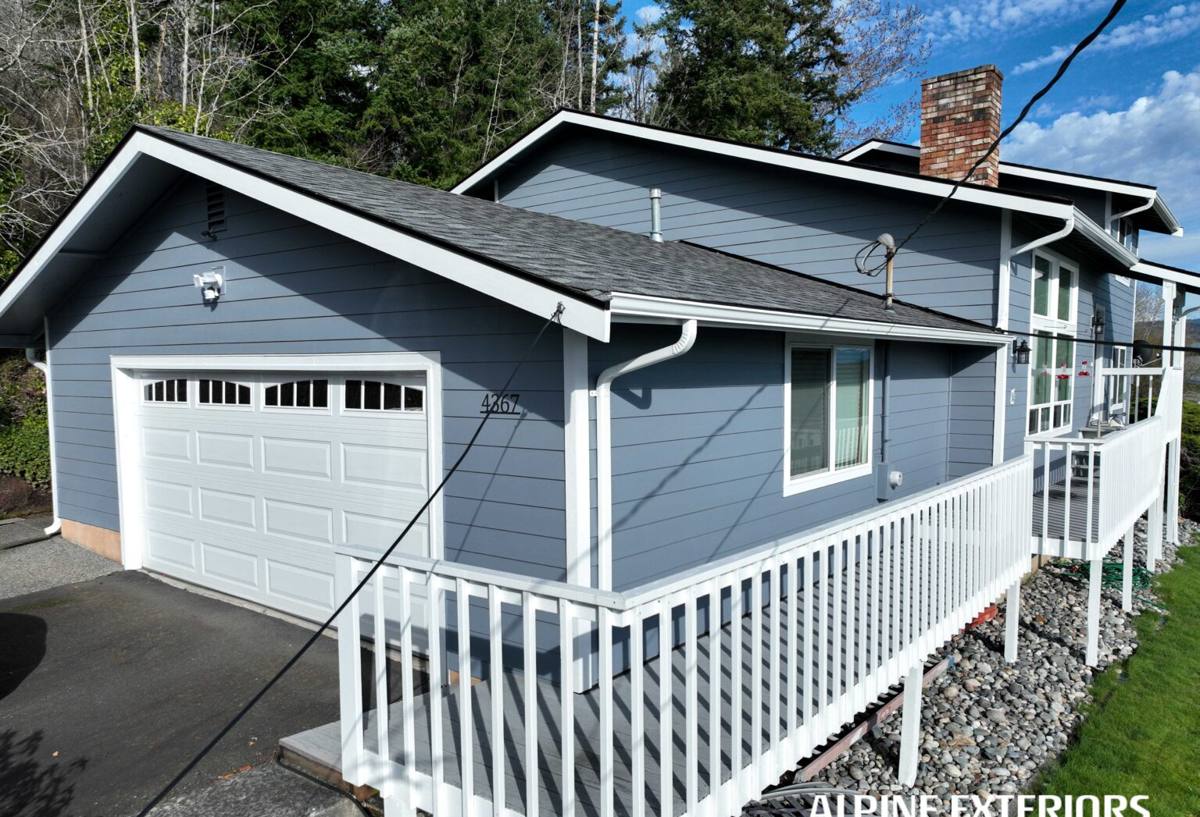
The specific problem depends heavily on what kind of roof is on the house, since the neighborhoods around St. Petersburg and Largo have a real mix — older asphalt shingle roofs, concrete and clay tile roofs on both older and newer homes, and low-slope or flat sections on additions, Florida rooms, and porch tie-ins. What we're called out for most often includes:
- Wind-lifted or missing shingles — tabs pulled loose or torn off entirely after a wind event, exposing the underlayment underneath
- Cracked, slipped, or broken tiles — from wind uplift, foot traffic, or wind-blown debris, common on tile roofs throughout the area
- Failed flashing at walls, chimneys, and skylights — sealant and metal that has dried out, corroded, or pulled away from the surface it's supposed to seal
- Deteriorated pipe boots — the rubber collar around plumbing vents is one of the first things intense UV breaks down, and it's a very common leak source
- Ponding and membrane failure on flat or low-slope sections — common on additions and porch roofs where drainage wasn't built in correctly or a membrane seam has opened up
- Valley leaks — where debris buildup or worn valley material lets wind-driven rain work its way under the roof covering
- Nail pops and fastener corrosion — salt air speeds up corrosion on exposed fasteners, which loosens the roofing material around them over time
What a Correct Roof Repair Actually Involves
Diagnosing the Real Source Before Patching Anything
Water on a ceiling or in an attic rarely shows up directly below where it entered the roof. It travels along rafters, decking, and insulation before it becomes visible, so a repair that only addresses the spot where the stain appeared often misses the actual entry point. A correct repair starts with tracing the leak back to its source — checking flashing, penetrations, and roof-plane transitions uphill from the stain, not just patching the nearest visible gap.
Matching Materials and Techniques to What's Already There
Repairing a section of shingle, tile, or flat roofing correctly means using material that's compatible with what's already installed and a technique that ties into the existing roof system rather than sitting on top of it. On a tile roof, that means matching profile and set correctly so the replacement tile sheds water the way the surrounding tiles do. On a shingle roof, it means weaving new shingles into the existing courses so wind can't get under the repaired edge the way it could on a poorly integrated patch. On flat or low-slope sections, it means using a membrane and adhesive system compatible with what's already down, not just layering something new over a failing surface.
Flashing, Penetrations, and Transition Points
Since this is where most leaks actually start, it's where a repair has to get the most attention. That means re-flashing properly rather than just adding more sealant over an old, failed joint — sealant alone is a short-term fix on a coastal roof, not a real repair. Pipe boots that have dried out or cracked get replaced, not caulked. Valley material that's worn thin gets replaced along its full run, not just at the point where the leak happened to show up.
Attic and Interior Check
Once the exterior repair is made, we check the attic and interior side for any wood that's been compromised by ongoing moisture — decking, rafters, or trusses that have softened or show rot need to be addressed as part of the repair, not left in place under a new patch. A repair that looks clean from the outside but leaves damaged structure underneath isn't a complete repair.
Repair or Replace? How We Make That Call
Not every roof problem is a repair, and not every roof problem is a replacement. The honest answer depends on a handful of factors that we walk through with every homeowner before recommending either path.
| Factor | What It Tells Us |
|---|---|
| Age of the roof | A roof well past its expected service life with a new leak is often better served by replacement than by repeated repairs |
| Extent of the damage | Isolated wind or storm damage to one section is usually a straightforward repair; widespread granule loss or multiple failure points point toward replacement |
| Underlying decking condition | Sound decking supports a targeted repair; soft, rotted, or delaminated decking under multiple areas changes the math toward a larger project |
| Roof type and material availability | Matching an older or discontinued shingle or tile profile can be difficult, which sometimes makes a full section replacement more practical than a patch |
| Storm and insurance history | A roof with prior storm damage claims or an upcoming wind mitigation inspection may factor insurance requirements into the repair-versus-replace decision |
We'll always give you the honest assessment rather than defaulting to the bigger job. Plenty of St. Petersburg roofs just need a correctly done repair to get several more good years out of them.
Our Roof Repair Process, Start to Finish
- On-site inspection — we get on the roof (weather permitting) and in the attic to trace the actual source of the problem, not just the visible symptom
- Honest assessment — a clear explanation of what's actually wrong, what caused it, and whether repair or a larger fix makes sense, with the reasoning laid out
- Written scope and estimate — what work will be done, what materials will be used, and what it will cost, before any work starts
- Repair work — damaged material removed, structure checked and addressed if compromised, and the repair tied into the surrounding roof system correctly
- Flashing and sealant detailing — every penetration and transition point involved in the repair gets flashed and sealed to hold up against wind-driven rain, not just patched over
- Final check — we confirm the repair from both the roof surface and the attic side before considering the job finished
Permits, Insurance, and Documentation in Pinellas County
Pinellas County and the City of St. Petersburg require permits for most roofing work beyond minor maintenance, and that permit process exists for a reason — it means the repair gets inspected against current Florida Building Code wind and material standards rather than just whatever was done last time. We handle the permitting on repairs that require it so you're not left figuring out county requirements on your own.
Insurance is its own piece of this. If your repair is related to wind or storm damage, documentation matters — clear photos of the damage, a written scope of what was found and fixed, and an honest explanation of cause. We provide that kind of documentation as a normal part of a storm-related repair, because a claim built on vague or incomplete information is much harder to get approved than one with a clear paper trail.
What to Have Ready After a Storm
- Photos of any visible roof damage or interior water staining, taken as soon as it's safe to do so
- Your current insurance policy details and any prior wind mitigation inspection report, if you have one
- A general sense of when the roof was last replaced or repaired, even if you don't have exact paperwork
- Any history of prior leaks or repairs in the same area of the roof
- Notes on when you first noticed the damage or leak, since timing can matter for a claim
Why Hiring a Crew That Already Works St. Petersburg Matters
A roofer who mostly works inland, calmer markets can still do competent work in general, but this stretch of Pinellas County punishes shortcuts faster than most places. A flashing detail that would hold up fine in a low-wind, low-humidity climate can fail within a season or two here once it's exposed to real hurricane-force wind loads, constant UV, and salt air working on every exposed fastener. A crew that repairs roofs in St. Petersburg regularly already knows which failure points show up again and again in this area, which materials and techniques actually hold up to the local conditions, and which shortcuts simply don't survive a full storm season.
That local experience also shows up in smaller, practical ways — knowing which neighborhoods tend to have older tile profiles that need careful matching, which flat-roof additions are prone to drainage problems, and how to sequence a repair around Florida's storm season instead of leaving a home exposed at the wrong time of year.
Ready for an Honest Look at Your Roof
If you're dealing with a leak, storm damage, missing or cracked roofing material, or you just want a second opinion on whether a section of your roof needs repair, it's worth getting an honest, on-site assessment before assuming the worst — or before assuming a quick patch will hold. We offer free, no-pressure estimates for roof repair in St. Petersburg and the surrounding Largo area — use the form below to get a time on the schedule.