 Largo Window
 Why Decks Age Faster on Treasure Island
Treasure Island sits out on the barrier islands west of Largo, with the Gulf of Mexico on one side and the Intracoastal Waterway on the other. That location is what makes it beautiful, and it's also what makes it hard on outdoor living spaces. A deck here deals with a combination of stresses that inland homes never see at the same intensity: constant salt-laden air off the Gulf, intense year-round UV exposure, wind-driven rain that gets pushed sideways under railings and through gaps, and the real possibility of hurricane-force gusts during storm season. Any one of these will shorten the life of an outdoor structure. Together, they're the reason so many older wood decks on the islands look worn out after just a few seasons.
Composite decking was designed to handle exactly this kind of punishment better than wood does, but only when it's specified and installed correctly for the environment it's going into. A composite deck built the same way you'd build one in Ohio is not going to hold up the same way on a barrier island in Pinellas County. That's the difference we focus on.
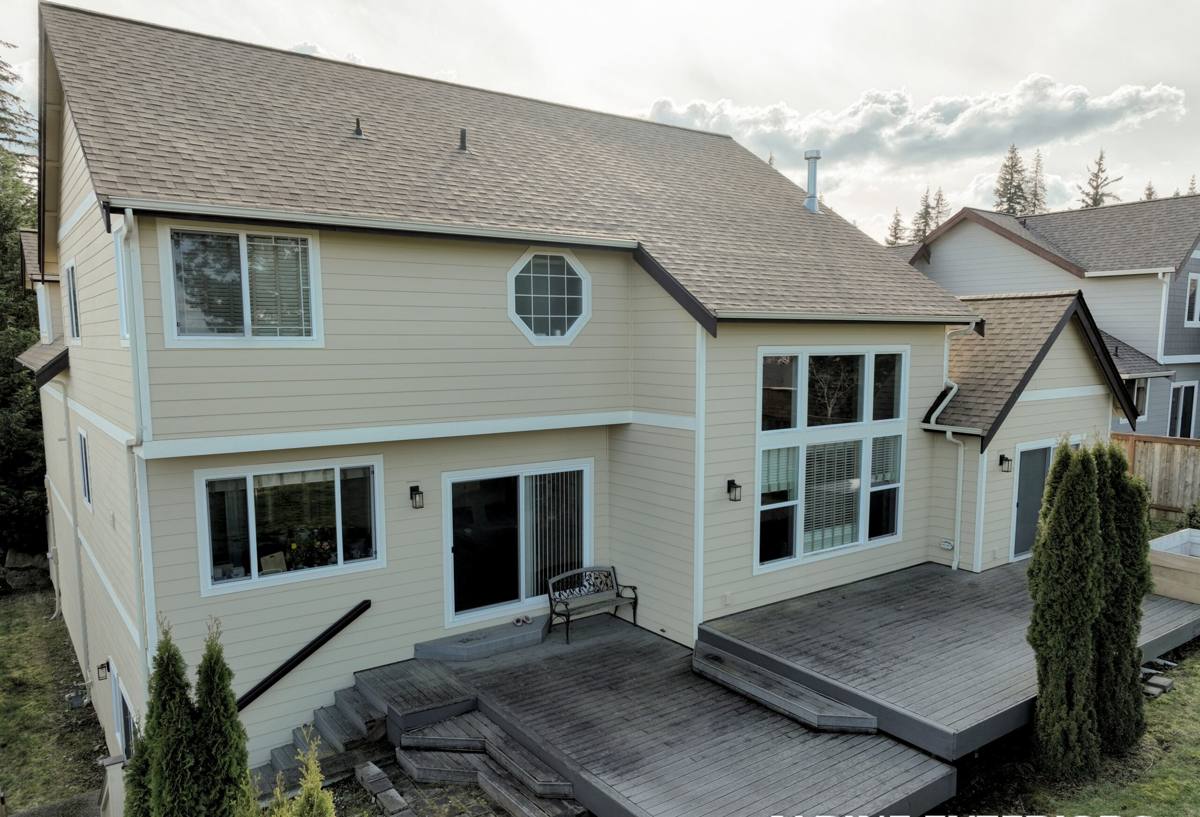
What This Climate Actually Demands From a Deck
Salt air and corrosion
Salt in the air settles on every exposed surface, including metal fasteners, brackets, and railing hardware. Standard hardware corrodes faster near the coast, and once a fastener starts to rust, it weakens the connection it's holding and can stain the decking around it. On a job this close to the Gulf, every piece of hardware needs to be rated for coastal or marine exposure — not just what's cheapest at the local supply house.
UV exposure
Florida sun is intense nearly every day of the year, and a west- or south-facing deck on Treasure Island gets hours of direct, unfiltered light with almost no seasonal break. Cheaper decking materials fade unevenly, chalk on the surface, or get brittle over time. The composite boards worth installing here use a UV-stabilized cap or formulation specifically because of this kind of year-round exposure.
Wind-driven rain and moisture
Rain in this area rarely falls straight down — Gulf storms push it sideways, and it finds its way into any gap, seam, or fastener hole that isn't properly sealed or drained. Moisture trapped under or between boards is what causes rot in wood decking and can cause problems even in composite systems if the substructure underneath isn't built to shed water.
Hurricane-force wind loads
Decks, railings, and stairs all need to be attached in a way that can take high wind loads — both the push of the wind itself and the uplift it creates. This isn't about the decking boards; it's about the framing, the ledger connection to the house, and the fasteners holding it all together. That's engineering and installation, not a feature you buy off the shelf.
Composite vs. Other Decking Materials for This Environment
Homeowners often ask us to walk through the honest trade-offs between decking materials before committing. Here's how they generally compare for a coastal Pinellas County property:
| Material | Salt air / UV performance | Maintenance | Typical lifespan here |
|---|---|---|---|
| Pressure-treated wood | Fades, splinters, and grays quickly in coastal sun; prone to rot if sealing lapses | Annual sealing/staining recommended | Shorter, especially near the water |
| Tropical hardwoods | Dense and durable but still needs regular oiling to resist UV graying and moisture cycling | Regular oiling, more labor-intensive care | Moderate to long with upkeep |
| Uncapped composite (older generation) | Can absorb moisture at the surface and mildew in humid, salty air | Periodic cleaning, no sealing | Moderate |
| Capped composite | Polymer shell resists fading, staining, and moisture absorption in coastal conditions | Occasional washing only | Longer, with manufacturer warranty backing |
We install capped composite boards as our standard for coastal jobs. It's not that other materials don't have a place — a homeowner who genuinely enjoys the upkeep of a hardwood deck and knows what they're signing up for can be happy with it. But for a low-maintenance deck that's going to face salt air and sun every single day, capped composite is the more honest recommendation for most Treasure Island properties.
What a Correct Composite Deck Installation Actually Involves
The decking boards get most of the attention, but they're the last piece of the system. The parts that determine whether a deck lasts are underneath and often invisible once the job is done.
Framing and structure
Joists, beams, and posts need to be sized and spaced for the actual span and load, not just "what's normally done." Composite boards have their own manufacturer-specified joist spacing requirements, and going wider than spec to save material leads to bounce, sagging, and premature board fatigue.
Ledger attachment
Where the deck ties into the house is one of the most critical — and most commonly under-built — connections in the whole structure. It has to be flashed correctly to keep water from getting behind the siding or into the rim joist, and fastened to resist both the everyday load of people on the deck and wind uplift during a storm.
Fasteners and hardware
Every bracket, screw, and joist hanger should be rated for coastal or marine-grade exposure. This is one of the easiest places for a job to be built to a lower standard than it should, because the difference is invisible once the boards go down.
Hidden fastening and board layout
Most composite systems use hidden fastener clips rather than face screws, which gives a cleaner look and avoids creating screw-head entry points for water. Board layout also needs to account for expansion gaps — composite moves with temperature more than people expect, and gaps that are too tight can cause buckling in full summer sun.
Railings and code compliance
Railing height, baluster spacing, and post attachment all need to meet Florida Building Code requirements, and on a coastal property those connections need the same corrosion-resistant hardware as the deck itself. This isn't optional detailing — it's what keeps a deck safe and keeps it passing inspection.
Our Process
- On-site assessment — we look at the existing structure (if any), sun and wind exposure, drainage, and how close the deck sits to salt spray or standing water.
- Design and material selection — board style, color, railing system, and layout, sized to the actual space and how the homeowner uses it.
- Permitting — pulling the correct permit and building to the load and wind requirements that apply to the property.
- Framing and structural work — built to spec, not to the minimum that will pass a quick glance.
- Decking, railing, and finish work — hidden fastening, proper expansion gaps, and coastal-rated hardware throughout.
- Final walkthrough — checking fastener lines, railing solidity, and drainage before we call the job done.
What Matters Specifically About Treasure Island
Being on a barrier island changes a few practical things about a decking project. Salt spray is more constant here than on inland Largo properties, so hardware selection matters even more. Many homes are elevated or built on pilings, which means the deck structure often ties into an existing raised foundation rather than sitting at grade — that changes how framing and support posts get engineered. Wind exposure is also higher with open water on multiple sides and fewer windbreaks than an inland lot would have. A crew that installs decks across Pinellas County, including out on the islands, has already worked through these details on other properties nearby — they're not solving them for the first time on your house.
Living With a Composite Deck in This Climate
Composite decking is genuinely low-maintenance compared to wood, but "low-maintenance" doesn't mean "no maintenance," especially this close to the Gulf. A simple seasonal routine keeps a coastal composite deck looking and performing the way it should:
- Rinse or wash the deck surface periodically to remove salt film, sand, and airborne grit before it builds up
- Sweep or hose out debris from between boards so drainage gaps stay clear
- Check railing posts and stair connections once or twice a year for any loosening
- Wipe up spills (sunscreen, oil, food) reasonably promptly to avoid surface staining
- Trim back nearby landscaping that shades boards unevenly or holds moisture against the surface
- Confirm gutters and downspouts near the deck are directing water away, not onto it
None of this requires sanding, staining, or sealing — that's the real advantage composite has over wood in a climate like this one.
What Affects the Cost of a Composite Deck Project
| Factor | Why it matters |
|---|---|
| Deck size and shape | Square footage and the number of angles, steps, or level changes drive material and labor |
| Board tier | Composite lines range from mid-grade to premium capped boards with longer warranties |
| Substructure condition | New framing vs. rebuilding on an existing (possibly compromised) structure changes scope |
| Height and access | Elevated or piling-supported decks common on the islands require more structural work |
| Railing system | Composite, aluminum, and glass railing options vary widely in material cost |
| Permitting and inspections | Required for any structural deck work and factored into project timeline and cost |
We don't quote a job over the phone without seeing the property — too much of the cost depends on what's actually there. What we can tell you upfront is that we won't cut corners on framing or hardware to hit a lower number, because those are exactly the parts of a deck that fail first in this climate if they're built cheap.
Get an Honest Look at Your Project
If you're planning a new composite deck or replacing a tired one on Treasure Island, we're happy to come take a look, walk the space with you, and give you a straightforward assessment of what it needs. There's no pressure and no obligation — just a clear picture of the work, the materials, and the honest cost of doing it right for this climate. Use the form below to request a free estimate.