 Largo Window
 Oldsmar's Exposure Is Different From a Standard Siding Job
Oldsmar sits along the upper edge of Tampa Bay in Pinellas County, which means homes here take on a mix of weather stresses that a lot of siding products were never designed to handle. You've got sustained, moisture-heavy heat for most of the year, intense UV that never really lets up, tropical storm systems and hurricane-force wind gusts that arrive with wind-driven rain, and a steady dose of salt-laden air moving off the bay. Individually, none of that is unusual for a Gulf Coast community. Together, over years, it's exactly the combination that separates siding that holds up from siding that quietly fails from the inside out.
When we talk about a "local service" for Oldsmar, we mean it literally — the right siding choice, the right installation details, and the right long-term expectations here are shaped by this specific climate, not a generic national average.
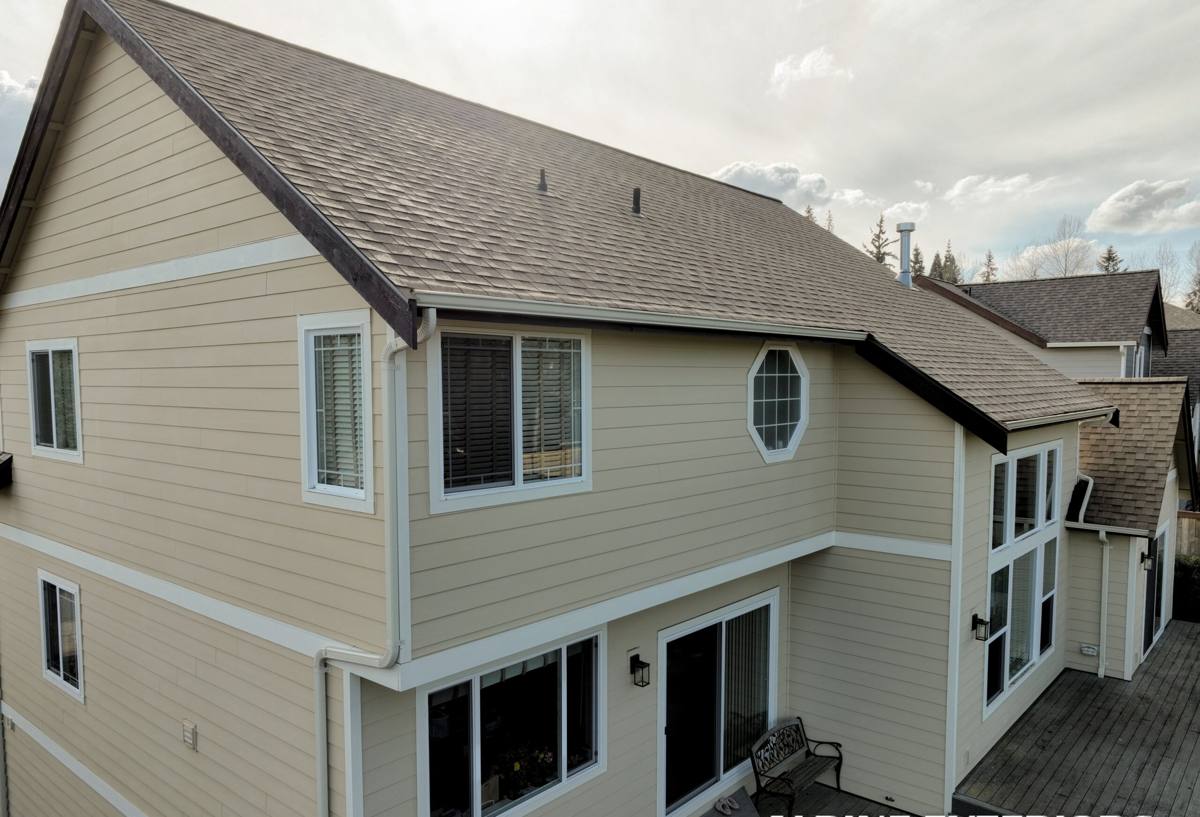
Why Fiber Cement, and Why James Hardie Specifically
We install James Hardie fiber cement siding exclusively. We don't offer vinyl, LP SmartSide, Cemplank, Allura, or primed wood species like spruce or cedar, and that's a deliberate standard, not a sales pitch. Each of those alternatives has a real vulnerability in a climate like Oldsmar's: vinyl softens, warps, and can crack under sustained UV and heat cycling; engineered wood products rely on a wood-strand core that is sensitive to moisture intrusion at cut edges and fastener penetrations; unfinished wood siding needs ongoing maintenance to keep water out at all.
James Hardie's fiber cement formula — sand, cement, and cellulose fiber — is non-combustible and dimensionally stable across heat and humidity swings. It doesn't rely on a factory paint film alone to keep water out the way wood-based products do, and it isn't a petroleum-based product that softens in direct summer sun. That's the baseline reason we standardized on it, and it's especially relevant for a bay-adjacent community that gets both extreme heat and repeated wind-driven rain events in the same season.
The HZ5 Engineering Detail That Matters Here
James Hardie engineers its siding by climate zone, and Pinellas County — including Oldsmar — falls into the HZ5 category, the company's harshest-exposure specification. HZ5 product is formulated with moisture and impact performance suited to hot, humid, storm-exposed regions, as opposed to the HZ10 formulation sold in drier, colder parts of the country. When a siding crew installs a product that wasn't engineered for this specific exposure, or installs the right product incorrectly, the climate here will find the weakness faster than it would almost anywhere else in the country.
Signs an Oldsmar Home's Current Siding Is Losing the Battle
Whether you currently have vinyl, wood, or an older fiber cement product, the coastal Tampa Bay climate accelerates certain failure patterns. Homeowners should watch for:
- Visible warping, buckling, or waviness in panels, especially on the sides of the house that catch the most afternoon sun
- Chalking, fading, or a dull, powdery surface where paint or factory finish has broken down under UV exposure
- Soft or spongy spots near the bottom courses, around window trim, or at corner boards — a sign moisture has gotten behind the siding
- Visible corrosion streaking near fasteners or metal trim, often tied to salt air exposure
- Gaps opening up at seams, corners, or trim joints after wind events
- A noticeable jump in interior humidity or musty odor near exterior walls, which can indicate moisture intrusion behind the cladding
Any one of these on its own might just mean a repair. Several at once, especially on a home that's had multiple named storms pass through, usually means the siding system as a whole is due for replacement rather than another round of patching.
What a Correct James Hardie Installation Actually Involves
The material is only half the equation. Fiber cement siding fails prematurely almost as often from installation mistakes as from product defects, and in a wind-and-rain climate those mistakes show up faster. A correct installation on an Oldsmar home includes:
Water Management Behind the Cladding
A properly lapped weather-resistant barrier, correctly integrated flashing at every window, door, and roofline intersection, and a rainscreen or drainage gap where the assembly calls for it. Siding is the visible layer — the water management system behind it is what actually keeps a house dry during a wind-driven rain event.
Fastening to Manufacturer and Wind-Zone Specification
Correct fastener type, spacing, and penetration depth, following James Hardie's published installation instructions for our wind exposure. Under-fastening or using the wrong fastener is one of the most common causes of panels working loose in high wind.
Clearances and Joint Treatment
Proper clearance from the roofline, grade, and decks or patios so the bottom edge of the siding isn't sitting in standing water or constant splash-back, plus correctly caulked and sealed joints at seams and penetrations using products rated for the exposure.
Factory-Applied ColorPlus Finish
Wherever possible we specify ColorPlus factory finish rather than field-applied paint. It's baked on in a controlled environment, comes with its own finish warranty, and holds color and resists UV fade far more consistently than a job-site paint job exposed to Florida sun before it's even fully cured.
Choosing the Right James Hardie Product Line
James Hardie makes several distinct siding profiles, and the right one for a given Oldsmar home depends on its architecture, sun exposure, and the look the homeowner wants. This isn't a one-size-fits-all product.
| Product Line | Best Suited For | Key Trait |
|---|---|---|
| HardiePlank lap siding | Most single-family homes, traditional and coastal styles | Widest color and texture selection, the standard workhorse product |
| HardiePanel vertical siding | Modern designs, accent walls, gable ends | Clean vertical lines, often paired with board-and-batten trim |
| HardieShingle siding | Cottage-style or accent areas | Staggered or straight-edge shingle look without the maintenance of wood shakes |
| HardieSoffit panels | Eaves and overhangs | Pre-finished, vented or non-vented options for humid attic spaces |
On a lot of Oldsmar homes we end up specifying a combination — HardiePlank for the main field, HardiePanel or HardieShingle as an accent on a gable or entry feature. The goal is always matching the profile to how much direct sun and wind exposure that section of the house actually gets.
Our Process for an Oldsmar Siding Project
- On-site assessment. We walk the full exterior, checking current siding condition, trim, flashing, and any moisture damage at penetrations before quoting anything.
- Product and color selection. We help match a HardiePlank, panel, or shingle profile and ColorPlus color to the home's style and sun exposure.
- Tear-off and substrate check. Old siding comes off and we inspect the sheathing underneath for rot or prior water damage before anything new goes up.
- Weather barrier and flashing installation. This is the step that determines how the house performs during the next wind-driven rain event, and we don't shortcut it.
- Hardie installation to spec. Fastening, clearances, and joint sealing done to manufacturer and local wind-zone requirements.
- Final inspection and walkthrough. We check seams, trim, and finish before calling the job complete.
What Drives Cost on a Siding Project Like This
We won't quote a number without seeing the house, but these are the honest factors that move the price up or down on an Oldsmar job:
| Factor | Why It Matters |
|---|---|
| Home size and wall complexity | More corners, gables, and dormers mean more cutting, trim work, and labor hours |
| Substrate condition | Rotted or water-damaged sheathing found during tear-off has to be replaced before new siding goes on |
| Product line and profile mix | A single HardiePlank field costs less than a combination of plank, panel, and shingle accents |
| ColorPlus vs. field-applied finish | Factory-finished ColorPlus carries a material premium but reduces long-term repainting cost |
| Trim and accessory scope | Soffit, fascia, and trim replacement alongside siding adds material and labor |
| Access and site conditions | Fencing, landscaping, second-story sections, or tight lot lines affect labor time |
Why Hiring a Crew That Already Works Oldsmar Matters
Pinellas County's permitting and wind-load requirements apply to exterior work like this, and a crew that regularly pulls permits and works to code in this county isn't guessing at what an inspector will want to see — they already know. Beyond paperwork, familiarity with how Oldsmar's specific mix of bay proximity, storm exposure, and sun angle behaves on different home orientations means fewer surprises once tear-off starts. A crew that's only ever installed siding inland or in a different climate zone may not think twice about a flashing detail or clearance gap that matters a great deal a few blocks from open water.
It also means accountability that doesn't disappear. A company with an ongoing presence in the area has a reputation to maintain with the neighbors of the home they just finished, not just the one homeowner who signed the contract.
Get a Straight Answer for Your Home
If your current siding is showing warping, chalking, soft spots, or storm damage, or you're planning ahead of the next hurricane season, we're happy to take a look and give you an honest read on what your Oldsmar home actually needs — no pressure, no inflated scope. Use the form below to request a free estimate.